
HAND MADE IN LOS ANGELES, CALIFORNIA
Translation to English by Google...
Award "Best of the Best
2010 "in the category of offroad vehicles
Robb Report magazine
was awarded the honor of a
patterns crafts
from the United States.
Among the classic off-road vehicles, these are such famous names as symbols admirable only count on the fingers. Willys CJ is one such name. That is the reason why Jonathan Ward, founder and designer at the same time as the company's ICON is headquartered in California, has chosen the legendary Jeep vehicle in 1950 as a source of inspiration and foundation for his own works, the ICON CJ3B. Although the source ICON is an enterprise specialized restoration and regeneration the cars of the Toyota Land Cruiser FJ Series, but Ward to pursue projects CJ3B to strengthen the brand's reputation in the processing and manufacture simple cars, reliability, durability and convergence features of a terrain class "framework". We'll monitor the formation of off-road work is excellent throughout.
All information from very large systems such as frames, bodywork, to the little details like the brace, standoff, the system micro-wrong, or screws are each normalized by the computer. In addition, the CAD also supports designers in making the parameters "movement" of the department during actual vehicle operation.
The suspension is also one of the options very carefully with the aim of not only high but also optimal under a flexible and smooth operation.
Control mechanisms as well as steering angles are adjusted in accordance with the size of the shaft and tires. Off-road vehicles should be equipped with large tires, but still not necessarily good cornering and easy to gentle force.
Cabin space as well as the posture of sitting on the car is modeled on the drawing right from the beginning. The key objective is to create a vehicle off-road all-powerful, should feel comfortable who sat in the car also extremely important.
The drawing of the vehicle can complete a detailed customized as desired by each owner. This a matter of "personalization" that the boss Ward boasts process completely manipulated his craft.
Based on drawings complete, the processing is conducted in house ICON in California. All stages were performed by manual methods, including framing, installation of suspension system, check and adjust steering systems, test the vehicle body twist ...
Equipped with rescue of two choices. The first selection includes the 9.0RC 9000lb Warn winch with cable with durable polyester bag with accessories Viking rescue. Other selections simply Warn M6000 winch with steel cable.
The massive steel bar size 2x4x0, 14 inch is put into the bending device or special equipment to create the frame beam high hardness and has no wrinkles in the folds. All the details on fixtures and fittings that are laser cut and precision formed. All welds are done manually at the hands of highly qualified welders.
Axle-based design of the sample axis Jeep Rubicon. Vi-wrong transmission ratio is 4.10:1 with electronic lock is standard equipment.
2.4 GM Ecotec engine with VVT 4-cylinder, direct fuel injection. This engine power to 200
horsepower and 264Nm of torque achieved. Along with this engine is a gearbox 5-speed Aisin-Warner AX15 - top of several boxes of 4x4 vehicles around the world today. NP231 transfer case with 2-speed transmission ratio 1.1 (high) and 2.72 (low) as standard equipment. Transfer case selection is a part-time 4x4 RubICONTM NP241, 2 speed transmission with a ratio of 1.1 (high) and 4.0 (low).
Whole-steel body is shaped and crafted by the formula of the original Willys Jeep, even handling more robust and have better stamina. The grille is also designed and crafted in the workshops of ICON. Then, every detail is covered with a durable putty - a types of coatings that are used in exterior architectural design, resistant to abrasion and shocks extremely well, developed specifically for the ICON. Finally, the body is one of seven standard colors, including Rocky Mountain, Volcanic, Sand, Mayan Sun, Quartz, Spruce, Slate. Windshield frame is Volcano black paint in the spirit of the original design.
After you have assembled a preliminary test, the vehicle was suspended for testing trencau improve the ability of the suspension. According the design, the wheel can "move" with amplitudes up to 24 inches (approximately 609.6 mm) both before and after. While the rear suspension link 4 point type, the front used by the horizontal bars can be adjusted. Both 4-wheel disc brakes.
With prices in the U.S. to 79.000USD, certainly many will question whether this car is nothing special especially when its price is more expensive than the famous Jeep Wrangler Rubicon to 50,000. The process of the craft is the first specifically referring to this symbol. From design to detailed design is very unique, not identical with any current models do. Design inspired by legendary off-road community
with advanced technology, powerful engines, the lightweight (only about 1.300kg) has created a unique, wonderful product. ICON and boss Ward has a compelling reason other special vehicles, such as emissions. GM Ecotec engine of less harmful gas emissions than the 1953 Willys CJ3B advanced through a filter, making it more environmentally friendly. In terms of features, an off-road vehicles often do not promote strong on the highway. But with CJ3B, impressed again exceed the expectations of the operator. Of course not comparable to a car like sedan, but put in context with the 1953 Willys CJ3B ICON's work shows remarkable. Even if the tape speed of over 110km / h, the body is balanced, solid and incredibly stable. Terrain capability, the combination of 33 inch tires, suspension and large 24 inch range, the axis of the transmission ratio 4:10.1-posting, transfer case ratio is 2.72:1 (low) and two of false-lock helps CJ3B become the all-terrain vehicle. It is difficult to express the features of an off-road vehicle with just a few words. The feeling of the fans of this sport is the most accurate answer. About his technique, will not be felt fully without directly putting his hand on every detail of the car. However, only a comparative few points can make the difference between CJ3B and Jeep Wrangler. Typically the fender of the Jeep plastic and certainly little confidence in the durability of it in a few struggles. Meanwhile, the ICON CJ3B fenders made of thick steel as if it were built to withstand bullets. Even if you hold a hammer banging on the fenders on it or many other parts of the body, the hammer will come up that your hands are numb. The difference and superiority is reflected in every detail. Cavity may be an example, instead of using iron or plastic material and generally inexpensive, high-grade aluminum ICON using specialized aircraft. ICON's goal is to use only the special material quality than what the industry which is often used on a car. Even pieces of logo and symbol of the ICON are looking in detail by the manual method. While most car symbol made of plastic or cheap metal and chrome, the symbol of the ICON is made of pewter and engraved by hand with the tools used to manipulate traditional jeweler. Only the logo alone can cost up to $ 400. List of things to be proud of is long again. A car is a compromise perfectly between the classic design with modern technology, make people use a little freak, but instead is feeling quite excited and satisfied. And that's the reason ICON CJ3B is worth the price that owners have to spend, and maybe more!
__________________________________________________________________________________________________________
ORIGINAL ARTICLE TEXT
Bi?u t??ng
xe off-road
Gi?i th??ng “Best of the Best
2010” trong h?ng m?c Xe offroad
do t?p chí Robb Report
trao t?ng ?ã vinh danh m?t
hình m?u s?n ph?m th? công
??n t? n??c M?.
Trong s? nh?ng dòng xe off-road c? ?i?n, nh?ng cái tên l?ng danh ???c ví nh? nh?ng bi?u t??ng ?áng khâm ph?c ch? ??m ???c trên ??u ngón tay. Willys CJ là m?t trong nh?ng cái tên nh? th?. ?ó chính là ly? do vì sao Jonathan Ward, ng??i sáng l?p và ??ng th?i là nhà thi?t k? c?a hãng ICON có tr? s? ? California, ?ã l?a ch?n chi?c xe Jeep huy?n tho?i c?a nh?ng n?m 1950 làm ngu?n c?m h?ng và n?n t?ng cho công trình c?a riêng mình, chi?c ICON CJ3B. M?c dù ICON kh?i ngu?n là doanh nghi?p chuyên ph?c ch? và tái t?o
nh?ng chi?c xe FJ Series Land Cruiser c?a Toyota, nh?ng Ward l?i theo ?u?i d? án CJ3B ?? c?ng c? danh ti?ng c?a th??ng hi?u này trong vi?c ch? tác và s?n xu?t nh?ng chi?c xe ??n gi?n,
tin c?y, b?n b? và h?i t? nh?ng tính n?ng c?a m?t chi?c xe ??a hình h?ng “kh?ng”. Chúng ta cùng theo dõi quá trình hình thành tác ph?m off-road tuy?t h?o này qua ?nh.
T?t c? nh?ng chi ti?t t? r?t l?n nh? h? th?ng khung, thân xe, ??n nh?ng chi ti?t nh? nh? các thanh gi?ng,
thanh cân b?ng, h? th?ng vi-sai, hay t?ng con ?c ??u ???c chu?n hóa b?ng máy tính. Bên c?nh ?ó, CAD còn h? tr? nhà thi?t k? trong vi?c ??a ra các thông s? “c? ??ng” c?a các b? ph?n trong quá trình chi?c xe v?n hành th?c t?.
H? th?ng treo c?ng là m?t trong nh?ng ph?n ???c tính toán k? l??ng v?i m?c tiêu không ch? ??t ?? cao g?m t?i ?u mà còn linh ho?t và uy?n chuy?n khi v?n hành.
C? c?u ?i?u khi?n c?ng nh? góc ?ánh lái ???c ?i?u ch?nh phù h?p v?i kích th??c c?a tr?c và l?p. Chi?c xe off-road c?n ???c trang b? l?p c? l?n, nh?ng nh?t thi?t v?n ph?i vào cua t?t và d? dàng v?i
l?c nh? nhàng.
Không gian ca-bin c?ng nh? t? th? c?a nh?ng ng??i ng?i trên xe c?ng ???c mô ph?ng trên hình v? ngay t? lúc ban ??u. M?c tiêu m?u ch?t là t?o nên m?t chi?c xe off-road toàn n?ng, nên c?m giác tho?i mái c?a
nh?ng ng??i ng?i trong xe c?ng vô cùng quan tr?ng.
B?n v? chi?c xe hoàn thành v?n có th? tùy ch?nh m?t cách chi ti?t theo y? mu?n c?a t?ng ch? xe. ?ây chính
là v?n ?? “cá nhân hóa” mà chính ông ch? Ward t? hào v?i quy trình ch? tác hoàn toàn th? công c?a mình.
D?a trên b?n v? hoàn ch?nh, quá trình ch? tác ???c ti?n hành ngay t?i x??ng c?a ICON ? California. T?t c? các công ?o?n ??u ???c th?c hi?n b?ng ph??ng pháp th? công, k? c? t?o khung, l?p ??t h? th?ng treo, ki?m tra và hi?u ch?nh h? th?ng lái, ki?m tra kh? n?ng v?n thân xe…
Trang b? c?u h? g?m 2 l?a ch?n. L?a ch?n th? nh?t g?m có b? t?i WARN 9.0RC 9000lb v?i cáp
b?ng s?i t?ng h?p siêu b?n cùng túi ?? ph? ki?n c?u h? c?a Viking. L?a ch?n khác ??n gi?n h?n là t?i WARN M6000 v?i cáp b?ng thép.
Nh?ng thanh r?m b?ng thép kích th??c 2x4x0,14 inch ???c ??a vào các thi?t b? ti?n ho?c u?n chuyên dùng ?? t?o ra b? khung r?m có ?? c?ng cao và không có n?p nh?n t?i các ?i?m g?p khúc. T?t c? các chi ti?t và ph? tùng gá trên ?ó ??u ???c c?t b?ng tia laser và t?o hình chính xác t?ngly. T?t c? các m?i hàn ??u ???c th?c hi?n th? công d??i bàn tay c?a các th? hàn trình ?? cao.
Tr?c xe d?a trên thi?t k? tr?c c?a m?u Jeep RubICON. Vi-sai có t? s? truy?n là 4.10:1 v?i khóa ?i?n t? là trang b? tiêu chu?n.
??ng c? GM 2.4 VVT ECOTEC có 4 xy-lanh, b?m nhiên li?u tr?c ti?p. ??ng c? này cho công su?t 200
mã l?c và mô-men xo?n ??t 264Nm. ?i cùng v?i ??ng c? này là m?t h?p s? sàn 5 c?p Aisin-Warner AX15 – h?p s? ??u b?ng c?a nhi?u dòng xe 4x4 trên toàn th? gi?i hi?n nay. H?p s? ph? NP231 2 t?c ?? v?i t? s? truy?n 1.1 (high) và 2.72 (low) là trang b? tiêu chu?n. H?p s? ph? l?a ch?n là lo?i RubICONTM NP241 4x4 bán th?i gian, 2 t?c ?? v?i t? s? truy?n 1.1 (high) và 4.0 (low).
Toàn b? thân xe b?ng thép ???c t?o hình và ch? t?o th? công theo công th?c c?a Jeep Willys nguyên b?n, th?m chí ???c x? ly? c?ng v?ng h?n và có s?c ch?u ??ng t?t h?n. L??i t?n nhi?t c?ng ???c thi?t k? và ch? t?o th? công t?i x??ng c?a ICON. Sau ?ó, t?ng chi ti?t ???c ph? b?ng m?t lo?i b?t b? siêu b?n – m?t
lo?i ch?t ph? v?n ???c s? d?ng trong thi?t k? ki?n trúc ngo?i th?t, có kh? n?ng ch?ng mài mòn và ch?n ??ng c?c t?t, ???c phát tri?n ??c bi?t cho ICON. Cu?i cùng, thân xe ???c ph? m?t trong 7 màu tiêu chu?n, g?m Rocky Mountain, Volcanic, Sand, Mayan Sun, Quartz, Spruce, Slate. Khung kính lái ???c
s?n màu ?en Volcano theo tinh th?n c?a thi?t k? nguyên b?n.
Sau khi ?ã ráp th? s? b?,chi?c xe ???c treo trênc?u nâng ?? th? kh? n?ng c?a h? th?ng treo. Theo
ph??ng án thi?t k?, bánh xe có th? “c? ??ng” v?i biên ?? t?i 24 inch (t??ng ???ng 609,6mm) c? tr??c và sau. Trong khi h? th?ng treo sau ki?u liên k?t 4 ?i?m thì phía tr??c s? d?ng các thanh cân b?ng ngang có th? ?i?u ch?nh. Phanh ??a c? 4 bánh.
V?i giá bán t?i M? lên t?i 79.000USD, ch?c h?n nhi?u ng??i s? ??t câu h?i li?u chi?c xe này có gì ??c
bi?t khi giá c?a nó ??t h?n Jeep Wrangler RubICON l?ng danh t?i 50.000USD. Quy trình ch? tác th? công là ?i?u ??c bi?t ??u tiên khi nh?c ??n bi?u t??ng này. T? ki?u dáng thi?t k? ??n các chi ti?t ??u r?t ??c ?áo, không trùng v?i b?t k? m?u xe nào hi?n nay. Thi?t k? l?y c?m h?ng t? huy?n tho?i off-road c?ng
v?i nh?ng công ngh? tiên ti?n, ??ng c? m?nh m?, l?i có tr?ng l??ng nh? (ch? kho?ng 1.300kg) ?ã t?o nên m?t tuy?t ph?m ??c nh?t vô nh?. ICON và ông ch? Ward còn có m?t ly? do thuy?t ph?c khác cho chi?c xe ??c bi?t này, ?ó là m?c khí th?i. ??ng c? EcoTec c?a GM th?i ít khí ??c h?i h?n so v?i Willys CJ3B 1953 nh? m?t b? l?c tiên ti?n, khi?n cho nó thân thi?n v?i môi tr??ng h?n. V? m?t tính n?ng, m?t chi?c xe offroad th??ng không phát huy l?i th? trên xa l?. Nh?ng v?i CJ3B, ?n t??ng l?i v??t quá mong ??i c?a ng??i ?i?u khi?n. D? nhiên là không th? so sánh v?i m?t chi?c xe du l?ch nh? sedan, nh?ng ??t trong b?i c?nh v?i Willys CJ3B 1953 thì tác ph?m c?a ICON th? hi?n s? v??t tr?i. Ngay c? khi b?ng b?ng v?i t?c ?? lên ??n h?n 110km/h, thân xe v?n cân b?ng, ch?c ch?n và ?n ??nh ??n kinh ng?c. V? kh? n?ng ??a hình, s? ph?i h?p c?a l?p 33 inch, h? th?ng treo biên ?? l?n t?i 24 inch, tr?c các-??ng t? s? truy?n 4:10.1, h?p s? ph? có t? s? 2.72:1 (low) và hai vi-sai có khóa giúp CJ3B tr? thành chi?c xe c?a m?i ??a hình. R?t khó ?? có th? di?n ??t nh?ng tính n?ng c?a m?t chi?c xe off-road ch? b?ng vài t? ng?. S? c?m nh?n c?a nh?ng fan c?a môn th? thao này là câu tr? l?i chính xác nh?t. V? ?n t??ng k? thu?t, s? không th? c?m nh?n ???c h?t n?u không tr?c ti?p ??t tay lên t?ng chi ti?t c?a chi?c xe. Tuy nhiên, ch? m?t vài ?i?m so sánh c?ng có th? làm rõ s? khác bi?t gi?a CJ3B và Jeep Wrangler. ?i?n hình nh? ch?n bùn c?a Jeep làm b?ng nh?a
và ch?c h?n ít ai tin t??ng vào s? b?n ch?c c?a nó trong m?t vài cu?c v?t l?n. Trong khi ?ó, ch?n bùn c?a ICON CJ3B làm b?ng thép dày nh? th? nó ???c ch? t?o ?? ch?ng ??n. Th?m chí, n?u b?n c?m m?t chi?c búa ??p m?nh vào chi?c ch?n bùn ?y ho?c vào nhi?u ph?n khác c?a thân xe thì chi?c búa s? b? n?y ra
khi?n tay b?n b? tê d?i. S? khác bi?t và v??t tr?i còn th? hi?n ? t?ng chi ti?t. Khoang máy là m?t ví d?, thay vì s? d?ng các ch?t li?u s?t hay nh?a thông th??ng và r? ti?n, ICON s? d?ng nhôm cao c?p chuyên dùng trên máy bay. M?c tiêu c?a ICON là ch? s? d?ng nh?ng v?t li?u ??c ch?ng v?i ch?t l??ng h?n h?n nh?ng gì mà ngành công nghi?p v?n th??ng s? d?ng trên m?t chi?c ôtô. Ngay c? nh?ng mi?ng logo và bi?u t??ng c?a ICON c?ng ???c ch?m chút t? m? b?ng ph??ng pháp th? công. Trong khi h?u h?t các bi?u t??ng xe h?i làm b?ng nh?a ho?c kim lo?i r? ti?n r?i m? chrome, thì bi?u t??ng c?a ICON làm b?ng thi?c r?i ???c kh?c ch? b?ng tay v?i nh?ng d?ng c? chuyên dùng ?? ch? tác kim hoàn truy?n th?ng. Ch? riêng chi?c logo
thôi ?ã có giá t?i 400USD. Danh sách nh?ng th? ?áng t? hào còn dài n?a. M?t chi?c xe dung hòa m?t
cách hoàn h?o gi?a thi?t k? c? ?i?n v?i công ngh? hi?n ??i, khi?n cho ng??i s? d?ng không m?t chút l?n t?n, mà thay vào ?ó là c?m giác hoàn toàn h?ng ph?n và mãn nguy?n. Và ?ó là ly? do ICON CJ3B x?ng ?áng v?i m?c giá mà ch? nhân c?a nó ph?i b? ra.
There’s nothing quite like the experience of jumping in a rare, classic vehicle, and fortunately for us here in Australia, prices of classic old four-wheel drive vehicles mean this retro experience is still relatively attainable. Early LandCruisers, Patrols, Jeeps, Landies and Range Rovers can be picked up for a couple of grand, and good roadworthy
examples for less than $10k. Real early stuff, such as WWII Jeeps and Series I Land Rovers, can be yours for a lot less money than buying classic cars of the same vintage, although prices are on the way up. Things are different on the other side of the Pacific, where old Land Cruisers are harder to come by, not only because of their age, but compounded by the fact they were only imported to the US in very limited numbers. FJ40 Cruisers are highly sought after and while still nothing like the domestic muscle cars, they fetch big dollars
from collectors. Take at look at sales online and you’ll be amazed at what people are asking (and getting) for early FJs in the US, with prices upward of US$40K to US$100K.
Californian Jonathan Ward saw the growing interest in early Cruisers in the US and in 1996 he formed TLC. Tender Loving Car, Toyota Land Cruiser; call it what you want but the company set out to be a one stop shop for early Cruiser sales, service and restorations, concentrating on the legendary FJ40 but also delving in to FJ45 and later 55 and 60 Series Cruisers. After many FJ restorations, Jonathan saw that original parts were getting harder to find and collectors were still willing to pay a lot of money for retro vehicles. Toyota itself had even commissioned TLC to produce three prototype vehicles for what eventually became the modern FJ Cruiser. “As our global reputation grew and grew, I began to work as a consultant for Toyota, and TLC began to handle special projects for Toyota, ranging from outfitting vehicles for special events to eventually being asked by Mr [Akio] Toyoda to build three running and driving prototypes of what became the 2007 Toyota FJ Cruiser. Our original prototypes paid more direct homage to the Land Cruiser tradition than the new FJ Cruiser,” Jonathan says. This project, and seeing how Toyota transformed it in to the FJ Cruiser, prompted Jonathan to ask himself how he would build a tribute to the original FJ and hence ICON was born. ICON builds 4X4 vehicles that pay homage to the originals but utilize modern materials, technologies and manufacturing practices to create vehicles that drive as you would expect of a modern car, yet still have that old school cool that only a classic car can provide.
ICON started with the FJ40, 45 and 43 models, but has since expanded its line to include the Ford Bronco-inspired ICON BR series vehicles. ICON vehicles are built to order; if you thought the price of restored original Cruisers was high, you will be gob-smacked by the price of an ICON. Depending on your specs, an ICON FJ will cost you from US$125,000 to US$195,000. They are available in short (FJ40), mid (FJ43/44) and long (FJ45) wheelbases; with petrol V8 or four-cylinder turbo-diesel engines and a range of drivetrain, trim and feature options for buyers to choose from. Anything from a leaf-sprung replica to a race-bred Baja brawler is possible, although the leaf springs are no longer offered as standard. The vehicle pictured here is a bit of a phantom FJ and shows the scope of ICON’s
Inventiveness. Toyota never made a four-door FJ but the inquisitive minds of the crew at ICON thought it would be a cool idea. “Over the years we looked at ways of taking the brand forward and we did a quick rendering of what a four-door would look like,” says Jonathan. “We shelved the plan while we developed the CJ range, but people kept asking for it, and this one guy persisted with it. I couldn’t talk him in to a FJ43 so I emailed him the rendering and he said ‘Yeah, that is it’ and after we sold five of them in a month, it became our newest model.”
The FJ44 is similar to a four-door Jeep Wrangler in concept, although this one is set up with seating for six, in three rows of two bucket seats – just the thing for taking the family out on the tracks. The 44 rides on a 2895mm wheelbase, whereas the ICON FJ40 sits on a 2362mm wheelbase and the FJ45 ute has 2971mm between the front and rear wheels. As all the ICON bodies are hand-made from aluminum, creating the four-door was no special task. All the panels, bar the bonnet, are 5052-H32 aluminum; the bonnet is a new steel part from Toyota. The panels are powder coated in a special material developed for ICON, while the undersides are polyurethane coated for protection and reduced heat and vibration transfer. It’s when you start talking hand-made body panels that you see where the money goes in one of these beauties. The chassis is specially manufactured
for ICON, this time by renowned chassis shop Art Morrison. Each one is made on a jig using 2”x 4”x 0.180” mandrel-bent mild steel rails and state-of-the-art bending technology to create rigid, wrinkle-free rails.
All accessory mounts are precision laser-cut and formed to exact dimensions to ICON’s specification. Morrison helped with the suspension design as well, with a triangulated four-linkused on the rear and three-link and panhard rod used under the front. Adjustable coilover shocks are used at each corner, as are front and rear blade-style sway bars. The sway bars and lower control arms are made the same front and rear so as to be Interchangeable in the field and require less spares to be carried.
Diffs are a Dana 44/60 front/rear combo from Dynatrac, manufactured to ICON’s specs. ARB air lockers are one option, another is the Stop Tech brake package featuring six-spot calipers on the front and four-potters on the rear, grabbing massive custom discs. The standard brake package uses OE parts from GM over slotted and vented rotors. ICON offers numerous powertrain options for the FJ, including two petrol V8 engines and a 2.8-litre, four-cylinder turbo diesel that is tuned to run on biodiesel. The intercooled turbo-diesel engine comes from VW and <span yes"=""> makes 365Nm at just 1400rpm, with far better fuel economy that the V8s. Petrol V8s are the engines of choice in the US and this FJ44 runs the 5.7-litre LS V8 from GM, making 313kW at 5500rpm and 620Nm at 4500rpm. The transmission is a four-speed auto, also from GM; a five-speed manual is also available. The transfer case is the indestructible Atlas II off-road unit, with 3:1 low range as standard or ultra-low 5:1 gears for crawler work.
Like all the drivetrains offered in the ICONs, this one is designed to offer simple and reliable performance, with servicing and replacement parts easily available from regular suppliers. It works with the other modern components used in the cars to give that ‘new car’ performance and drive experience while wrapping the package up in a head-turning retro body. This FJ44 is even more neck snapping – any Land Cruiser enthusiast who sees it will know that Toyota never made such a vehicle. And, on top of that, its four-door configuration makes it stand out even more from the “standard” ICON FJ.
Link: http://www.boldride.com/ride/2011/icon-baja-limited-edition
Got a hankering for classic trucks and Jeeps but hung up on buying one for fear the thing may fall apart into a rust heap in your driveway? Enter ICON. The California-based company handcrafts bespoke 4×4 vehicles out of space and military grade materials in a vision to revisit classic transportation in a modern context. ICON CEO and lead designer Jonathan Ward explains his unique concept and line to us.
BoldRide: Why did you start Icon?
Ward: I find that a lot of designs in the past are more purposeful and have more continuity that the modern world has overlooked. The modern world – transportation included – is about trying to embrace such a wide audience that at the end, the product has no soul and clarity or purpose. When we started, in 2005 with the Toyota Land Cruiser, it was because I’ve seen more and more people who had an affinity to the older aesthetic of the vehicle but didn’t like the charming yet antiquated electronic and mechanics. So we began re-envisioning the truck.
How did you do that?
We stepped back and took a more evolved approach. We pioneered the conversions utilizing state-of-the-art GM engines; LS1 fuel-injected aluminum V8s. Typically, you’d take an old carburetor from some junkyard, low-tech V8 and bolt it in before adapting it into the original 3-speed transmission. Instead, we wanted a computer-controlled engine; an updated 5-speed tranny and transfer case instead of a Turbo 300 or a Turbo 400. We wanted something that had overdrive and greater longevity. We coupled this vision with reverse-engineering technology and got the old trucks into CAD programs to have more control and engineering capability. Then we worked out efficient, low-volume manufacturing. Super-forming and hydro-forming; working with local aircraft manufacturers versus building the little pieces we need. After all of that, we built the first three prototypes for Toyota, which evolved into the FJ Cruiser. Their current iteration was a bigger departure than what we wanted. So we started ICON.
What models have you produced since?
In 2005, we started with Toyota’s FJ40, then the FJ45, which has a cult following. North America loves them but they were only here from 1963-67. Then came the FJ44 in 2009, which was our original six-seater, four door take off the traditional FJ. We delivered about 100 of those.
Icon’s line is decidedly pricier than most 4x4s.
The FJ44 retails from $125,000 to $195,000, depending on body style design package. They’re expensive to realize. When I built the FJ40, I had it locked down all in my head for a few years. By the time I went to make it, I had a high level of clarity of where I was headed. What I didn’t have the foresight for was costing. Sticking to pure directives of design, I built one. Then I added up how much it cost and realized that no one would buy these because they cost too much. So we realized either we dial down the quality to meet a price point that the public wants or we stick to our ideals with a complete disregard to the cost. We decided there is enough shit in the world and kept it at the higher price point.
What makes them so costly to produce?
It’s all about the quality. A lot of our materials aren’t from the automotive realm. We went into marine, aerospace and other industries for supplies. We found a great military pontoon boat manufacturer who makes marine-grade aluminum. It’s bullet proof; it will never rust or crack. Transportation products were once made to last as long as possible. Now they’re made only for a few years so that you throw them away and go lease another one. The only transportation brands that adhere to the ethics ICON does are in the industrial, agricultural or military fields.
What came after the FJ variants?
I’d always been a fan of Willys Jeeps. They represent longevity, simplicity and durability. And, in concept, we thought it would an easier platform to engage a wider audience. I concentrated on the CJ-3B, which was around for World War II and thereafter. Some have called it the ugliest vehicle ever; I call it the most unique. The high hood line allowed us options for motor power from diesel to gas and even electric. By the time we brought the product to market, it brought greater engineering challenges because it was so costly to make. I had thought it would retail around $50,000. Instead it ranged from $77,000 to $110,000.
And lastly, there’s your Ford Bronco interpretation, which sells for $155,000 to $210,000.
I got a call from Jim Farley, the marketing director for Ford, who used to be at Toyota. Jim asked would we do a one-off ICON Bronco show truck. Usually it’s us reaching out to manufacturers but to have one reach out to us was stellar. We told them we wanted to make this our new model and work with Ford directly to make sure we’re integrating what’s important to their brand on the contemporary sense. Ford approved that and offered us assistance in design and production last November.
What do you get for all that money?
You get a purposefully built chassis, a radius arm front, six piston ABS brakes, a 2012 Mustang Coyote GT V8 engine, with 390 HP and 412 lb-per-ft of torque – and with that you’re getting fuel efficiency north of 20 miles per gallon. You can opt for a manual five-speed transmission or an automatic with overdrive. All the trim is custom made out of aluminum or stainless steel. All the lighting is LED. The interior is by Mercedes with Chilewich woven textile inserts. All the door panels are fitted with aircraft hardware and the glass is architectural like you’d see in a sky scraper. That ends up ghosting out the windows and looks quite bitching. You also get power everything, a navigation system, modern instrumentation, hand enameled control knobs, and so on. Every detail is bespoked. We’ve considered design in a clear perspective and each and every piece on that has been considered at fantastic length, which makes it such a great end result.
Something Wicked This Way Comes...
ICONS AND LEGENDS CAN BE DANGEROUS THINGS. OR IT MAY BE MORE APPROPRIATE TO SAY THAT IT’S DANGEROUS TO CROSS THE FOLLOWERS OF THE ICONS OR LEGENDS, WHO REVERE THEIR PARTICULAR OBJECT,
SOMETIMES TO THE POINT OF ABSURDITY.
In the past decade, there have been three major articles of change in the Early Bronco world that have proved to generate a lot of discussion and opinions from all camps: the Bronco concept vehicle from 2004, press releases promising the return of new Bronco bodies from Dynacorn, and the release of the ICON Bronco in 2011. Of these three, the Bronco concept remained exactly that – a concept that never gained traction beyond the show circuit. Dynacorn bodies? The faithful have trooped to the SEMA Show in Las Vegas every year for several years now and returned home empty-handed. The ICON Bronco? It’s alive and kicking.
Jonathan Ward isn’t a “Bronco guy”, per se. And when it came time to offer a new twist on the classic four wheeler, that turned out to be a good thing. Ward is immersed in everything automobile, and brings a depth to the definition of reinventing vehicles that is sadly lacking in many automotive design and manufacturing efforts today. In the case of the beloved Bronco, he was truly able to think “outside the box” in a manner that has often eluded the traditional Bronco build community.
Ward’s philosophy with all his reinterpretations of the classics is to build a vehicle with the classic aesthetic without the poor driving characteristics of the original. He realizes that 4 wheel drum brakes, manual steering, and sloppy handling get old in a hurry, muting the charm of vintage vehicles. Ward’s Bronco project kicked off with an invitation from Ford to do a modern interpretation of the classic with their blessing. He was soon bound for Detroit to meet with Ford designers and engineers and gain access to valuable data that would be helpful for the project. Jonathan notes that Ford gave him access to their archives and technical specs very early in the project’s life. While in Detroit, he met noted automotive designer Camilo Pardo, responsible for penning the Ford GT a few years ago. Pardo and Ward became fast friends and collaborators on the Bronco project – with each contributing numerous facets to the complete vision for what would become the ICON Bronco. For his Bronco project, Ward also enlisted a diverse group of team members, with the most interesting collaborator being Nike. Nike, you ask? As it turns out, Ward had done some work with Nike on his CJ project and remembering an offer from Nike’s CEO for help on future builds, contacted him when the Bronco project kicked off. Needless to say, Nike’s team of designers, engineers, and machinists are a talented bunch and can do a lot more than design shoes.
Starting with the foundation for his truck, Ward parted company with all other Bronco builders and worked with Art Morrison, best known for their Tri-5 Chevy chassis,and supplier of the chassis for ICON’s Land Cruisers and CJ-3Bs. With Morrison, Ward also had a supplier with a proven reputation for engineering excellence that could easily handle the challenges of proper suspension geometry and packaging. Morrison chose 2” x 5”, 0.180” thick mandrel bent tubes for the main frame rails spanned by 4 cross members with laser cut 3/16” and 1/4” braces and brackets. All the frame and suspension pieces are covered with a MILL_Spec powder coat finish. Attached to the frame are Dynatrac axles; a Dana 44 up front and a high pinion Dana 60 in the rear. The 44 is stuffed with Superior axle shafts actuated by Warn hubs. Ward uses similar axles on his ICON FJ trucks so adapting them to the Bronco seemed natural. Leveraging existing suppliers and components often makes sense from an economic standpoint. Sharp-eyed observers will note another carry-over from other ICON trucks – 6 lug wheels vs. the standard Bronco 5 lug pattern. Befitting the premium nature of the axle componentry, StopTech multipiston, fixed brake calipers on large rotors (15” front, 14” rear) are in place at each corner. The rear axle also has small, dedicated parking brake calipers on the perimeter of the rotors. This is the first known use of such high quality braking components on an early Bronco. The axles are located to the frame via 0.5” thick tubular links with Currie Enterprises ‘Johnny Joints’, which provide a nice compromise of flex, durability, and NVH absorption. The links are mounted in a triangulated pattern in the rear to locate the axle laterally as well as fore and aft. In front, a radius arm suspension with a panhard bar (trac bar in Bronco parlance) locates the axle. Nitrogen charged Fox Racing coilover shocks with Eibach coils and remote
reservoirs handle damping duties at each corner with the rears mounted inboard of the frame rails due to packaging constraints and clearance for the rear wheels during full axle articulation. The suspension system includes sway bars front and rear. Rolling stock consists of 285/70/R17 tires (approximately 33” tall) on several choices of 17” wheels, including the streetlegal Hutchinson beadlocks shown in the photos.
Another first for early Broncos, and one of the key components and the heart of this beast is what’s under the hood. The 302 cid V8 has had an association with the early Bronco since 1969. It was the primary, and sometimes the only, engine offered during eight years of the early Bronco’s original lifespan. Now in the second decade of the new century, a new “5.0” (302 cid) is once again the new Ford engine and the ICON Bronco is the first Bronco recipient of this new power plant, called the Coyote. 412 hp and 390 lb. ft. of torque ensure the ICON doesn’t suffer from lack of power thanks to electronic fuel injection, variable valve timing, and other features never dreamed of when the original Bronco was produced. Feeding that beautiful
engine is a fuel tank designed by Transfer Flow. It features rollover valves, an in-tank pump, and full baffling. ICON offers your choice of transmissions: AisinWarner AX-15 5 speed manual, or Ford 4R75W automatic, behind the engine. Advance Adapters’ bulletproof Atlas transfer case splits the gears behind the transmission.
The body and interior are the real palate for Ward’s broad brush of creativity and an in-depth look at each is well warranted. Unlike ICON’s FJs and CJ-3Bs, the Broncos use existing bodies from donor trucks. Ward scours the country looking for trucks in good condition to serve as donors. A note here – collectors and purists can rest easy as no historically significant, or concours perfect trucks are used as donors. The bodies are stripped, cleaned, any necessary bodywork performed, and finished with coats of matte finish paint (other finishes available). It’s the details on the freshlypainted body (matte finish on the truck shown here) that catch your eye. The door handles are a slightly ruggedized version of the originals, with a few extra creases to help create the look. The handles were redesigned by Jonathan and Camilo and then cut from stainless steel at Nike on a CNC machine. You’ll notice a similar nod to authenticity in the mirrors that were created in a similar manner. Subtle stainless steel body armor is visible in the custom surrounds for the reflectors (68-69 style shown) on the body and the taillights.
A small ICON logo in the red square is visible next to the Bronco script – homage to the original Sport Broncos. The Sport Bronco beltline trim is also used. On the ICON Bronco, it’s treated to a durable Teflon gray coating deposited by a physical vapor deposition (PVD) process. The most visible change to the body is most certainly
the grill and lighting. The grill is a laser cut stainless piece, with laser cut features and a recessed character line running horizontally down the center of it, adding strength to the flat surface. Ward hints that future versions will be CNC’d aluminum. The turn signals are now circular lenses, with LED lighting. The distinctive headlights are made by Speaker and are a pattern of LEDs as well. The “ICON” letters in the center of the grill are CNC’d stainless and mimic the red enamel letters found on early Broncos with the Sport Bronco package. On the tailgate, Jonathan designed a stainless, acid-etched insert with the ICON logo residing where the FORD letters once stood proud. High above that tailgate, an LED 3rd brake light provides an extra measure of safety.
ICON also worked their magic on the front and rear bumpers – again leveraging ideas from their FJ and CJ designs. The front tastefully integrates a 9500 lb. Warn winch with a Viking hawse fairlead and thimble and integrated LED fog lights. The rear places the spare tire on a high quality swing-away carrier, which latches to the bumper via a beautifully machined handle that actuates an eccentric cam/over-center type latch. Since the tire carrier blocks the original license plate location, the license plate lighting is now on the tire carrier as is a very bright LED backup light. Another first forthe Bronco world are the small, lockable storage containers in the rear bumper that flank the recessed receiver. It’s easy to overlook the details on this veritable work of art.
Before opening the doors and checking out the interior, the medium between you and the interior bears mentioning. Most car builders rare venture outside the “car world” for sources and inspiration for their builds but Jonathan does. The glass in the windows of the ICON Bronco comes from the architectural world and features its layer of tint between the layers of glass. It took several tries to get the sizing of the glass just right for the hardtop. Open the door and check the door panel and you’ll see another item from the architectural world – ribbed panels that normally adorn the inside of elevators in high-rise office buildings. Surrounding the panels are powder coated trim pieces attached with stainless steel hardware. The lower door panels, door upholstery inserts, center console cover, and floor patterns are Chilewich textile. The rear quarter panel inserts are made to match. When you opened that door, you would’ve also noted that a power step from Amp Research extended out from the body to aid entry and egress from the truck. The high-backed bucket seats have Mercedes vinyl upholstery with the afore-mentioned inserts.
The underside of the tub and the inside of the body are heat-cured polyurea. It resembles more common polyurethane coatings but bonds to the metal better and has higher chemical resistance. The floor mats are a composite of a rubber bottom, Dynamat insulation and the Chilewich textile on the top surface. This layered combination should serve as a durable, easy-to-clean configuration that provides insulation, noise damping, and an element of style. The glove box shares the same material as the door panels. The truck features power door locks (power windows are an option) and keyless entry and start. The Ididit tilt steering column is topped by a thick-rimmed steering wheel recognizable from ICON’s FJ line. Machined and powder coated aluminum dash inserts direct the flow of heated or air-conditioned air to cabin occupants. A Vintage Air unit provides cabin air conditioning. Overhead you’ll find sun visors sourced from aircraft and a custom 3-speed wiper assembly from Newport Engineering that manages to do away with much of the bulkiness of the stock unit. Ward notes this unit will bolt into all early Broncos as a nice retrofit option.
Machined aluminum knobs in the dash control all climate controls, the emergency brake release, and the hood release. Pardo and Ward’s design influence is also heavily evident in the instrument panel in the truck. Eschewing the common trend of jettisoning the original instrumentcluster and installing a row of aftermarket gauges in the dash, they instead paid homage to the original, recognizing it as a key design element of the original trucks. Working with Dakota Digital, they designed an instrument panel packed with information and customizable via two digital displays in the lower quadrants. The result requires no gauge additions to clutter the dash or steering column while retaining a recognizable feature of the original Broncos. As a result of this collaboration, Dakota Digital now offers a similar cluster for owners of early Broncos.
The rear cargo area of the truck has a fold and- tumble rear seat, 3 point belts for rear seat passengers, Jocal and JL Audio speakers in the rear cargo panels (the head unit is in the center console), and a 4 point chrome-moly cage to protect the occupants. The underside of the top is lined with Dynamat for insulation and then covered with Alcantera; a high grade upholstery material more often found in expensive sports cars than Broncos.
Popping the hood to view that beautiful 5.0 engine reveals more ICON handiwork under the hood. Ward wisely kept the engine stock for longevity and durability purposes and incorporated the stock cold air box intake into the Bronco’s engine compartment.
The engine is cooled by a custom aluminum Griffin radiator with air movement generated by an electric fan. The intake cover has a custom machined ICON cover on the front and a custom machined vehicle identification tag resides in the location formerly driver’s side fresh air intake box on a stock Bronco. Each identification tag contains pertinent information on the vehicle plus a subtle Nike “swoosh” on the bottom as a symbol of appreciation for all the assistance the prominent shoe manufacturer provided in the design and manufacturing process for the ICON Bronco.
In addition to the unorthodox partners and suppliers such as Nike for this project, a quick overview of the truck reveals a variety of quality products from more traditional Bronco suppliers as well. Hood bumpers, hood shocks, lift gate shocks, the hood release cable, door bucket cups, window cranks, dash, door sill covers, locking tailgate handle and the gas cap are sourced from companies like BC Broncos, NicksTrix and Drake.
While the ICON Bronco is not within reach, financially speaking, for everyone, its production is a boon for the entire Bronco community as it stretches the boundaries of the collective thinking for modifications to existing Broncos. It’s developed a few new products for its elderly brethren along the way and most likely hatched more than a few ideas and provided inspiration for another legion of Bronco owners around the globe. And with production in progress, even more people will get to own their version of the classic Bronco.
ICON recently moved to a larger location in Los Angeles to support the growing demand for their vehicles. A photo tour of their website shows quite a number of early Broncos staged for future builds. This is one great idea that has become a reality. For more information, including pricing and options, visit their website
at www.icon4x4.com.
Written by Todd Zuercher, for Bronco Driver Magazine.

These Incredible Off-Roaders Will Take You Places You Only Imagined!
These Incredible Off-Roaders Will Take You Places You Only Imagined
Read more: http://www.businessinsider.com/these-incredible-off-roaders-will-take-you-places-you-only-imagined-2012-3#ixzz1oNLi1dGk
In the early days of the off-road truck, the Toyota Land Cruiser, Willys CJ, and Ford Bronco were iconic members of the class.
Over the years, these trucks have changed massively. The modern Land Cruiser's only relation to the classic is the name. The Willys CJ became the Jeep Wrangler over time, and it has grown in size and quietly moved up-market.
And in the case of the Ford Bronco, it tried to help OJ Simpson escape from the police. Then it escaped from dealers all together when Ford ended the production run.
One man decided that the disappearing act these off-roaders were pulling was a terrible magic trick and it was also unacceptable.
ICON was born.
The California based automaker, headed up by Jonathan Ward, uses an almost insane attention to detail to make modern interpretations of these classic trucks. Each is catered to the individual owner, so no two ICONs are exactly the same.
While ICON's versions of the cars look familiar from the outside, they are anything but. With starting prices above $100,000, ICONs are not meant for the amateur off-roader.
However, the connoisseur will appreciate his unique ride for years to come.

A Fetish
Willys? Why wouldn’t He?
The Willys-Overland CJ3B, reimagined by ICON for the well-heeled, style-conscious adventurer.
What you see here is not a modified Willys-Overland CJ3B. Nor is it a vehicle built from the ground up to look like something like the old flat-fendered, snub nosed CJ3B, although that is what its builder, California-based Icon, says it is. Rather, it is a fetish. It is the embodiment of the idea of a CJ3B, meticulously constructed from modern mechanicals-cut-down Dana 44 axles from the Jeep Rubicon, Fox remote-reservoir coil-over shocks at all four corners (for two feet of wheel travel), four-wheel disc brakes, and a 210-hp, GM 2.4 liter Ecotec four- along with detailing that is obsessively industrial chic. The body’s finish, like that of the company’s more familiar Toyota FJ re-creations, is a matte Teflon-polymer powder coat that promises durability. The seats can be covered in optional and fashionable Chilewich-brand woven vinyl. The interior knobs are unique knurled, engraved and hand-enameled minor works of art. The thing is a jewelry box. It starts at $77,000.
- by Daniel Pund
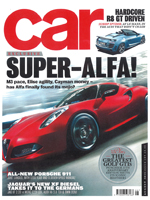
Think the Defender is the epitome of rugged off-road cool? Meet the Icon that's about to change your mind.
ESCAPE FROM LA
CAR Magazine August 2011
They look like original Willys Jeeps and indeed they have modern Jeep underpinnings. But they’re made by a man who’s built his name on recreating the coolest off-roaders ever invented.
In Los Angeles the car is king. Live in the City of Angels without one and you won’t ever fall in love with this infamous, true capital of California. It’s equally true, of course, that with it’s legendary traffic, it’s safe to say that you’ll never truly loathe Los Angeles until you’ve endured its day-long jams in the scorching heat. Thousands of miles of sun-bleached concrete arteries clog every day as millions commute across this vast metropolis, the whole city alive with life.
Except tonight. Bar the two dark shapes before us, we haven’t seen another car, person or animal for hours. It’s not quite post-apocalyptic; it’s too clean and spotless for that. When zombies, aliens or Skynet finally take over the world, I’m expecting a trail of destruction to signal The End. Instead, it feels like everyone has simply vanished-the lights are on, but there is no-one home.
The lights really are still on. We’ve holed up in a deserted car park next to the Walt Disney Concert Hall in Downtown, but the skyscrapers on nearby Bunker Hill are lit up like stark, industrial Christmas trees, bathing us in a perpetual glow. Last time I was here it was in a Lamborghini Performante, during the bustle of a workday, lunchtime, but despite it now being in the middle of the night it doesn’t feel any darker. Or quieter. There’s no barking, howling V10, but buildings in big cities never sleep: there’s a constant background hum as air-con units and other machines work on unseen until the dawn.
The scene before us is fitting, because our transportation for the night is exactly what you want to be driving when four angry horsemen appear on the horizon. Built by a company called Icon right here in LA, the two small, matt shapes are instantly familiar-you’ll recognize them as Willys Jeeps. Albeit Willys that have been injected with HGH: winches spout from the nose of each, and huge, chunky tires bulge out from the wheelarches, exposing massive suspension kits. They look like they’ll go anywhere.
And they do. Worrisome images of The Fast Show’s two overly-ambitious 4x4 enthusiasts spring to mind when photographer Daniel Byrne asks for one of the Willys to be parked on a steep bank, but with low-range engaged it just drives on up there. ‘Some customers just go to Starbucks in Miami and take the dog to the park and that’s it’, reveals ICON CEO Jonathan Ward. ‘But we have so many other vehicles which are in four-wheel drive and low-range all the time, never leave the property, get their butts worked hard and get put away wet. Most of our clients really use them aggressively’, he says with a big grin.
Ward originally created Icon to meet the demands of his existing customer base, who wanted classic-shape FJ40 Land Cruisers with modern mechanicals, and he and his team then went on to re-create the longer FJ43 and the FJ45 pick-up. A four-door FJ44 was on the cards, but Ward is refreshingly honest about the expense of his hand-built creations: ‘My price point is so loopy the 44 was just going to add more cost, and I really wanted to try and embrace a wider audience. The simplicity of the original Willys design-which is durability, longevity and no frills-is just straight forward and helped us reduce our content cost, so we rolled these cars out instead.
‘These cars” are the two CJ3B’s before us, the first pre-production and production cars out of the factory-ridiculously, Ward owns the trademark to the name, because Jeep never bothered about it. To bring the cost down from the FJs’ $125k-plus price tags to under $80k, the pair use off-the-shelf axles from Jeep Rubicons-albeit shortened to fit the CJ3B’s smaller dimensions-plus 2.4-litre petrol engines from GM.
It doesn’t sound like the most sophisticated recipe, but these things are designed to be beaten up off-road, not to do the weekly school run. They’re tried and tested components, and everything else is marine or aerospace-spec, all dreamed up by Ward’s creative team (which includes a KTM engineer, plus designers from Nike and Toyota). The volumes are low, but that means Icon can easily change something it’s not happy with/ ‘I love the anal retentive value of every last component on our trucks’, says Ward. ‘I can tell you why it’s there and why it’s selected.’
What you won’t find is Jeep’s famous seven-slotted vertical grille. “There have been extensive law suits since the beginning of mankind’, smiles Ward. Instead, Icon went through over 30 different designs until they found one that worked-the sketches still litter Ward’s office. It’s a modern take on an icon, and you can choose how retro you want your CJ3B to look. The black CJ is in Icon’s Old School style, intended to have a vintage feel, with a lower ride height, smaller wheels and tires, and just a single roll bar. And the khaki car showcases New School, with 33in tires on 17-inch rims, a bigger cage, and the option of canvas doors and a canvas roof.
Both are pretty bare inside, but the quality, fit and finish is exquisite. There’s no paint anywhere; the body is powder-coated in a Teflon and polyester hybrid, with mica in it to give it the rough sheen-it’s rough and tough to touch. It’s ten times stronger than conventional paint, says Ward, so you can just hose it down when you’re done desert blasting or mud plugging. There’s not a single conventional bulb either: the dash lights, indicators, and headlamps are all LEDs. Want luxury? Look elsewhere. There’s a basic, MP3-only audio system available as an option, but the rest of the extras are hardcore items such as front and rear locking diffs, winches, and a compressed CO2 tank fro rapidly inflating tires and rafts. Each CJ takes five months to build, and Ward reckons he looses half of his potential customers because today’s culture means people just aren’t prepared to wait that long. But it’s worth it.
Total CJ sales so far in 2011? Nine. And now you’re thinking he’s a nobody, not to be taken seriously? Well, up next is a Ford Bronco recreation (the first-gen, as opposed to OJ-spec)), and both Ford and a ten-man team from Nike helped out on the design. Not convinced? How about the fact that GM approached Icon when it heard Ward was looking into hybrids, and offered up a yet-to-be-announced performance version of the Volt’s range extender powertrain?
And if you’re still not converted, Ward probably doesn't care. “The market needs brands with clarity of intent, and brands that aren’t afraid to not be for everyone’, he passionately explains. “it’s not for everyone, that’s the pint, that is part of the fun. We’ll get some guys who will call and will be like “is it going to ride like my Lexus?” err, no!’
You can’t help but admire his enthusiasm (he’s supposed to be with us for an hour, but in the end stays the whole night), or the fact that Ward’s reveling in the current market conditions and is hilariously self-depreciating about the size of his company. ‘Our industry at large thinks it’s Doomsday, but without any bullsh*t, I really do think at my level it’s an amazing time. It’s like a dot-com era for opportunities. Never in my career has the public been more disenchanted with the offerings from the big players, nor more open to hearing about a passion-based product. More suppliers are willing to work with us too; five years ago Eibach and Fox Racing would have told us to f*** off. My account’s small, but our visibility and reputation is large, and we pay our bills. It works out great.’
We leave downtown, tearing through the Second Street tunnel, barely silenced exhausts blaring off the white-tiled walls. And then having gone the wrong way, decide upon a new strategy that will see us heading in the right direction: east, towards the LA River and the Sixth Street viaduct, where a hair-gelled Travolta raced his hot rod to impress Olivia Newton-John.
And now I should probably reveal that the CJ3B isn’t very nice to drive: you’re constantly sawing at the steering wheel in a straight line, the ride on the knobby tires is terrible, the gear shift is vague and the clutch is sharp. Who cares? Just as a modernized GT40 or DB5 or E-type is night and day next to an original, so ICON’s creation is many times better than a 1950s Willys. And these things are designed to go off-road, so that slack steering won’t snap your thumb when you hit a vicious bump, and the chunky tires will find grip no matter what surface you’re on. I badly, badly want one, perhaps with the new aluminum body and VW TDI engine that Icon is now experimenting with.
While Daniel ploughs on taking pictures, with the help of processed sugar, I end up falling asleep in the Old School CJ3B beneath the Sixth Street viaduct. Soon after it was completed in 1932 the concrete began to disintegrate and, despite expensive repairs, it’s almost a dead-cert to fall down when the next earthquake hits. All the same, here in a $100,000 jeep with the keys in the ignition, all alone in a didgy district of LA, beneath a crumbling bridge, I can't think of a safer (or cooler) place to spend the night. The apocalypse ain’t arrived yet but tonight it feels like, if the end is nigh, then bring it on.
By Ben Pulman
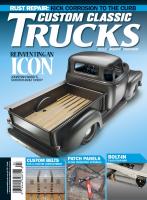
Reinventing an ICON - When Worlds Collide
Styles run the gamut in the world of customizing. We often see hot rods such as Boyd Coddington’s Chezoom or the ’54 Plymouth Sniper designed by Chip Foose and built by Troy Trepanier that bear little resemblance to the factory versions of the cars they were
created from. At CCT we’re all about touting contemporary upgrades to improve function, but in the case of the aforementioned customs, some people might ask why anyone would want to make an old car or truck look modern. Many looked perfect in their day. To each their own, but part of the appeal inherent to a classic is in the vintage aesthetic. Like Coco Chanel said, “Fashion changes, but style endures.”
When it comes to Chevy Thriftmasters and Advance Design pickups, many would argue they’re already styling icons in the world of classic trucks. In the case of ICON owner Jonathan Ward’s interpretation of a modern 1950 Chevy pickup, just by looking at the photos alone you are probably thinking it may be subtle, perhaps too
subtle. Truth be told, the muted paint doesn’t do this unconventional custom justice. We don’t have the space to cover all of the details that have gone into this truck, but we’ll do our best to get as many as we can.
Jonathan Ward knows his way around trucks. Jonathan started by doing restored and customized early Toyota Land Cruisers with his TLC brand, and later developed the ICON brand to explore alternate approaches to these fine classics, along with Willys CJ-series jeeps and early Ford Broncos. Having owned and restored a number of Thriftmasters over the years, Jonathan always loved these trucks’ overall appearance, but was never fond of their antiquated performance. That’s when he spawned the decision to do a modernized version of this series of pickups with all the trappings of a
contemporary truck.
After finding a ’50 Chevy pickup in desperate need of restoration, he began the laundry list of things he’d like to see inculcated into the redesign. Having worked closely with Art Morrison Enterprises, it was a natural choice for him to use one of their chassis as the truck’s foundation. Mods include four-wheel Wilwood disc brakes with a power-assisted ABS master cylinder, a 3.89:1-geared Currie 9-inch rear with 31-spline Strange axles, and JRI coilovers. It’s all sitting on 18-inch billet Circle Racing wheels and Nitto rubber. For power Jonathan chose to go with a 315hp 5.3L Chevrolet Performance E-Rod. You might think since this is an emissions friendly motor, that is doesn’t get up and go, but the Magnuson supercharger will ensure there’s no loss of oomph when you get behind the wheel. It’s all smog-legal, to which you may ask yourself, “Why bother? It’s an exempt truck.” Jonathan’s answer: “Because it’s
the right thing to do.” It’s all mounted up to a 4L65E trans, cooled by a custom Griffin radiator, and flowing out Art Morrison headers into mandrel-bent 3-inch exhaust and MagnaFlow muffers.
You may notice that the ICON Thriftmaster is noticeably absent of typical exterior mods you see on custom trucks, but that was the idea—keep it authentic looking. A Mar-K tailgate sports the company’s moniker by way of acid etched letters and features elbow hinges and release latches on the inside of the gate. When the original body was blown apart for the rebuild, it gave the team at ICON a chance to scan all the body panels into CAD software and have Premier Street Rods produce GM-licensed reproductions for this truck and the production models… but we’ll get back to that last part in a bit.
The Glasurit matte paint may seem restrained for a truck of this caliber, but ICON is all about performance, not bling. The underside of the body and inside floor surfaces are polyurea coated for noise/vibration reduction and durability. LED lighting throughout the truck can be found in the reverse lights hidden in the bedrails, turn signals hidden in the rearview mirrors, and license plate lights hidden into the rear veneers. The SLR gas cap embedded in the ash bed wood with nickel-plated stainless strips leads to a 25.6-gallon stainless tank. Extensive custom billet work can be seen in the badging, knobs, handles, pedals, and various other pieces throughout the truck. The custom deco-esque dash may look conspicuously bland, but in an effort to avoid a bunch of obtrusive switches and knobs, ICON has hidden the HVAC vents and touchscreen Kenwood head unit that controls the climate system, stereo functions, Internet browsing, navigation, Bluetooth, lighting control, and just about every other function you can think of. An ISIS electrical system powers it all and even serves as a mobile Wi-Fi hot spot. The gauges are Dakota units modified with some old-school flair. The Glide seat frame was reworked with Tempur-Pedic mattress material and finished
in American bison. The door panels, lining of the dense loop-pile berber carpet, and 16-inch custom-designed steering wheel that sits on an ididit collapsible column are also covered in bison. The Dynamat lined-surfaces will ensure you get good sounds out of the full Audison digitalaudio system.
Now back to that part about production models. You’re only going to see five of these produced in 2014 ranging in price from $235,000 to $260,000. Options include color choices in matte or gloss finishes, ride height, bed wood, an optional T-56 Tremec six-speed trans, and a normally aspirated or supercharged motor. Like rewatching Inception to fully understand the movie’s plot, you may have to reread this article to absorb everything that’s gone into this truck. It can be difficult to improve upon a classic without losing sight
of its old-time charm, but we think ICON has done just that without overlooking a single detail. Whether parked at a show or dodging cones on the autocross, this is not a catalog build, and when tailored to each customer’s tastes, we’re sure no two will be alike.
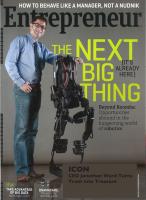
From Trash To Treasure
From Trashed to Treasured
Revamped rides: Icon's BR Series was inspired by the vintage Ford Bronco.
Luxury and ruggedness don't always go hand in hand, but they converge beautifully at Icon, a company that produces artisan-quality, custom-made rides out of scrapyard-bound vehicles.
Housed at an industrial complex in Chatsworth, Calif., Icon's headquarters stands out thanks to the dozens of beat-up, rusted Toyota Land Cruisers and Ford Broncos lined up in the parking lot. "They're our ladies-in-waiting," jokes founder and CEO Jonathan Ward. Each one will be transformed, via reverse-engineering and low-volume manufacturing techniques, into a fully customized vehicle.
Ward, a self-described "purist geek" when it comes to cars and design, founded his first brand, TLC, with his wife, Jamie, in 1996. A small automotive shop focused on restoring Toyota Land Cruisers, TLC led them to the idea for Icon, which has grown into a 28-person, $5.2 million business. Ward expects revenue to triple over the next three years.
Wanderlust and a wager inspired the restoration business. "During my travels, I saw that the more remote the terrain, the more people were devoted to their Land Rovers," he says. "I thought there had to be a much larger market." He started tinkering with the idea of quality restorations of four-wheel drive vehicles. Then, while attending a University of Southern California business extension class, another student bet him $1,000 that he couldn't increase demand for restored vehicles by improving the quality of the supply.
Ward took the bet. He and Jamie advertised their services in local auto-sales magazines, then traded their first restored Toyota FJ40 in exchange for design of their original company website. Soon Universal Pictures ordered five matching FJ60s for the movie Dante's Peak. In 2000, the Wards got another big break--a call from Akio Toyoda, president of Toyota Motor Corp. Toyoda had heard about the business and hired Ward to help with preproduction designs for what would eventually become the 2007 FJ Cruiser.
"The process left me yearning to see the prototypes as I envisioned them--hyper-engineered with unnecessarily cool parts," says Ward, who took the money from the Toyota contract and built the first pure Icon vehicles, tricking them out with top-of-the-line components, including LED diodes used in jet planes; windows made of skyscraper glass; and upholstery designed in partnership with New York-based Chilewich.
And for each customer, bespoke details: like the Wyoming cattle farmer who wanted the farm's brand featured as a design element. Ward's own ride--a 1952 Chrysler Town & Country wagon--still has a vintage shell, but under the hood is the engine of a 550-horsepower supercar, as well as an 18th-century whiskey bottle used as an overflow reservoir.
It's not just car buffs and Toyota that have taken notice of Icon. Ward is involved in a $1.1 million project with Ercole Spada, design chief of Aston Martin's original Zagato; he's also working on converting a vintage gas vehicle into an electric plug-in, with support from General Motors. In 2011 the Icon Bronco was named Car of the Year by GQ. Ward has even collaborated on car parts with designers from Nike.
Though Ward was initially worried about the high price point--models start at $108,000--the company's biggest problem these days is that some inventory is sold out until the fourth quarter of 2015. "Demand is far outstripping manufacturing capacity, and it kills me," he says. "I'm losing sales every day." He is looking at the best ways to raise capital and to scale (up to now, he has been investing revenue back into the company), and is hopeful for the passage of legislation that would establish a class of "low-volume motor vehicle manufacturers," allowing him to build cars from scratch, rather than salvage.
As for that bet, Ward says he never collected his $1,000--but he's OK with that. With Icon, he's more than proved his classmate wrong.
Written by Jennifer Wang
Entrepreneur Magazine 5/2013
Read more: http://www.entrepreneur.com/article/226303#ixzz2RDdeJlgj

Bespoke Ride
Forbes
Hand built in Los Angeles with a GM engine, military-grade hardware, and vintage Land Cruiser style, ICON’s are ruggedly masculine in the most civilized way. They’re also tailored to excruciatingly bespoke specifications - Builder Jonathan Ward considers everything from client’s height and weight to what kind of music they like – at the rate of fewer than twenty per year.
The FJ44 is Ward’s latest feat. Produced after several current owners requested something more family friendly (prior models lacked features like entry steps, interior lighting, and rear seats), it is ICON’s first foray into four-door territory.
This rig comes with a 350 hp, 5.3-liter V-8 engine (a 475 hp V8 and a turbo diesel version are optional); a five-speed, 4WD manual transmission (automatic optional); and 350 foot-pounds of torque. Expect to get 16 mpg off-road, with the turbo-diesel version getting 25 mpg. It will go an estimated 0 to 60 mph in 6.7 seconds.
Inside are Learjet-sourced sun visors, a gun-safe locking console, and rubber plugs that are removable for drainage. Each of the four seats is coated with marine vinyl; the windshield can be dropped to the hood for maximum clearance.
It’s the antithesis of the gilded, suburbanized SUV, although it costs much more. Call it quintessential style for conquering the green hills of Africa-or the back 40.
Hannah Elliot
October 2011
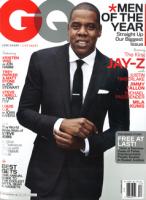
GQ Car Of The Year
-Best Stuff-
Car Of The Year!
The Bronco’s Back. You Got a Problem With That?
We’re constantly saddled with remakes no one wants: the 2002 Ford Thunderbird, say, or the Footloose redux. But for years we’ve been jonesing for a revived version of the original 1966 Ford Bronco. Thanks to Icon, an LA-based boutique manufacturer of industrial-grade SUVs, it’s back and more beastly than we remember. The body panels come from slightly worn vintage Broncos, but the rest is all brand-new, including axles from a military supplier and the 420-hp V-8 engine. The cabin keeps with the utilitarian theme: You stare at gauges inspired by Bell & Ross’s pilot watches and sit on woven Chilewich vinyl because, as Icon founder Jonathan Ward says, “Leather doesn’t last for shit”. The result is a reincarnated Bronco with the original’s fuck-you ruggedness racheted so high, you’re not sure if you should drive it to the beach or the front lines.
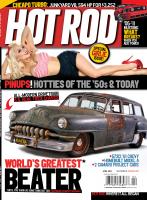
World's Best Beater
You know what’s wrong with this car? The cupholders suck. Aside from that, this is the most well sorted example of a new-car/old-car rat cruiser mash-up we’ve ever driven or ridden in. We know that because owner Jonathan Ward of Icon 4x4 proved not too bright by loaning us the thing for a week of our normal routine: the 15-mph crawl to work, the drop-in at the Bob’s Big Boy cruise night, the trek to the Pomona swap meet, and so on. Every moment was a joy. That’s because of the Art Morrison clip, the 6.1L SRT8 Hemi, the six-speed automatic trans, and a nice interior that’s loaded with tunes and air conditioning. Yet as we’ve learned so many times, hardware alone does not make the car. In some cases, even an assembly of great parts can be lackluster, but here it all just fell together to perfection in character and experience. The thing even smells right. It’s also great that it isn’t a ’50s Chevy; it’s a ’52 Chrysler Town & Country wagon with a ’52 DeSoto front clip.
Virtually no one knows what it is, but everyone sees it coming, and it wouldn’t be so appealing if it didn’t have the kind of patina that money can’t buy. It’s got that perfect combo of surface rust, burned paint, and slightly pocked trim while also being totally complete and not punched in or laced with rot. Still, patina is just decay until it’s stuck to an excellent car. Which this is. Jonathan’s goal was “to create something respectful of the original design values, to keep the brilliant patina, and to hide a modern chassis focused on modern performance and utility. More of a wabi-sabi style influence illustrated on an automotive platform.” Wabi-sabi is a Japanese worldview that seeks beauty in the imperfect, the simple, and the modest. The car and the wabi-sabi aesthetic reflect what seems to be a growing trend in hot rodding: the rat machine and rat cruiser. Though the label rat stirs enormous conflict when applied to a hot rod-ish build, it’s a common term now and is creeping into the world of ’50s through ’70s cars. We’re starting to see more beater muscle cars and earlier, bigger cars with patina and sometimes full-on rust sitting on good suspension and drivetrain hardware. The most expensive part of building a car almost always comes down to bodywork and paint—what if you just ignored that and concentrated on the rest of the car, even if the exterior was an eyesore? The Derelict, as this ’52 Chrysler has been named, is a rat cruiser done perfectly. It handles well and has enough power to do burnouts all day long. The brakes work perfectly, it’s easy to drive, it’s comfy, and the creature comforts are great. The latter two were especially appreciated during our one-hour morning drive and the hour-and-a- half trip home (29 miles . . . we don’t get it either). Since there’s no radio receiver, we couldn’t listen to the talk radio that normally puts us in a bad mood to start the day, but an iPod hooked to a Parrot controller had us rocking out. The Derelict has the stereo components to crank, and the sound is great. The stock seats were reupholstered in original materials and are super relaxing, the enormous steering wheel has just the right amount of assist and, unlike in most hot rods, everything works except the ancient AM radio. One of the things that shocked us the most is that the wind noise is very low, and there are no squeaks and rattles. The gauges all work, but we initially questioned the fuel gauge because it wouldn’t move off of “Full.” Then we remembered that the car has a huge, 40-gallon fuel tank, so you could drive this car from Los Angeles to Vegas and back on a single fill-up. The doors close with the solidity of a Mercedes, something we’ve
never been able to accomplish on any of our personal cars. For three years we had a daily-driver 5.7L Dodge Magnum with a bunch of bolt-ons that ran mid-13s in the quarter. The Derelict, with its 425hp 6.1L Hemi, shoves a bit harder. It feels like it’ll run with an SRT8 Challenger, which isn’t surprising, as it’s the same drivetrain. The Derelict is a cruiser,
not a race car, so we didn’t drift it or dragrace it, but it runs really strongly and we’re completely sold on the Art Morrison chassis parts. The Derelict rides beautifully, the tires don’t rub anywhere, it never bottoms out, nothing clanks in the suspension, it handles well, and the brakes work like those in a new car. There just ain’t nuttin’ wrong with the
chassis and drivetrain. But the best part is that the ordinary, Camry-driving public doesn’t look twice. If Los Angeles drivers think about it at all, they expect to see gardening equipment in the cargo area, not computers and camera bags.
Drive a bright-orange ’69 Camaro down the freeway and you get thumbs-ups all day long. Not this car, and for that we like it. It’s subtle. But the car guys who get it nearly crash and burn trying to tell you it’s cool. Which is not to say that there weren’t a few things we found on the car overall that aren’t perfect. The steering column has a bit of shake in it at about 70 mph. Freiburger doesn’t like the placement of the drive-by-wire gas pedal and dead pedal, but Kinnan had no issue with it. But, most objectionably,the cupholders really do suck. They won’t hold our favorite tasty morning caffeinated treat in a Super Big Gulp cup. We feel like the staff of Motor Trend right now. Before we got the Derelict, Jonathan wheeled it to Vegas where it was displayed at SEMA, then drove it home. We put probably 300 miles on it without a single problem or driveability issue. We’d have no more fear circling the country in this thing than we would any new car, and that’s exactly what we want in a daily driver—no question as to its reliability, no tense glancing at the gauges to make sure nothing’s failing or running hot. The fact that the Derelict is one of the neatest looking cars you’ll ever see on an L.A. freeway truly makes it perfect. We honestly didn’t want to give it back.

An Everlasting ICON
ICON
For some, a vehicle is just a means of transportation, and for a select few - it’s a passion. Jonathan Ward founded TLC back in 1996, a restoration and upgrade outfit dedicated to the passionate 4x4 community and owners of the classic Toyota Land Cruiser (FJ 60,62). In 2008, Ward created ICON, offering a turn key solution for fans of off road vehicles based off the vintage Bronco and Jeep silhouettes, with high standards for performance, aesthetic and custom builds. With just over 100 units built and sold since 2008, a wait list of 12-20 months, and a cost of 100k plus … these rare vehicles are available for a select few. I sat down with Jonathan Ward to find out what makes him tick, and hear more about ICON's most recent cars DERELICT (classic car bodies with upgraded chassis and power plants), and what the future may hold for this innovative company.
“It’s almost more interesting when less people get it but get it at a deeper level, to me that means so much more”
JP: So, what I’d like to start by asking is what were you into as a teenager; I know you are a car guy, but is there something that would surprise me about what you were following or you were into?
JW: Well, the only interesting thing or on a surprising level, was when I was growing up in New York City, in the 80’s and it was all about the video game craze, so I was major video game whore as a kid and I lived right off Times Square on 45th between 8th & 9th, and my school was right at the southwest edge of central park so I would always walk or unicycle, skate or whatever back from school and hit the arcades if it wasn’t Matinee day or I had to go to work. So definitely an arcade kid.
JP: Were you a quirky kid, you mentioned a unicycle, I don’t think I’ve ever known someone to ride a unicycle before?
JW: Yeah some what, I was never a kid’s kid, I was never very good at being a kid, I had more friends that I think were more adults or outliers than kid kids and any of my efforts to do kid things like, little league or football or boy scouts or whatever never panned out. I literally got kicked out of the cub scouts cause I asked too many questions. But I think ever since I can remember I was always drawn to design and tactile, I was the kid taking stuff apart to figure out how it worked, and occasionally putting it back together to see if it was still functioning, or altering it and putting it back together. I’d always be looking or scanning the shape, the texture, the material, the technology, etc. I’ve always had a very perceptive value in that regard and like, always thought about how do you repurpose or repackage or combine different aesthetics or approaches or technologies in a new way that can create something that interests me. So cars were just, natural and my dad was a car guy, and my granddad had a tiny tiny small town used car lot and repair garage around World War II in Chesapeake Virginia, so we were somewhat of a car family. I always remembered seeing on road trips with my family in Maryland before we moved to the city long trains of cars going to car shows or whatever, and always being sort of drawn to that romantic ‘where are they going, what year is that, what is THAT’ all the shapes and colors. Then when I moved to southern California when I was 15 it was game on, because their cars were such a part of this culture, and you could get your license at 15 ½, and I was like I’m staying here I’m not leaving this joint. So yeah I either formally studied lightly or just being an inquisitive sort, done leather work, tooling, wood working, furniture making, sculpting, mostly painting oil on wood and sketching between all that and being somewhat of an extrovert, cars sort of organically were a realization to me of so many different arts and sciences all together in one cohesive. And that was another unique challenge, how to address so many different elements in a design language that worked together in chorus, compounded further by my interests in grabbing from aircrafts or military or marine or architectural and making it work. Cars were sort of the logical ultimate combination of so many different parts of one platform for me.
JP: Did you mention your father or your grandfather had a shop?
JW: My grandfather
JP: So what did your father do? What sort of influence did her have on what you became?
JW: It was my mom’s dad who had the car garage, my dad’s dad was a crabber in Chesapeake Bay as was his dad. My Dad went to the coast guard and then went to law school - he was a corporate maritime lawyer - but always had a succession of cool cars before the money pit called children showed up. So stories and photos of him and 100-4 Austin Healy or whatever would have been his Citroen; I always thought that made my dad a little bit cooler and so he always shared that appreciation with me but didn’t have the financial bandwidth to emerge in it to the depths that I have been able to - I mean I don’t have the financial bandwidth either but managed to build a brand around my passion and my clients end up enabling me. If I didn’t need clients that would be just fine with me, not that I dislike them, I’ve been blessed with great clients but for me its about the process and realizing the vision and creating it and the clients are kinda just an unnecessary tool to do it, I spend most of the time trying to talk clients into crazy things I want to build rather than maybe what they wanted to build.
JP: So walking around your plant here, I noticed there’s a big emphasis on 4x4, where did this come from?
JW: Well, I used to travel a lot, I still kinda do but I’ve got a lot more responsibilities now, but I used to travel like two months a year all over the planet, and I noticed that the more remote the local the harsher the terrine the more their lives depended on it, people were incredibly committed to their Land Cruisers or their Land Rovers. Even at that time in my early teens I’d already restoring the hell outta things and had a bad habit of restoring them too nice then you had to tip toe around them, you could hardly use them, and I wanted something just for dogs, surfing, camping, fun just to flip flop, just a beater, so jeeps were a little too expected and I was looking more for the freaks and the geeks. So from my travels I became really fond of the Land Cruiser and really grew an understanding of their brilliance and focused purpose and utility and design, down to the last bolt, so far and beyond everything else that I bought one and dialed it in and it became a slippery slope and I kept taking it apart, but it really started I guess, the short answer would have been for my own utility needs, but then the business opportunity I saw when we started. Jamie (my wife) and I hated our careers and I had a bet in a business class at USC about supply and demand, that I proposed supply and demand is B.S, if you can control and ideally reposition the supply you can create the demand and turned it into a 1000 dollar bet to shift a market in a timeframe, so I originally went around and bought every FJ40, for 6 or 8 months and chipmunk them away and using my resources in my still hobby-budding car-business, started dialing them in and returning them to market to try and win that bet. Won that bet, they never paid up but I realized there was sort of some brilliant simplicity in the premise, at that time at least no one was properly restoring vintage utility vehicles, $600 paint jobs, chrome rims, get them running and that was all people were doing and I kind of sensed there would be a much larger market that wanted to embrace them for their original design value, if only someone would simply apply quality restoration skills as were being applied to two wheel drive, so that’s when we started the TLC brand and it was all Land Cruiser based, so when I got a little bored with that and got a little more and more into engineering and evolving and realizing within the confines of TLC we were kinda hitting our heads against the ceiling of the roof that we had created by that definition and looking at new technologies and techniques, we needed to yes stay honest to the silhouette but grass-up-redesign the whole thing to get up the level that we needed so we just started with the FJ cause that’s where my heart, my experience and branding already was and had Toyota support, but really before that I just designed in cars that I dig, whatever from the 30’s to the 60’s for the most part. Now with ICON the standard sort of production models are yes, 4x4 utility vehicles until the THRIFTMASTER (vintage pick up truck) which is two wheel drive, but from here forward I don’t think I’m going to add any more 4 wheel drive to the basic menu, they’ll be on the specials or whatever but I think we have the ground somewhat covered and I’m wanting to evolve into a wider range and get into two wheel drive passenger. And the other thing from the marketing front that always made no sense to me, a lot of people before the brand people understood the ethics of the brand were resistant to the price point because they were like ‘Oh but it’s for the four wheel drive, you know it’s for the Hamptons or the cabin - I’m really not bothered it’s not like my daily driver’ so it was less important to them without them having the understanding of the demands on an engineer and content cost and rigidity and quality cost for a four wheel drive is heads above two wheel drive, so like ok why argue that then, come out with two two wheel drive models that’ll be a lot easier to make at the same price point menu, it’s better business and you’ll see you’ve noticed that most of the one-offs, the Derelicts and Reformers have been passenger cars.
JP: So speaking of Toyota, I read somewhere that you had a hand or some sort of responsibility in the FJ cruiser that came out in the mid 2000s, could you tell me a little bit about that?
JW: Yeah, basically with growing the TLC brand eventually Toyota got wind of what we were doing and thought we were lunatics but we started doing some builds for employees of Toyota, officers of Toyota, dealers of Toyota etc, and one day like out of nowhere I got a call from Mr. Toyota’s office, I didn’t even know there was a Mr. Toyota but ok, we took the call seriously and he wanted to come down and visit the shop. It was like God coming to the church and he came, he was a wonderful man and toured the shop and wasn’t very forthcoming about why he was there rather than trying to really understand the culture cause it was so foreign to Japanese tradition and maybe a week later his liaison came back to us and presented the concept and we’d already been doing some trade with Toyota Brazil - or trying to - I’d been travelling down there, like banging on doors cause they had cool stuff that was discontinued in the US decades ago, just sitting there rotting on the shelf, so I was trying to lobby them to let me get in, that had gotten back to him so they came and quite simply said with your understanding of this demographic and the vehicle and the culture would you build us sort of a concept vehicle, or design study vehicle that would be your take on if we were to do a FJ40 today, what would it be. It was one car in and it turned into about half way through they requested two more variations on it and we delivered all three and they voted on it, the board votes on it and they pick their favorite then they take it to Calty, their in-house design studio and then they turned right and changed everything and that was kind of the impetus of ICON because I’d already been cooking up my own vision of if we redesigned our own version of the FJ40 what it would be like and then I altered from that vision to Toyotas priorities and then when the FJ cruiser became what it is today I felt it went in a different direction and it lost the clarity of purpose, intent and design and utilitarian value and became more of an anime retro which seems to be common with modern car designers so, that’s when I went back to Toyota and said hey we have a new idea for this new brand and we want to call it ICON and its going to be about celebrating great transportation design of the past but revisit it in a modern context, its never going to be about “look what a horrible job Toyota or Ford did and look how brilliant we are” so we wanted to make sure, be somewhat brand agnostic, but be promoting their heritage so that they would hopefully see free valuable heritage marketing value and not squashing us. Got Toyota’s blessing and then set out to build the FJ to my vision and that’s where that all started
JP: The Derelicts line I find to be one of the more impressive things you appear to be working on, a lot of people would use the term resto-mod. What do you think of this term, and how would you accurately describe the Derelicts line and what it’s all about?
JW: Well I think our industry, worse than most, but like many, their so stuck in traditions and stuck in ruts for better, or worse, but often I think because people are afraid to pioneer or try new approaches or evolve, or maybe its nostalgia or misunderstood, I don’t know what it is. You’ve got rat rods street rods, hot rods, you’ve got concourse stock and all these sort of defined areas and spaces but, to me I don’t like when people chop and modify and flame and smooth out and trim because those details, if your talking about the right car in the first place will have made that car magical and evoke that sense of time gone by and those details are where the magic is, but at the same time from my own experience, building my own cars and loving classics I just hated the way they drove, I finish one and within three miles, I’d be like forget this, the steering is wrong, it doesn’t stop, it’s stinky it leaks all over the place, you can’t get on the freeway and everyone else is driving with modern car expectations and you can’t anticipate their stopping distance and it doesn’t meld. I was also worried on another level about the relevance of classics in that, I think the market was somewhat dwindling because people had less and less of an attachment to them in their own personal history and you further compound that by dissociation with the archaic mechanical relationship and that further alienates people who would embrace the market, vs. resto mods or hot rods usually there’s no synergy in the design or the engineering or the content and then they are what they call catalogue cars with bits and pieces and mods and sacrifices and kind-of-sort-of’s but then the end result was still so far lacking, so to me it was step back big picture, my way, for better or worse, why don’t we take the best new engine from the best new vehicles, why don’t we do ABS brakes, why don’t we do coil suspension and then studying all these convergence of all these new amazing resources in the last 10 years, you know this business would not have been viable 10 years ago even, with the convergence of reverse engineering and low volume manufacturing, prototype tooling and all that, I just thought there was room to evolve that market and approach it from a different perspective, so the best of the new with the aesthetic of the old. Derelicts is the most evolved obtuse version of that and a lot of people totally don’t get it, I mean I get stopped in Derelicts all the time and people are like ‘that looks good, how’s it coming a long, what color are you going to paint it?’, no you don’t get it I’m done, ‘no, like red?”, and I’m like no I’m done, but there’s something perverse in me I guess that’s probably bad for business that, its almost more interesting when less people get it but get it at a deeper level, to me that means so much more. And the Derelicts, I think like any of our works are like onions, I mean the more you look at them you peel back the layers, I mean we have clients that have owned an ICON over a year and call me or text me and notice something they hadn’t noticed before, like so many design driven products or modern cars they are a shadow of their former self, they are a marketing campaign of their heritage, it looks like the machine turned, stainless panel of that brands yesterday but then you actually engage with it, it’s all a veneer, it’s a scrim, so I wanted to merge the best where it matters and how you interface but keep to the tradition of the aesthetic and the tactile interface components and stuff like that, but that’s the big fun, the big challenge of them, is finding how do you integrate an iPad mini retina into the dash of a ‘37 Lincoln Zephyr without jumping the shark and just ruining the whole thing, so I love all those challenges and the diversity of Derelicts that we’re doing for clients and the Reformers to a greater extent and that we re-design many of those details and knobs and switch gears, I mean it’s again selfish, it’s like a customer funded think tank, or skunk-work, so the more I can talk them into doing the crazy things I want to do, the way I want to do the more we expand our teams capabilities and understanding, relationships with new brands, suppliers, probably the worst business of what we do but far become my favorite, Derelict and Reformers.
JP: So looking at the Derelict line, even looking at the ICON line, it seems like a natural evolution, would be to see an electric power plant at some point?
JW: Totally with you, certainly. Baby steps, most of the ICON’s come with, if we’re running a 2014 motor, will support the 2014 fuel emissions through the sealed gas tank systems, so that’s something that our core industry looks at and thinks “What are you nuts, why are you doing that, why don’t you put a carbureted big block in it”, and I’m like forget carburetor’s they suck, fuel injection rocks, if your going to do fuel injection your going to do an OBD2 or can-bus or modern electronics, your not suffering any added components complexity or much cost its logical and right to just engineer all the emissions into it as well. I have been making various approaches to Elon Musk (founder of TESLA motors) and have yet to talk to him personally and directly, but as of today I would love to be building Derelicts for example with the Tesla S platform underneath it, it would be a home run.
JP: Do you mind if I put that in?
JW: Go for it I want him to find out. To me I think that if they could hopefully understand the brand value for them to do something so free form, artistic and creative, my customers would gobble it up, we’ve thought about some of the four wheel drive platforms and had been very close to partnerships with firms to do such, but frankly yet to find the partner that I have the right level of confidence in to bet the farm on it. I think the interesting thing for us is that we don’t have the challenge that the big companies have of established relationships and worry about negating the relevance of the main product line by doing EV [Electric Vehicles] or anything like that, plus I pay so much for exhaust, fuel, engine, transmission, and all of that at my level on manufacture that cost wise to offset to go electric cause your negating so much complexity and so many systems we could very quickly I think make a cost effective argument to do so, but serviceability, service network has been a big limiter for our concern cause our clients are all over the planet, secondly the rolling mass and the wind resistance of these toasters that mostly we build has been a limitation as well. But yeah, I’m dying to do that. Hybrid not so much, I think hybrid is a marketing ploy BS stop gap; you’re doubling the complexity and the content of the vehicle by ensuring its in the landfill that much quicker, that I have no interest in but electric or series electric diesel free utility apps, because then you get where your going -- you power down the vehicular element, you power up the diesel and you’ve got a 15 18 22 KW remote generator that’s utility enabling and starts to speak to me again, but we’re just too small fry to think we could engineer that on our own properly, so we’re just sort of seeking the right partnerships to make that viable but Tesla, my goal. Or Bob Lutz’s new venture.
JP: My final question is, about television, so reality TV has seemed to focus a lot on car restoration and car builders, has that had an impact on your business in any way?
JW: Yeah on a couple of levels, that was prior industry, entertainment, so I’m not the typical car garage owner that when the production company calls it’s like ‘Omg I can be on TV’, so I don’t want to be part of that discussion whatsoever.
JP: How has it affected the demand on what you do?
JW: I suppose the mainstream visibility of custom car culture, we have benefitted from to a certain extent. The one that irks me the most though is, and its happened several times in fact in my career we have fired two clients ever, and both clients fall into this category, go well ‘I saw Chip Foose on his show, he did it in two weeks!’ and I’m like are you kidding me, have you seen those cars a week later? They are aerosol-duck-taped-bubble-gum papier-mâché-cluster****, just a train wreck… and the other thing is literally maybe weekly we get approached to do those shows, I think if my priority is being a “celebrity” and selling an ass-ton of t-shirts then great, otherwise I take this brand so seriously and I really want to position the brand to have long term relevance and standing, not to sound arrogant but to the extent of Bugatti, the very few storied automotive personalities and brands that held the line and it was about quality and it was hold our perspectives and our priorities at whatever F’n cost, even for the sake of the P&L, that decades forward, someone sees that vehicle and someone will go that’s an ICON and they will know what that means, that’s where my heart is and that’s what’s important to me, and I think if you do those shows your asking for a spike and a drop, its an accelerated cycles of empires scenario, and they want to infuse drama and I’ve spent 18 plus years building staff, thirty three employees now… that’s not about that, its about vision and teamwork and quality and pride. And I don’t want to disrupt the culture for that, so we are thinking and in talks about developing a show with a dear friend that I trust with that my vision and that show would be the greater picture, what we call the makers movement, the resurrection of craftsmanship but not reality and not transportation just bigger picture around the world, with the visibility I’ve gained with this brand, the amount of people that, like yourself, that we’ve met that had a vision and stuck to it and executed it is mind boggling, so much phenomenal shit out there nowadays.
Words by JEAN-PIERRE MASTEY
All Photographs courtesy of ICON
2011 Style & Design Issue PERFECT THINGS
The Retro Jeep, Perfected
Like most mechanical geeks, Jonathan Ward sees beauty in a well-designed tool. Unlike most geeks, Ward seeks to perfect them. His ICON CJ3B is a bravura reimagining of a 1953 Willys Jeep, designed to withstand not just off-road rigors but also time itself. The CJ3B shows unwavering commitment to function, from the custom steel frame to knobs and badges from aircraft components machined and enameled by hand. This fantasy CJ lives for boulders and mud, yet some inspiration traces to spiffier locales: Ward spotted the body's powder coating on Frank Gehry's Walt Disney Concert Hall, and the vinyl for the seats and roof in a suite at Wynn Las Vegas. [from $78,000; icon4x4.com]
September 2011
Off-Road for Connoisseurs
Perfected FJ
More reboot than restoration, Icon’s latest take on Toyota’s rugged FJ40 Land Cruiser is a prime example of founder Jonathan Ward’s obsession with perfection. The newest model, the FJ44 is what you’d get if Land Rover had continued developing the FJ40 after Toyota pulled up stakes in 1984. Every aspect has been improved, from the thick, box-section frame, to the GM 5.7-liter V8, to the meticulous interior details (machined aluminum dash knobs and even heated seats) and a body stamped out of aluminum so it won’t rust. It drives more precisely thatn its utilitarian design suggests, thanks to four-link coil-spring suspension, and the thick cloth top does an admirable job of quelling road noise. Forget the creature comforts, the mechanical click of the gearshift, and the woven Chilewich carpet, and you’re left with a beastly off-roader. The Atlas transfer case and ARB locking diffs permit manual control of torque distribution, and there are tractor-like approach and departure angles. Who’s game for a road trip up Kilimanjaro? We can only hope the affluent buyers (it starts at $150,000) won’t be shy about soiling this off-road tribute.
Written by Larry Webster

Wanted
What's better than a rugged old pick up? For us, not much. Unless, of course, that rugged old truck sits on modern underpinnings and comes with upgraded styling. And so we have the ICON Power Wagon D200, a creation spawned by Jonathan Ward and his customization company, ICON. The D200 is ICONs first truck, and it's a beast. Based on a 1965 Dodge crew cab, the D200 is equipped with a modified chassis and the mechanicals from a 2007 Dodge Ram 3500, modified by diesel-tuner Banks Power. Equipped with a 4½” lift and Kore Racing suspension, Fox 3.0 reservoir shocks, and 37-inch BF Goodrich All Terrain tires, the D200 is meant to be worked hard. Custom machined mirrors along with updated trim and new tailgate latches make it a looker. The leather interior using native American Reservation free-range Bison might me over the top, but, yeah, we’d probably brag about our Buffalo seats if we had them. The price is sure to be ridiculous (ICON FJ models go for well over $150K), but even if money were no object, the D200 is a one-off. That lucky owner has our eternal envy.

Drivable Art
http://pursuitist.com/wp-content/uploads/2014/02/A-Conversation-with-Jonathan-Ward.jpg
Drivable Art: A Conversation with Jonathan Ward, CEO of ICON 4×4
By Susan Kime in Auto on February 3, 2014
Jonathan Ward’s work is unusual, expensive and his products are not for everyone. It is also certain that not everyone remembers with great affection, the grille of a 1952 DeSoto, or a 1959 Chevrolet Parkwood station wagon, and can be enchanted by the colorful, nuanced character of rust stains on old cars. But for those who do and can, and who dream of driving their grandfather’s old Willys Jeep, or MG-TC, or a 1960 Aston Martin Roadster down the road, into the sunset, Jonathan’s vintage design aesthetic and his company, Icon 4×4, is worth a second look. He sees great design in vintage vehicles, and has re-created the feel, sense, touch, life to cars that many of us remember only in daydreams, or in back seat memories of childhood and adolescence.
We recently interviewed Jonathan, and asked him about the root systems of his ideas, and how he came to be doing these vehicular recreations, making visions of the past the actual driving realities of today.
Pursuitist: Because you work is such an unusual, niche field, we’d like to know were you born and raised, and where were you educated?
Jonathan: I came from Maryland… and my education was sketchy. I never quite fit in anywhere. But there was a kind of car geekiness in my family – My dad and my grandfather always loved old cars. I did some design work on a corporate level, but I always loved to do my own work, create my own designs. So my wife and I decided to go into business for ourselves. And was in 1996. We started TLC in 96, and ICON in 2007. For simplicity’s sake, you could stay we opened our business in 96.
Pursuitist: When did you realize you had an attraction to cars and trucks of the 40-60′s and wanted to replicate, yet renovate one?
Jonathan: It was more than that – I wanted to re-purpose vintage cars with modern internal parts – sort of vintage on the outside, modern on the inside. I wanted to be true to the original exterior design aesthetic also. I didn’t want the dashboard of a vintage car to scream MODERN everything, I want the interior to be subtly contemporary, but with an overriding feel for the period.
Pursuitist: So you are more of a vintage automobile architect?
Jonathan: Yes – as you can tell from Victorian or contemporary homes, the interiors of those homes often have the feel for the period, with colors, textures, materials, and furnishings of the period, but they also have contemporary conveniences and integrated technologies also.
But there is more to this: I have always seen the details of a vintage automobile – the window handles, the nuts and bolts and leatherwork and steering wheel design, are small works of art that enhance and power the whole. You can also see a power train or engine as a work of functional art. It is a kind of art that makes a car move, but with a certain way of seeing, these are works of art nonetheless.
Pursuitist: After reading about Icon and its work, I am curious about your abilities as a structural and/or a mechanical engineer. Did you grow up being able to fix things? Do you know how to rebuild an engine?
Jonathan: Yes, I can fix things – I can fix things around the house, and fix moderately complex car issues under a hood. The complicated things, well, that is why I hired the mechanics and engineers I have. I can eventually get it done, but they have more evolved skills than I!
Pursuitist: Let me know one of the more interesting stories you have done in the rebuilding and revivifying an automobile.
Jonathan: Revivifying is a good word, because that is what we actually did. A client came to us, and told us that one type of Aston Martin – in 1959 – was going to be built, but it never got beyond the drawing stage, actually a sketch, due to some manufacturing arguments. The client wanted us to create a ‘59 Aston from that sketch. So, we bought a modern Aston for its V12 and electronics. We then scratch built an aluminum body and steel frame, to create the DB4GT Zagato Barchetta. It is now finally being built – by us, not by them. It will be beautiful… and no arguments! We collaborated with the original designer, Ercole Spada. Quite the honor.
Pursuitist: You did say that ICON builds a custom, bespoke vehicle around the body of the customer’s choice. I’d like to know at least three different kinds of requests you are working on now, if possible.
Jonathan: We are working on many, but these three are really diverse: We are taking a Volvo P1800ES Sport Wagon, an early production 1965 P1800 coupe, and infusing its design elements into the 1973 wagon version, with modern drive train and chassis.
Second, we have a 1950 Buick Roadmaster convertible and are running a custom chassis, with a 2014 Cadillac CTSV supercharged V8 engine inside, with paddle shift auto, and an IPad integrated into dash (hidden under a panel.) Vintage distressed leather interior, Filson canvas roof…
Third, we have a 1965 F250 Ford Crew Cab pick up truck, built on a modern Ford Raptor truck platform, appearing stock and vintage at the same time.
Pursuitist: And what do you drive yourself?
Jonathan: I drive a vehicle that combines the body of a 1952 Chrysler Town & Country wagon with the front-end of a 1952 DeSoto. It is one of the vehicles in our line we call the Derelict. The philosophy behind the Derelict models is basically a vintage body structure re-invigorated with a modern chassis and internal machinery. The Derelicts are made for daily use, and their rust patterns – often quite beautiful – remain as they are. There is a Japanese view taken from a Buddhist teaching called Wabi-Sabi, which means an acceptance of transience and imperfection. This seems to describe our view of Derelict vehicles — a deep appreciation of the integrity of natural objects that have patterns of imperfection brought about by time. A few examples we’ve worked on are a Chevrolet Skyline DeLuxe Coupe, 1952, a Dodge M37 1952, a Lincoln Club Couple, 1946.
Pursuitist: And you have another line of cars, called The Reformer. Where did you get that name, and what type of vehicles are in that line?
Jonathan: My wife thought of the name, and it seems to fit our concept quite well. These are substantial restorations, the chassis’ and under-hood machinery is all modern. These are classic designs. Examples? An Aston Martin DB4 Zagato Roadster, 1960, Toyota land Cruiser FJ 40, 1962; a Willys Jeepster 1950, a Willys CJ3B – 1946, 1965 Dodge D200 Power Wagon Crew Cab.
Pursuitist: And what is the price range of these iconic ICON vehicles?
Jonathan: The production models run between $145-265,000. The one-off creations (Derelicts & Reformers) run between $200,000 and a million.
Pursuitist: What are the challenges you face in the creation and modernization of these vehicles?
Jonathan: Probably the major one was the aftercare of the vehicle. In the Keyport is an 8G memory that explains every nut and bolt in the car, where it came from and how it fits into the whole car frame and internal systems. So that if there is a problem, the mechanic – whomever the owner chooses — can see immediately what needs to be done. It has to be said that with all that goes into the car, ten years ago the tech solutions for these sorts of creations were not in existence yet. Now they are.
Pursuitist: How do you find Vintage cars, old grilles, old parts?
Jonathan: I hired three car hunters who search online and in backyards. We have met them over the years, starting as friends of the brand. One is an architect in Aspen, another a construction worker in Texas, and a student in Utah.
Pursuitist: The general deeper subtexts of luxury are often defined as scarcity, legacy, worth and the reality of perfected craftsmanship. The ICON brand seems to exist within those terms, but there is something more, something beyond showing what you own. Do you know what else attracts buyers to the brand?
Jonathan: I am not sure our buyers are buying our cars for showing off purposes. They like to have something that very few others have. Many have gone through the Ferrari, Bentley, and Maserati phase and have gotten over it. And even though our vehicles are expensive, sometimes as much or more than a Ferrari, they come to us because they remember a car that they knew in childhood, or that a beloved relative had – they loved the design of it, the feel of their remembered childhood when inside. They seem to sense a remembered aesthetic bond to the design, and they are grateful we can allow them to drive a work of art and symbol of the past that has personal meaning, personal memories for them. I also feel we are creating drivable art, something that outlasts trends in style, and that are built to last for decades.
Sema
With support from Chevrolet Performance and other key SEMA partners, ICON is proud to debut the new ICON Thriftmaster Pick Up on the SEMA Technology Center Booth at the 2013 SEMA show in Las Vegas. Inspired by the 1947-53 Chevy 3100 five window classic pick up, this modern iteration is ready for adventure.
Make no mistake, while the look is vintage, the drive is decidedly modern. From the chassis engineering refinement, fuel injected supercharged aluminum emissions equipped V8, ABS four wheel disc brakes, to the sophisticated electronics, this truck has no peers.
ICON is a niche automotive brand based in Los Angeles, focused on revisiting classic automotive designs in a modern context. We celebrate the history while infusing the best state-of-the-art content, to create unique daily drivers rich in character and distinction. This new ICON will be built by hand in very low volume along side our other offerings; including the ICON Bronco, FJ series, and CJ series resto-mod vehicles.
This first, “Ultimate Edition” ICON Thriftmaster, comes in your choice of body color (matte or gloss finish), with your choice of manual or automatic transmission, naturally aspirated or with an intercooled supercharger. Otherwise, it comes one way… loaded. Standard equipment includes four wheel disc brakes, A/C, PW, PDL, Wi-Fi Hot Spot, Web-enabled Kenwood and Audison digital audio, NAV, tilt column, copious insulation, Bison hide seating, Wilton wool carpet, Alcantara headliner, smoked glass, and innovative brushed nickel plated trim with aircraft ceramic clear coat.
The performance and refinement is astounding. Never before has a classic pick up managed such comfort and handling. With approximately 435HP, there is plenty of power on hand. With Wilwood oversized disc brakes at all four corners, 60-0 is equally impressive. The Platform specific Art Morrison chassis is unparalleled in its balance and handling characteristics.
For 2014, ICON will build only five Ultimate Thriftmasters. Each will be signed and sequentially numbered. Pricing will be in the $220,000-250,000 range.
The matched ICON E-Flyer electric bicycle is a special edition collaborative effort between ICON and E_Tracker, available now as well. For further details, please contact ICON.
PR Contact On Site ICON Contact
Dan Weikel Jonathan Ward (CEO) 818-232-1923
IBP Media jw@icon4x4.com
Mobile: 818-324-3857
dweikel@ibpmedia.com
www.ibpmedia.com
Key SEMA Supporters
Chevrolet Performance Art Morrison Enterprises Glide Engineering Vintage Air
United Pacific Dakota Digital Kenwood Audison
Real Steel Greening Auto Company ISIS Magnuson
Autonet Mobile
Why Old FJ’s Never Die
By Jerry Garrett
The New York Times Sunday 2/06
Jonathan Ward and his wife, Jamie run a time machine. Their shop, TLC is where fanatically loyal Toyota FJ owners bring their tired, rusted-out, crunched-up Land Cruiser. The Wards turn back the clock and make the FJ’s new again.
“We discovered a whole marketing that was waiting to be serviced,” Jonathan Ward said in a recent interview.” “We can make them 100 percent new again, make them better than new with modern parts or we can make them an all-new vehicle from scratch.”
The Land Cruiser has a special place in Toyota history. In the late 1950’s, when the Japanese company entered the United States market, is only car was an underpowered, poorly made sedan called the Toyopet. The wretched Toyopet sold so poorly that by 1960, the only thing that allowed Toyota to maintain an American presence – and let its few dealers keep their doors open – was the jeeplike Land Cruiser utility vehicle.
Tough and reliable, the Land Cruiser – FJ was shorthand for its engine and platform combination – gained a cult following. (The big Land Cruiser sport utility still found in Toyota showrooms is a descendant of that vehicle.)
In the United State, FJ’s were available as two-door hardtops and convertibles from 1960 to 1983. A pickup version was offered in 1963-67. The four-door wagon was introduced in 1965.
TLC provides restoration, repair and refitting of all FJ’s, past and present. Mr. Ward says the company (tlc4x4.com) carries the largest inventory of FJ parts in the country.
Four levels of restoration are offered costing up to $50,000, which start with repair and parts replacement: the work can progress up to full frame-off restorations. The most complete makeovers involve replacement of the running gear, including the original in-line 6 engine, with modern V-8’s for General Motors of Ford diesel engines (4 cylinders, 3 liters) made in Brazil.
“We can set them up to run on bio-diesel. Mr. Ward said. “We can even turbocharge them.”
TLC is also experimenting with diesel-electric hybrids that might be legal for single-occupant use in California’s ubiquitous car pool lanes, and electric vehicles as well. “Right now those have about a 100-mile range, and a 70 m.p.h. top speed,,” he said, and could be plugged into a standard house-hold outlet. He said TLC was “also working on regenerative braking.” A system that captures energy from the brakes and uses it to recharge the batteries.
In November, TLC began offering its own model, the $90,000 Icon, which is based on the original military FJ, or “Japanese Jeep, “that Toyota built for the United States Army in 1958. A buyer can choose form several engine and transmission options.
To avoid having to conduct emissions and crash testing, TLC bolts its own homemade components onto an original FJ frame. “So we are designated a restorer, not a manufacturer, “Mr. Ward said.
TLC’s restoration business, in an overflowing 20,000-square-foot shop in the San Fernando Valley community of Van Nuys, turns out 10 to 12 full or partial restorations each month, Mr. Ward said. So far, it has also sold seven Icons.
“Right now, we’re in the middle of trying to decide to keep our business relatively small, or see just how big it can be become,” he said. The popularity of the whole enterprise, he added, has “ so far been over-whelming.”

The Birth of a ’66 Bronco, by Way of the 21st Century
Icon 4×4 Bronco.
Among the featured complete vehicles at the Specialty Equipment Manufacturers Association Show in Las Vegas will be the Icon 4×4 Bronco, featured in Sunday’s Automobiles section. Here, Jerry Garrett explains how this thoroughly modern $159,000 retromobile came to be.
Check in with Wheels on Tuesday, the first day of SEMA, for coverage from the convention center floor.
VAN NUYS, Calif. — In the 1956 movie “Invasion of the Body Snatchers,” beings from outer space replace people with reasonable facsimiles.
The imposters are given away only by their perfection; the replicas lack the idiosyncrasies that make humans unique.
This cult classic, remade in 1978, came to mind as Jonathan Ward of Icon 4×4 explained the birthing process of new Icon replicas of the 1966 Ford Bronco, a renowned 4×4 that was also somewhat reviled for its many foibles.
“We’re looking for donor cars,” Mr. Ward said, conjuring images of space invaders combing junkyards for Bronco carcasses. “We need an immaculate body shell with a title, nothing else.”
What Mr. Ward is building is an all-new, 21st-century Bronco in the image of, and within the dimensions of, the original. The price is a little more outsize than its inspiration: $159,000 and up.
It would not be difficult to improve the 1966 Bronco, which changed very little through the 1977 model year. This was a vehicle, made up of Mustang and F-100 pickup parts, that was consumed by corrosion almost from the moment it left the dealership. Oil usually leaked from every orifice of its straight-six and V-8 engine offerings. And the rattles, squeaks and shudders from its poorly reinforced body were almost enough to cause its operator hearing loss.
Naturally, a certain rugged, rough-hewn segment of the buying public loved them; nearly a quarter million Broncos were sold during the span of the first generation’s production run. Enthusiast clubs have kept many on the road since then, although most have vanished into junkyards or have become piles of rust.
Another reason for possessing the bodies of first-generation Broncos is that the reborn Bronco can be built to ‘60s-era emission and safety standards, which were virtually nonexistent.
That said, the Icon Bronco uses a modern, emissions-compliant Ford Coyote V-8 and is equipped with sturdy lap and shoulder belts at all seating positions.
Mr. Ward said that Icon’s goal in re-envisioning the Bronco was to revisit, in a respectful way, the design heritage of a classic 4×4 and interpret it in a modern way. The company has also had notable success doing the same sorts of things with old Toyota Land Cruisers and Jeep CJs.
In reimagining the Bronco, Mr. Ward’s team created a surprisingly sophisticated, modern vehicle from the silhouette of what was originally a very crude piece of workmanship. Interior panels, originally left open to the exterior body panels, are now enclosed with storage compartments and sound-deadening materials. Wheel wells that were open traps for water, mud, road salt and other corrosive materials are now panel-covered. Brakes, lighting, suspension structures, wheels and chassis pieces that were originally quite primitive have been upgraded with sturdy, beefy, modern materials and components.
The Icon Bronco’s Coyote V-8 is the same 5-liter 412-horsepower crate engine that can be purchased from Ford’s high-performance catalog; it is fitting somehow, given the original Bronco’s reliance on Mustang parts, that the Icon would use the same V-8 found on a 2012 Mustang GT.
The original Bronco weighed close to 3,600 pounds, about what the Icon Bronco tips the scales at, despite the feeling that this modern one feels substantial enough to have been carved from a single block of granite.
By JERRY GARRETT
ICON_Thriftmaster_Press_Release
ICON is proud to debut the new ICON Thriftmaster Pick Up. Inspired by the 1947-53 Chevy 3100 five window classic pick up, this modern iteration is ready for adventure.
Make no mistake, while the look is vintage, the drive is decidedly modern. From the chassis engineering refinement, fuel injected supercharged aluminum emissions equipped V8, ABS four wheel disc brakes, to the sophisticated electronics, this truck has no peers.
ICON is a niche automotive brand based in Los Angeles, focused on revisiting classic automotive designs in a modern context. We celebrate the history while infusing the best state-of-the-art content, to create unique daily drivers rich in character and distinction. This new ICON will be built by hand in very low volume along side our other offerings; including the ICON Bronco, FJ series, and CJ series resto-mod vehicles.
This first, “Ultimate Edition” ICON Thriftmaster, comes in your choice of body color (matte or gloss finish), with your choice of manual or automatic transmission, naturally aspirated or with an intercooled supercharger. Otherwise, it comes one way… loaded. Standard equipment includes four wheel disc brakes, A/C, PW, PDL, Wi-Fi Hot Spot, Web-enabled Kenwood and Audison digital audio, NAV, tilt column, copious insulation, Bison hide seating, Wilton wool carpet, Alcantara headliner, smoked glass, and innovative brushed nickel plated trim with aircraft ceramic clear coat.
The performance and refinement is astounding. Never before has a classic pick up managed such comfort and handling. With approximately 435HP, there is plenty of power on hand. With Wilwood oversized disc brakes at all four corners, 60-0 is equally impressive. The Platform specific Art Morrison chassis is unparalleled in its balance and handling characteristics.
For 2014, ICON will build only five Ultimate Thriftmasters. Each will be signed and sequentially numbered. Pricing will be in the $220,000-250,000 range. In the future, expect a wider range of ICON Thriftmasters.
The matched ICON E-Flyer electric bicycle (see stand alone press release for further details) is a special edition collaborative effort between ICON and E_Tracker, available now as well.
PR Contact ICON Contact
Dan Weikel Jonathan Ward (CEO) 818-232-1923
IBP Media jw@icon4x4.com
Mobile: 818-324-3857 www.icon4x4.com
dweikel@ibpmedia.com
www.ibpmedia.com
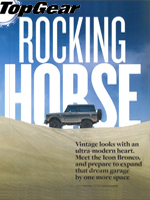
Rocking Horse
Today, the world is packed full of wonder. The Californian coast is gently drowning in thick, lazy sunshine, and I've just driven through a small town called Oceano, on the hunt for a place called Pismo Dunes. This slice of the Cali coast is exactly how you imagine it. Once you've slithered down from the identikit clapboard and breeze-block 'burbs, past the RV parks and outlet stores and into the main parts of town, you could be in a million TV shows that teleport clean dreams into damp suburban UK like wormholes into perma-sunny fairyland. It's a sea-bleach colour palette, there are surfboards propped in unlikely places, and the traffic lights are strung above the four-way intersections exactly as the movies promise.
There are low-rise buildings clad in salt-warped boards, selling the American equivalent of the seaside tat international law dictates must be sold in such shops: taffy, pails and spades, ice cream and fudge. Tourists are an aimless throng, coated in sweaty polyester and clutching gallons of iced-brown something. The sun beats down, and it's warm, simple and slow.
I'm at the wheel of a 1972 Ford Bronco, darling of middle America, workhorse of the masses, an off-road vehicle before the SUV tag was even a glimmer in a marketeer's eye. The driver's window is open, my elbow is propped on the sill and I feel at home, years of driving early-series Land Rovers providing a notional allegory to this Yankee cousin. There's a meaty V8 glub-glubbing up front, a heavy, mechanical five-speed manual 'box to wrestle, and a view out over a bonnet that hasn't changed in 40 years.
I swear that somewhere I can hear the gentle picking of banjos. And it feels deliciously, unquestionably right. But all is not what it seems. Because it never is. Around one corner, there's a stupendously fat man in a wheelchair paddling himself along the sidewalk with his feet, straining flesh bursting through the gaps in the seat. He's carrying a cardboard sign that reads ‘Hungry like a WLOF' printed in childish capitals, and he appears to be singing softly to himself - something bluesy about fried food and chicken feet. This, it seems, is what a naked, derelict Dalek might look like.
Another intersection, and a fleet of intellectually unchallenging mid-sized saloons surround a couple on a pair of matching Harley-Davidsons, making the bikers look small and surrounded, bracketing the thudding V-twins with mediocrity. Until, that is, you catch the slight hitch in the posture of the riders in their new-tight leathers and the rental tags on the bikes: just another codified and threat-lite adventure, riding free within the confines of the Disney dangerous. Cracks in the facade, middle-class slumming. Rebels without a clue.
For some reason, this makes me angry. So, at the next set of lights, I shift into first and give the Bronco some real throttle. At this point, any faint illusion of normality is shattered. Because the Bronco, this middle-aged - if not grandaddy SUV - squats the rear, lifts its lantern jaw to the sky, and bucks right off, making a noise like an enraged elephant seal attached to a car battery. For a moment, all I can see in the triple-framed rear-view mirror are rows of slack jaws. Before they can quick-draw their camphones, we've already gone. Off to the dunes, and salvation.
This, as you may have guessed, is no ordinary Ford Bronco. This is an Icon Bronco, remade under the watchful eye of a man called Jonathan Ward, whose idea of ‘restoration' sits somewhere past what most consider acceptable. Possibly in a galaxy far, far away from what most people consider acceptable. Ward's LA-based sister company TLC (Toyota Land Cruisers) reinvigorates the older models of Toyota 4x4, and was responsible for the rolling design studies that eventually became the Toyota FJ Cruiser, so he's got some top-level recognition for the quality of his vision. And, as a natural extension of his love for vintage workhorses, he turned his eye to some classic Americana in the shape of the CJ Jeep and this, the Ford Bronco.
Which means that what you see is most definitely not what you get. It may wear a VIN plate from 1972 inside its glovebox, but underneath the stock, yet eerily perfect, matt-painted bodywork, is an entirely new chassis. Bolted to that is a crate-fresh Ford 5.0-litre V8 from a contemporary Mustang GT punting out over 400bhp and just under 400lb ft of torque, and giving the old girl the kind of giddy-up that will put the frighteners on anything short of a fairly serious sports car for the noise if not the outright off-the-line pace.
The body is slightly smaller than later Broncos, the original 1966-77 first generation upon which this car is based not having swollen - that came later in '78 - but even so, the original optional 4.9-litre Windsor V8 only had 255bhp. It wouldn't have mustered quite so spectacularly.
It permanently drives all four wheels through a purpose-built Atlas II transfer case and custom Dynatrac Dana solid-axle assemblies, suspended on independent coilover suspension by Eibach and Fox Racing - the same people who make the shocks for the insane Ford Raptor. And included in the roll call of top-line suppliers is the kind of execution and integration that makes mass production seem exactly that.
Underneath, it is pure industrial pornography. I spend 20 minutes lying on my back below the thing just... ogling. It might not be the exotic execution of a modern supercar - something like a Pagani Huayra, say - but the themic extension is plain. It's just that where the Huayra is a rapier, the Icon Bronco is a cleaver. Neither leaves much to the imagination as to its purpose.
Pismo Dunes offers a chance to see whether the checklist promise lives up to the working reality. And it's a strange place for the notoriously litigious US. Pay $6, and you can camp on the beach in your RV, 4x4 in the dunes and generally have some family fun. The rules are remarkably reasonable: be safe, have fun, try not to die. They'll even pump out your chemical toilet and supply fresh water to your RV for $30, and tow you out with what appears to be some sort of sand-biased diesel monster truck should you find yourself in difficulty. The Icon, unsurprisingly, doesn't require that sort of nannying.
Mario, an Icon/TLC engineer/fabricator who drove the Bronco to meet us, simply lets some air out of the 285/17 BF Goodrich All Terrain tyres, and off we go. Mario, by the way, turns out to be a very TopGear sort of chap, if for no other reason than he has flames tattooed up both forearms. Which obviously means very little in reality, but being some sort of human hot rod sits well with us.
Tyres laid low, we amble off into the dunes, and, yet again, I'm struck by the way the Icon is put together. Ward has a rare eye for detail and his obsession with fitness for purpose borders on brilliant neurosis. Inside, the Icon is a deluge of simplicity that makes modern cars seem overwrought and hopelessly baroque; every single bit of this car is designed for use and abuse. It's not a showpiece. The dash is a simple slab, punctuated by an aircrafty dial set by your left knee inspired by Bell & Ross timepieces.
The simple seats and door cards are fabricated from Chilewich woven vinyl for supreme longevity, and other panels are ribbed stainless steel inserts. There's a decent Alpine stereo with marine-spec speakers (a little water won't phase them) and a hidden satellite-navigation system.
The sun visors are adopted from a Learjet, on the simple basis that they are the best sun visors available; the lighting (headlights, reversing lights, etc) is all low-draw LED mounted in original-ish housing shapes; and the handles, mirrors, grille and lightguards are designed by Icon and fabricated in stainless steel. Even the glass in the windows of this car is tempered architectural glazing with a slight grey tint. It is - to use a heavily overused phrase - awesome.
Some of the jewellery, by the way, is produced in conjunction with a little company called Nike, whose design team found a kindred soul in Ward and decided to offer a little help. Its only nod is a plaque in the engine bay that bears a tiny red swoosh as iconic as the car that bears the actual badge. Next to that are design credits for our man Jonathan Ward and a chap called Camilo Pardo - someone you may recognise as the chief designer of the Ford GT. Even the roll call of influential partners has hidden, joyous and exciting provenance.
Five minutes later, and there are dunes to the east and sea to the west, and nobody about save for a small flock of brightly coloured quads patrolling the lower slopes. The Bronco stretches and yawns, and unsheathes its claws. Out on the road, it produces far more shove than the centre of gravity and tall tyres can reasonably handle - which makes it a genuinely, ah, exciting thing to muscle down a curving highway - but it remains remarkably flat through corners and doesn't suffer the inherent age-related bagginess you expect from a car of this purported vintage. It doesn't wander or squeak or sag. The steering is relatively high-geared - presumably to stop you from inadvertently flipping the car. The manual five-speed has a reasonably heavy clutch pedal, but fifth gear is long and easy - more like an overdrive - and the Bronco will happily sit at reasonable speeds all day long.
The dunes, however, are more fun. The car we're driving has a full set of ARB pneumatic differential locks (you can lock the axles at the flick of a console-mounted switch for maximum traction), as well as that Atlas transfer case and a Warn 9.0Rc 9000lb winch stuffed in the front bumper, but we never even thought to use any of it. Line up towards a dune, choose second gear and simply feed in throttle.
The result is a flat roar, unsubtle and glorious, accompanied by levelled arcs of sand spewing horizontally backwards from all four wheels. The rear squats hard, the back wheels tuck right up into the arches until the tops of the tyres disappear, and the Bronco launches forwards and up the dune like a peculiar type of noisy desert goat. Back off near the top (or on the road, for that matter), and the Icon mutes slightly, gobbles like a two-tonne turkey and then backfires through the ceramic-coated exhaust like a close-quarters gunshot. The first time it happens, you'll jump. After that, you'll just laugh.
Nothing stops it, or even gets close. And it also becomes apparent that the faster and harder the Bronco is pushed on the rutted and wavy sand, the more coherent it feels, a previously slightly crunchy low-speed ride quality resolving into something much more velvety once you really get going.
It's where the Icon really makes the most sense - out in the world, being used. Unlike most bespoke bits of kit, this is absolutely not a vehicle that should be secreted away in a temperature-controlled collection. It begs to be let loose, exercised in the way it was patently designed to be - something that Ward is eminently keen on: "An Icon should be used hard and put away wet," he says, with a charming appreciation for the possibile vagaries of his likely high-end customer base.
Unfortunately, this kind of lavish attention to detail and materials science doesn't come cheap, so that customer base will probably be privileged. A basic Icon Bronco starts at about $180,000 (£114k), and when you start - inevitably - loading the options, it can stretch way further than that. But that's pretty much by the by for a car like this.
Anyone can purchase a supercar, but it says precisely nothing about you, other than that you have a robust credit rating. The Icon is more demonstrative, more emotionally subtle. Already there's a two-year waiting list, and Ward says that he needs to restrict supply to keep up the quality - Icon produces only seven cars a year, each to the precise specifications of the customer. Which is appropriate somehow, because this car would never stand mass production. And that plan works best when framed through a single pair of eyes.
In fact, there's a faintly Buddhist vibe to the Icon ethos. The spirit not so much remodeled as reincarnated, an old soul stuffed into a new set of corporeal clothes, and pushed out into the world dewy and blinking, but carrying the spiritual weight of experience.
As you may have gathered by now, I like this car quite a bit. Not to put too fine a point on it, it's an almost religious manifestation for us car people...
...Which seems entirely apposite, given the name. It's fun, brutally elegant, less outlandish than a supercar but no less special. In fact, I reckon more so. Because this car is a singular vision. Like that Pagani Huayra, there's one man at the end of it all working to a plan.

Packing Heat
The clock had just hit 11AM when I pulled up at the lights near the Fifth Street bridge in downtown LA. A shiny new Chevrolet eased up next to my derelict Lincoln. I noticed a young wise guy behind the wheel. His motor was loud, but the paint job was louder. The driver was cocky. He had the kind of face you could punch. I don’t know why he picked me out for a race; maybe he didn’t like my hat. And I didn’t care, because I knew the kid would lose.
Excuse the pulp-fiction prose, but driving Icon’s Lincoln Derelict in Downtown LA makes you feel like a character from a 1940s Raymond Chandler novel, complete with broads, bent cops and classic American cars. It looks like a well-maintained old cruiser with a rough paint job, but this Lincoln is much more than that. First of all, it costs $260,000. That’s some serious coin in the United States, where the same cash would buy two Porsche 911s and a Cayman. They are sweet rides, but they don’t have
half the presence of this one-off special,which tantalizes with old-school charm and modern convenience.
There is nothing quite like driving old cars. I’ve had a few, and they’re great fun, but they’re also hard to live with. See, like old people, old cars tend to leak and also stain the driveway (Not sure if old people also stain driveways, maybe they do). Recalcitrant carburetors mean the air is constantly thick with half burnt fuel, and the drum brakes just don’t. Which
is kind of bad, because if you crash an old car you have as much chance of surviving as the movie soldier who shows a picture of his girlfriend to a buddy or the veteran cop on his last day of service. D_E_A_D.
The Derelict car is completely different because it looks like an old timer, but is actually, mostly new. I’m not talking about a hot new crate
motor crammed into a creaky old body. No, the Derelict is effectively a custom-made new car with an old outer shell on top. Derelict is the brainchild of Jonathan Ward, who loves cars and industrial design in equal measure. His company makes better than- original retro Toyota FJ 4x4s, old-school Broncos and now the Derelict range. It does extremely high-end work and the price tags of all the models reflect this. Ward says the Derelict concept: “Revisits the classic transportation aesthetic with modern engineering.” Or, as I put it; old car go fast.
In a moment of weakness, Ward hands me the keys to the grand 1946 Lincoln Club Coupe. Moments later, I turn out of the Icon parking lot hidden in a non-descript suburb of northern LA.
The Bakelite steering wheel is large, but thin, and rests comfortably in my hands. I move down the driveway ramp and maneuver the vast car onto the street. It’s as uneven as a fixed boxing match, but the Lincoln’s chassis doesn’t creak or bend as you would expect.
Remember, the original car was built just one year after Hitler railed against just about everything in his Berlin bunker. This Lincoln’s chassis doesn’t flex because it is brand-spanking new, built by custom car specialist Art Morrison. The team took the old body off and laser scanned it to make sure the new chassis fits perfectly. The rails are mandrel bent, which retains the shape (and strength) of the tube and gives you an excuse to use the word mandrel, which so few people know that it makes you sound very smart. The Lincoln’s ancient suspension has been banished, replaced with tubular independent front set-up and a four-link coil-over suspension at the rear. Given the newness of all the underbits, it’s natural to assume the suppleness Yank cars are known for has been lost, but that’s not the case. The big old Lincoln has been tuned for comfort
as well as handling and the ride is wonderfully plush on the vast freeway that leads into Downtown LA. That’s handy, because concrete roads around here are generally rubbish, with bigger joints than a university share house. Everyone in this city is in a rush to get famous and they drive like it. The traffic on the freeway is not only running well over the limit, at about 130km/h, but cars career across lanes without the slightest indication. Given there are more guns than people in the United States, it’s best to simply get out of the way and avoid any incident that could end up with you getting, as the young folks would say, a cap in your bottom. The Lincoln is absurdly long, some 5.6m, but the new suspension and fresh tires means you can swerve around renegade Teslas with ease. The wheels are just about the only external clue that this isn’t a standard car, although Icon
resisted fitting chromed-up spinners. Instead it had 20-inch wheels carved out from big chunks of aluminum and had them matt finished.
The bigger wheels allow for giant disc brakes and massive six-piston calipers to be fitted to the front. Four piston calipers grab the rear discs. These anchors are incredible. It blows your mind to hit the brakes in an old car and actually have it pull up straight away.
There’s also ABS so you can stomp away to your heart’s content. I pull up under the art deco Sixth Street bridge for some photos. It’s a few blocks from the really bad part of Downtown, where drug dealers trade in open view, so we should be ok. The Lincoln blends in perfectly with the grand 1932 bridge, which will sadly be demolished soon.
This car has such a dramatic shape, with huge front guards, beautiful sloping lines and a boot that just doesn’t want to stop.
It was found in Montana, purchased from its original owner, who is reportedly the same age as the Old Testament. Icon has three people roaming the US searching for cars that can be turned into Derelicts. They want cool old cars with weathered paint that are free of major panel damage or rust. Ward insists the surfaces of his cars aren’t
faked, they are as found, with a bit of polish. A protective coating is applied to cars bound for harsh environments to ensure they don’t rot away.
The interior is just beautiful. The dash is made of steel (remember that?) and chrome. It has the fine detail of classic cars that is nowhere to be seen these days. For someone who spent a lot of time in 50s cars as a kid, it is warmly familiar. But the interior is just like this car’s exterior, all is not what it seems. Behind the original in-dash wireless (that’s what they called radio in the stone age) is the latest sound system with Bluetooth connectivity and iPod audio streaming. Beefy speakers are hidden in the doors, behind perforated leather, and air-con has been installed, with vents hidden behind chrome dash grilles. The gauges and dials are all original, but are controlled by a far more reliable VDO electronics system which also relays your actual speed. The Lincoln originally had automatic window winders, which must have been a real luxury back in the day, but the old hydraulic system was prone to failure. A simpler electric system has been fitted using the same neat Bakelite door switches.
This Derelict Lincoln has the most comfortable seats I’ve sat in, even though they have no headrests. The front seat is a big couch-like bench, perfect for cruising with an arm around your significant other (or an insignificant other who you are renting; whatever, I’m not judging). It has been remade in fantastically soft deer leather, with a pattern from a fancy old French car stamped into the surface. It is so remarkably supple that it must have been made from the cutest baby deer they could find.
The carpet is extremely lush. Ah yes, it is Wilton wool from Rolls Royce. The ceiling is lined with mohair, which I can tell you after much research is not actually made from moustache hair, but a silky wool taken from Angora goats. Probably for the better, really. The sun has set now and it’s time to go because the crazies take over these streets after dark. I flick on the lights. Damn, they are bright. It
turns out they are LEDs, several times brighter than the original candle-weak headlights. I twist the key and a ferocious V8 roar fills the cabin and the neighborhood. The Lincoln has a six-speed auto transmission, controlled by an original column shifter (although six on the tree doesn’t sound that catchy). I drop it into D and move off, with that V8 burble bouncing off the concrete bridge pylons. The Lincoln’s body shell has been coated with an insulation film to keep out tire and road noise and the floor also has a thick hidden layer of acoustic goober. It’s relatively serene at cruising speeds, but sounds like it’s running down Hell’s own quarter mile strip when you get on the gas.
The original car came with a 4.8-litre V12; fancy for its time, but it produced less than 90kW. The Derelict has a 5.0-litre V8 straight from a 2013 Mustang GT. With all the latest tech including variable dual overhead camshafts, precise fuel injection, an alloy block and cold air intake, it makes 313kW. With that kind of power, and all the modern gear, this re-imagined Lincoln should be plenty fast.
The kid in the Chevy was dead certain he could beat this old-timer. He inched forward like a dog waiting impatiently for dinner. Then the lights changed and it was over. The Lincoln shot off the line like a round from a well-oiled Smith and Wesson, aimed in the right direction. I quickly caught a glimpse of the kid’s face as I charged away. It was all scrunched up, like he’d taken a swig of bad whisky, the kind that burns all the way down your throat and chews away at your stomach.
Behold the Derelicts
http://www.topgear.com/uk/photos/icon-cars-derelicts-2012-02-27?imageNo=0
Fancy something different? Meet the Derelicts
According to Jonathan Ward, boss of California's Icon Cars and mastermind of the "Derelict" idiom, these strangely alluring vehicles are all about Wabi-Sabi; a comprehensive Japanese aesthetic centered on the acceptance of transience or impermanence. Or, in Top Gear English, celebrating some stuff that looks a bit knackered.
The interesting thing about these careworn old things isn't that they look ratty. They're actually a complete reverse of our usual Top Gear style of engineering (ie, take something functional and make it completely impractical). The cars have been entirely reengineered with a modern chassis - featuring 21st century suspension, brakes, drivetrain and technology - so they can be pressed into daily service as useful transport.
Take this Chevrolet Styleline Deluxe Sports Coupe. Underneath the very original paintwork there's a powder-coated Art Morrison chassis (complete with independent suspension), six-piston ABS brakes, 440hp GM LS3 fuel-injected V8, air conditioning, Bluetooth connection, completely restored interior, extensive sound deadening…It's as well spec’ed as a modern muscle car. Better in some places - there's genuine Rolls Royce Wilton wool carpet on the floor - and because the bodywork's already dinged and rusty (though there is a special coating to stop the metalwork getting worse), Jonathan thinks people will be less afraid to use it every day. "We're getting rid of the charmingly archaic mechanical system where, to own [a classic] you feel like you have to be a martyr to it. The Derelicts are about having a viable daily driver with a timeless aesthetic."
Which explains why the engines aren't too insane. Jonathan says: "We fit high performance motors, but they're daily-driver friendly... We build high-performance cars, but we don't want to build track cars that are a b**** to drive."
So, how do you go about marrying high performance technology to skid-row body shells? Jonathan says: "We find the patina'd virgin car then isolate the body." Using lasers and some fiendishly complicated algorithms, Icon works out the best place to re-mount the body onto a modern chassis then has the entire underside fabricated. After that, the body's re-fitted and work starts on refining the car's innards.
Inside, each car's built to the customer's specifications. This Chevrolet's interior, for example, is trimmed in a material inspired by the alligator skin Hermes used to trim a briefcase for JFK in. Want one? You best get saving - the Styleline coupe cost $190k to put together. That's £120,000. Crumbs.
Approve of Jonathan's interpretation of Wabi-Sabi? We are sold!
Now watch this rather lovely video about the Derelicts

Get to know Jonathan Ward
Modding a car is, was and always will be about a craftsman’s expression.
Whether it take the form one of today’s fire-breathing turbo hatchbacks or of yesterday’s greasy Rat Rods, the car has long been a canvas where people have poured heart and soul into heavy metal canvases for the sake of creating something dynamic, artistic and most of all, fun. There are those of us who are practical, those of us who are outlandish, those who are exacting and those who are loose with their style.
…And then there’s the cars and trucks of Jonathon Wards’ ICON.
Jonathon stands at the helm of a car company that takes the spirit of all these ideals and then wraps them up in whole other level of craftsmanship and expression. ICON essentially takes the practice of car restoration several steps further by taking the iconic vehicles of yesterday and then wholly re-engineers them using the best of today’s technology and techniques. ICON cars are re-imagined and better engineered expressions of the originals.
ICON builds a limited run of “regular production offerings” which include a radically refurbished Ford Bronco, any one of several body configurations of the iconic Toyota FJ40, a deceivingly svelte Chevrolet Thriftmaster pickup and a newly released electric bicycle. In addition to these, ICON also dabbles in a program they call their Derelicts and Reformers. These are specially crafted one-offs that range from a massive 60′s Dodge D200 farm truck to a radically altered ’50′s Chrysler Town and Country station wagon.
We spoke with Jonathon Ward the other day to find out what goes into an ICON truck, what motivates him, and get to the bottom of their cool new E-Flyer, an electrically assisted city bike. Here’s what he had to say:
TLM: So give us a quick intro into you and the brand of ICON.
JW: Well I tend to explain ICON4x4 like this: think about how people rebuild old houses. They usually stick to the original design language of the property, but they wouldn’t necessarily reuse the old horsehair insulation for the walls. So ICON was started with a similar mindset where we revisit classic transportation but in a modern context so we can kinda mix it up a bit. Since we only make like 20 to 30 trucks a year we can take the liberty to be a little more creative. That allows us to take these vehicles out of the stone age with their archaic mechanical experiences while remaining true to the original vintage aesthetic. We end up building in some modern engineering improvements like emissions compliant engines, modern suspension, brakes, ergonomics and all that fun stuff. ICON is a passion driven company and it’s definitely a labor of love.
TLM: So what’s the story with your “regular production trucks.”
JW: Well my wife and I have had a company called TLC that does vintage LandCruiser work for many years. One day Toyota came to us to basically build the pre-production prototypes of the FJ Cruiser. They understood that we were still engaged with the community that they had lost contact with. So after that was done, I was left still yearning to do something with my original designs and bring them to light. So we went back to Toyota and explained that we wanted to revisit the classic FJ series and launched ICON4x4 with a re-envisioned FJ40 that was clean, super high quality and better than the original. After we had some success with the first FJ40′s, we kept with it and expanded the series to include a couple of more versions like a long wheelbase 43 that originally never came to America, a long bed pickup 45 series and a “44 series” long wheelbase 4 door. The cool thing about the 44 is that its a design that we just totally made up. After that we we began building up a few of the original CJ-3b type
Willy’s Jeeps. They are simple, reliable and versatile and helped carry on the ICON brand message of simplicity and utility. Then Ford reached out to us with an idea to revive some interest in their off-road heritage and asked if we’d be interested in building a singular ICON Bronco. We jumped at the opportunity and actually decided to do all the engineering to make it our next new model. So, anytime such a small company like ICON takes on such a task as this, it ends up becoming a team effort with other companies and individuals coming in to help us. Nike had vowed their support for us in the past and said that on our next big R&D effort, to give them a call and let them know. Working with Nike was really rewarding because it gave us access to a whole other world of materials, purchasing power and production equipment that helped us realize a lot of our more lunatic ideas.
TLM: What are the Derelicts/Reformers?
JW: The Derelicts idea started with a personal restoration project. I had built up all this time of restoring cars to concourse quality and I was always too scared to use them. I was scared it would get scratched or whatever so I wanted to build something that I could beat on and use everyday. We had this old ’52 Chrysler Town and Country Wagon hanging around the garage that I loved, but I hated the front end on it. I twas just too ugly. I didn’t really know what to do with it until I found some inspiration after finding this really cool looking front end from a ’52 DeSoto. They both had a similar original green paint and weathered patina so I thought why not put that grille on the Chrysler. After that little mashup, the idea around the D&R program began to take shape. The point of a Derelict is to find and retain that car that has a perfectly worn-in patina while modernizing the entire driving experience so that it’s useable as a daily driver. Around the same time, I realized that we needed a place to do some R&D on our own design language, engine development, interior materials & other fun stuff. These one-off projects give us a place to do that and be creative and try out new ideas. We even paired up with GM to help them build their new E-Rod engine and that’s where the Thriftmaster truck came from. The D&R’s are sort of like our “skunkworks” program.
TLM: What’s the story behind the E-Flyer and how does it fit with the rest of the brand?
JW: It was an idea that just organically took shape. I took a “Man-cation” to Pebble Beach last August and while walking around the car show I met a 22 year old kid who was prototyping an electric bike. We struck up a conversation and turns out he was a huge fan of ICON and we became instant friends. Up to that point, he had just been borrowing the money to develop the bike on his own but I loved what he was doing so we just ended up helping the kid out with materials and supplier resources. Eventually, we just brought him in and decided to collaborate more deeply on the project allowing me to further refine the design of the bike so that we could bring it to market. Good vintage design has always been close to my heart so we studied the early motorcycles of the WW1 Gilded Age and scaled the size up a bit to fit a wider range of users. Then we studied the current offerings in the electric bicycle market, and came across two things we didn’t like. One; the packaging of the EV elements looked like a science class project and, two; the price point was far too high. So we fit our bike with quality EV systems and achieved a more interesting and fluid integration of the technology. The cast aluminum center housing hides the battery and controller and there’s an external USB input for programming and charging.
TLM: Ok, time for a tougher question – and then I promise to get to the cotton candy questions in a sec. In a video from ArtofCraft.com, I heard you mention that you believe that the US is in a state of a manufacturing revival. That’s not the typical lay perspective that gets lamented about, so what makes you feel that way?
JW: I have this personal mantra that this country is wandering from its founding roots. This country was built around the idea of taking on challenges and developing new ideas, not just consuming our way
through life. We can’t sustain our culture from just buying shit. We must become makers again and make things domestically. I do believe that we’re at the very beginning of a revival of that mindset in America and it’s exciting to think that we’re a part of that nascent re-beginning of that kind of craftsmanship in manufacturing. Part of the benefit of working at ICON is that we get to work with that new generation of craftsmen that share the heritage and pride of building something we can all be proud of.
TLM: Okay, so let’s say you just stumbled upon the world’s greatest automotive graveyard and could pick from any car ever made, which would you convert into a Derelict/Reformer?
JW: Oh wow, well – I would love to do a Bugatti Atlantic Reformer or a ’38 Phantom Corsiar or a Hispano Suiza H6c Xenia coupe.
TLM: Any sneak peaks into what’s next at ICON?
JW: We’re working on a couple of Derelict & Reformer cars. One is a classic 1964 Volvo P1800 coupe mashup that we’re making into a shootingbrake type wagon. We’ve also got a ’48 Buick Super Roadmaster convertible that we’re putting a Cadillac CTS-V LS-9 engine into. We’re also going to integrate an iPad Mini into the dash for the controls.
So with that, we let Jonathon go back to creating inspired works of transportation. We hope to someday nab some time with an E-Flyer to provide a review so stay tuned for that.
By Charles Watkins
For Topline Magazine
Taking the Idea of the Resto-Mod a Step Further
There are so many good things about driving a truck from the past. There are styling cues that modern-day fuel economy requirements and modern regulations won't allow. Things like bench seats, which still exist today but are starting to become scarce. Art-deco-inspired features in the cab. And there's that great smell when you get into an old truck, the smell that can't be replicated with the plastics and materials that are now used in vehicle interiors. But there are some not-so-good things about driving an old truck, the things that most people don't think about when they wax nostalgic about the pickup they always regret selling, the one that got away. It was really slow. The brakes weren't that good. It leaked oil like a sieve, and smoke billowed from the tailpipe. And there was that one bent spring in the bottom seat cushion that you have to watch out for. Ah, memories.
The resto-mod concept is a solution to that, the idea being that you can retain the original body, yet get a modern drivetrain. You could say that ICON is a company in the resto-mod business, but their vehicles are so much more than that. We recently got the chance to drive one of the company's Thriftmaster trucks, and we got a feel for how awesome ICON's vehicles are.
Make no mistake, even though this truck is based on the 1947-1953 Chevrolet 3100 Advance Design five-window truck, what you are looking at here is a custom, high-quality, small-volume bespoke vehicle. You choose the color, transmission, and whether you want the engine supercharged or naturally aspirated.
What we were first taken by, before even getting into the truck, was ICON's attention to detail. Every line, every accent was just right. While the pickup stands out from everything else on the road, it isn't over the top. It's classy, and you can tell that this wasn't just a case of dropping a crate motor into an old truck.
The body is a new licensed GM steel body, supplied by Real Steel. It uses new badges designed by ICON that remain true to the Art Deco era. Art Morrison created mandrel-bent mild steel rails, designed to create a rigid frame. (In fact, all the plumbing in the engine bay is also mandrel-bent.) They used jig tables that are chassis-specific, and the accessory mounts are precision laser-cut and formed. The truck uses a custom-built Currie 9-inch limited-slip rear end, with 31-spline Strange axles. ICON also had new driveshafts made, with 1310-series U-joints and high-strength steel shaft bodies. The suspension is new as well, with a triangulated four-link setup in the rear with Johnny Joints. In front, the independent suspension is tubular, TIG-welded, and there is an anti-roll bar. The truck uses JRE coilovers all the way around.
Replacing the original inline-six is a GM E-Rod LS3 V-8, which when naturally aspirated, puts out 315 hp and 335 lb-ft. When we looked under the hood, we saw that this one was not -- it uses a Magnuson TVS 1900 supercharger, which brings the power totals to 435 hp and 458 lb-ft. It has an internal bypass valve and an air-to-water intercooler. Cooling is taken care of with a high-density core alloy radiator and dual electric fans. Backing the LS3 is GM's 4L65E four-speed automatic. (A manual transmission is also available.) The exhaust uses TIG-welded headers, a mandrel-bent three-inch system that is computer controlled, and high-flow stainless-steel mufflers.
As we continued the walkaround, we saw other cool features. ICON put 18-inch Nittos on Circle Racing billet wheels, with the ICON name acid-etched into each wheel. The truck bed uses ash wood strips separated by stainless-steel runners. There are LED lights in the ends of the rolled bed rails, and instead of the tailgate being suspended with the use of chains, ICON created a new latch system. The bumpers are the originals, nickel-plated with clearcoat.
It was time to get in. As was the case with the rest of the truck, the cab was completely redone as well. We slid into the regular cab, sitting on the bench seat covered in American bison leather. Carpeting is Rolls Royce Wilton wool, and there is plenty of Dynamat sound-deadening material. The steering wheel came from a 1955-1957 Bel Air, and its looks are a perfect fit. The aluminum dash looks stock, but hidden behind a sliding panel is a Kenwood double-DIN head unit, which gives the truck modern features like nav, Bluetooth, satellite radio, and wifi. There is also a full Audison digital audio system. The doors have what appear to be cranks for the windows, but they are actually controls for the power windows. All of these features were made possible once the ISIS Management System CAN-BUS wiring system was installed.
Starting the engine (with a key, thank you very much) causes a noticeable rumble, and it sounds decidedly modern. We used the column shifter to get in gear, and carefully exited the driveway to get on the road. We immediately noticed how fast the Thriftmaster is. The supercharged engine makes this truck incredibly quick, to the point where you could shock someone in the next lane over when the light turns green. Mike Febbo, associate editor at Motor Trend also had some time behind the wheel. He noted, "The weight feels down low and with a low moment of inertia. The truck feels like it would change directions pretty willingly, although I think the spool in the rear end is definitely slowing that down some." The rack-and-pinion steering was direct, and had none of the vagueness of an old truck's steering. Even though visibility was terrific, better than in most modern trucks, it was nice to have the use of the back-up camera that was part of the head unit. The brakes, four-wheel slotted and vented discs with ABS, took some pressure to operate, but were excellent. The suspension was on the stiff side, but works well.
The Thriftmaster is essentially art on wheels, a limited-edition sculpture that you can drive -- fast -- and really enjoy. Unlike regular art, this is tough and rugged, and is still above all, a truck. When the Thriftmaster goes on sale, there will initially be five Ultimate Thriftmasters, each one signed and numbered. Those will have a price of about $220,000-$250,000. We expect more Thriftmasters to follow, likely costing less than the initial five. But while the asking price is high, when you think about it, these are custom artworks. These are far beyond what the original Chevy truck was. To learn more about the Thriftmaster, visit ICON at http://icon4x4.com.
By Allyson Harwood, Photography by Michael Febbo

Craftsman Creates Vintage Trucks
Craftsman Recreates Vintage Trucks for Millionaires, One at a Time
By Basem Wasef for WIRED
10.30.12
Jonathan Ward, the slight, short-haired mastermind behind boutique automaker Icon, speaks much like he works: quickly and efficiently. This is especially true when he’s dissecting the underpinnings of his stunning retro-modern trucks.
Even stripped bare, his meticulous six-figure homages to classic off-road vehicles feature a cascade of tantalizing details. Mandrel-bent steel frames feature tolerances befitting a fine watch. Aerospace-grade stainless steel fasteners are liberally utilized, as are top-shelf items like hose clamps from Switzerland and gleaming CNC-milled aluminum components.
Ward moves to another wing of his shop, where a nearly completed Icon FJ45 – a stunning reinterpretation of a classic Toyota Land Cruiser – is undergoing final assembly. Ward points out polarized visors made by the same company that supplies Learjet, instruments inspired by Bell & Ross timepieces, and a convertible top worthy of a Mercedes-Benz. The snaps securing that top, by the way, are the very same you’ll find on a Bentley or Aston Martin.
“It’s asinine,” the 42-year-old Ward admits. “They’re like $9 apiece, versus 30 cents apiece. But their aesthetic and longevity is so much better.”
Icon occupies a rarefied corner of the auto industry, a place where buyers like Apple design guru Jonathan Ive happily wait a year or more for a hand-built truck more expensive than a Porsche 911 Turbo. This is the intersection of aesthetics and functionality, a place long inhabited by high-end hot rod builders and vintage car restorers. Icon isn’t building showpieces, either, but machines quite capable of carrying their well-heeled occupants to the farthest corners of the earth.
On Tuesday, Ward will unveil his latest creation at the SEMA specialty auto show in Las Vegas: The Reformer, a vivid remake of the Dodge 1965 D200 pickup truck, one of the first crew-cabs ever created. Like his other cars, it’s a rolling testament to the original builder’s ingenuity and originality, updated with modern mechanics and comfort.
Ward’s unwavering emphasis on quality and his dedication to design recalls the golden era of bespoke coachbuilding, a time when craftsmen like Figoni & Falaschi spared no expense crafting exquisite automobiles. Yet even as he looks back, Ward has one foot in the future.
For all the grief it has suffered of late, Ward believes the auto industry is on the cusp of a new era, one that could see upstarts wrest control from the old guard. Companies that stress innovation and creativity have the potential to create small but seismic shifts in how the industry addresses design, engineering, and even marketing.
“He’s a freak,” Icon client Mark Dowley says of Ward. “He is just so damn gifted. Why some major automotive manufacturer hasn’t bought his company, I will never understand, because the guys who are creative craftsmen and can take the through-line from design all the way to manufacturing are a rarity. Jonathan is one of those guys.”
Icon grew out of TLC, the shop Ward founded in 1996 to upgrade and restore Toyota Land Cruisers. He’d cut his teeth restoring blue-chip collector cars like Mustangs and Mercedes-Benzes, but his paradigm shifted when his world travels revealed a curious sociological automotive consistency.
“The more remote and harsh the terrain, the more people were adamant followers and believers in their Land Cruisers,” he says.
Land Cruiser owners are fanatics about their rides and go to great lengths to keep them running. But most restoration shops won’t give classic utility vehicles a second glance. Ward saw an opportunity to provide the off-road crowd with the same craftsmanship and reverence typically afforded big-ticket restorations.
Few thought he’d make it. Land Cruisers are essentially Japanese Jeeps, the automotive equivalent of a pack mule. Who’d spend the money to restore one? Ward, sitting behind a 1950s-era Steelcase desk cluttered with sketches, models and a clock pulled from a MiG, chuckles as he recalls the early days of TLC. He didn’t consult an accountant, he didn’t consider how it might play with focus groups. He just did it. He pursued “the purity of the original version, for better or worse.” And when he tabulated the cost of his first job, he came to a sad but inevitable conclusion.
“Ah, shit,” he recalls thinking. “This is not a viable business.”
Thwarted by the paradox of creating a successful venture around building 50-year-old trucks with six-figure prices, Ward approached client and friend Millard Drexler, chairman and CEO of the J. Crew Group. “What do I do?” he asked.
“I told him to stick to what he did well and not to compromise,” Drexler recalls. “There’s always a good potential market for beautifully designed cars that are made with a great amount of care, affection, and integrity.”
In other words, if you build it, they will come. Sure enough, they came. TLC’s momentum picked up. Toyota caught wind of Ward’s cult following about a dozen years ago — inevitable, given that Ward’s customers included some high-ranking Toyota execs — and company CEO Akio Toyoda stopped by.
“That, to us, was like god visiting the church,” Ward says.
Toyota, lacking the heritage of a brand like Land Rover, wanted to tap the nostalgia craze sparked by the rebirth of cars like the Mini Cooper and the Volkswagen Beetle. Toyoda asked if Ward might reimagine the iconic FJ-series Land Cruiser.
Ward leaped at the chance. After visiting Toyota’s factory in Fremont, California (now owned by Tesla and producing the Model S) to select a Tacoma truck chassis, he flew to Brazil to procure the body of a Toyota Bandeirante, a Land Cruiser variant that had been built there for roughly four decades. Ward had everything FedEx’d home, sequestered five of his 15 employees in shop created specifically for the project, and set to work.
Well into the build, Toyoda called with a favor. He wanted Ward to build two more vehicles. Ward scrambled, and eight months later loaded three trucks onto an 18-wheeler headed for the 2011 SEMA show. And then something curious happened: Toyota pulled the trucks from the show. Even now, it isn’t exactly clear why. Maybe they were too whimsical, too wild for public consumption. More likely, they simply did not appear modern enough for Toyota’s sensibilities.
“What he delivered was a very retro body,” says Bruce Hunt, a product planning manager for Toyota’s truck division. “It was difficult to engage our senior managers or our parent company to look backward and build the vehicle.”
Ward agrees.
“In Japanese corporate ethic, especially Toyota’s, looking back on design of the past is considered a big business no-no. It’s always about moving forward,” he says.
Move forward it did. Roughly five years after pulling the plug on Ward’s project, Toyota rolled out its own reinterpretation, the FJ Cruiser. It bears as much resemblance to the original as BMW’s modern Mini does with the classic Austin Mini of yore.
“In my humble opinion,” Ward shrugs, “they lost the utilitarian roots of the truck entirely.”
Ward is not alone in this perspective. And he considers the zeitgeist of retro design, littered with reduxes like the Fiat 500, VW Beetle and Chrysler’s frequent trips down memory lane, as an “anime pit where they turn it into a cartoon version of vintage, like a Gen Y meets PlayStation kind of thing.”
Still, Ward knew he was on to something. He realized people relish the look of the original Land Cruiser, but not necessarily the experience. A vintage FJ rides like, well, a truck. It’s rough. It’s noisy. It’s slow. So he launched Icon in 2007 to execute the concepts he explored with Toyota, without corporate constraints on his vision. He’d build the truck he wanted, not the one Toyota did.
They look old, but they’re thoroughly modern, thanks to a legal loophole that allows Icons to be registered as new vehicles just as long as Ward starts with an old one. That loophole, plus the fact Ward owns the trademarks to names like FJ and CJ, lets him sidestep IP and copyright issues.
Icon currently builds six vehicles: four FJ homages, a Jeep CJ tribute and a re-imagined Ford Bronco that is headed to customers’ driveways soon. At this week’s SEMA show, Ward will show off two new creations: a topless version of the Bronco, and the Reformer, his D200 pickup truck remake — an official collaboration between Icon and Dodge.
A bare-bones Icon CJ3B starts at $77,000, while a loaded Bronco comes in at $215,000. Few customers have a problem with that and are only too happy to request expensive options like, say, race-ready brakes. “By the time [customers] wrap their heads around my stupendous pricing,” Ward says, “they start clicking all the boxes.”
Icon has delivered over 100 trucks so far, the majority of them Icon FJs. The list of people who’ve put one in their driveway includes designer Marc Newson.
“Icon fits well in the context of design, bridging (and blurring) gaps between old and new,” Newson says. “It also acknowledges that classics should be revered. It’s kind of like luxury recycling.”
Perhaps more telling than the praise Icon owners heap upon their vehicles and the man who built them is the rationalization they offer for spending outrageous sums on an irrational toy with an inscrutable effect on passersby.
“They sound like a PT boat coming off idle,” says Texas rancher Dave Blevins, who owns an Icon FJ and has a second on the way. “Watching the Land Rover crowd snap their necks as I blow by them on the freeway is damn near worth the price of admission.”
Blevins also insists his Icon rides “many times better” than the original. Indeed, a test drive reveals a curious combination of an on-road hot rod sensibility combined with a voracious ability to surmount virtually any off-road trail. Inside, the Bronco’s optional Chilewich woven vinyl textile completes a brutally functional yet surprisingly comfortable interior.
“I like them because they’re works of art that work and you can use,” Drexler says.
Having thoroughly reworked the classic off-roader, Ward is turning his attention to the rat rod aesthetic currently popular with the hot rod set. His Derelict line is more playful, but just as meticulous in design and execution. Icon takes any decrepit classic from 1930 through 1960, then retrofits it with a contemporary drivetrain, interior and… That’s it. The exterior, with rusted panels, peeling paint and often mismatched parts, is left as-is.
“It takes a fairly evolved automotive taste to grasp what we’re up to,” Ward acknowledges, “Particularly with the Derelict.”
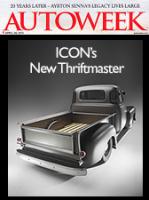
Thriftmaster Test
If you don't know, a stock 1950 Chevrolet "drives like s--t," says Jonathan Ward, the CEO of Icon, who actually met his wife Jamie while restoring a Chevrolet pickup. "Archaic. I restored a few back in the day, back when I was still calling it a hobby."
That's why Ward doesn't build stock 1950 Chevrolets. This is the Icon Thriftmaster, a $200,000 ode to an era when pickup trucks were small and unassuming and yet could do anything you asked them to -- including, apparently, blowing the doors off nearly anything around.
To that goal, the Icon Thriftmaster features a GM E-Rod 5.3-liter V8 that produces 440 supercharged, intercooled horsepower, connected to a six-speed Tremec TKO manual. The front suspension is fully independent, and a four-link solid axle sits in back. It has 50/50 weight distribution. The chassis is perched atop -- like most Icon vehicles -- a frame by Art Morrison. Premier Street Rods installed the GM-licensed steel body panels. The entire body was laser-scanned "by my mobile guy," said Ward -- a man who comes around in a van with all the equipment he needs. What a concept.
Ward hauled this example out of a junkyard in Pacoima, Calif., about 15 miles east of Icon's Chatsworth shop. A tree was growing out of the bed. Ward evicted the foliage and proceeded to spend 14 months taking the Thriftmaster project from sketch to rolling chassis. At the time, Icon was in danger of falling into a 4WD niche exemplified by the Bronco and Land Cruiser projects from which it first gained notoriety -- that's why he was eager to work on a decidedly 2WD project. Like the Reformers, it's still a truck, and like the Derelicts, it's still fundamentally a proud mid-century American.
The Thriftmaster shows design elements from the entire 1947-53 range of Chevrolet trucks, though you'd be hard-pressed to distinguish the specifics so seamlessly are they blended. The seats are Tempur-Pedic foam, wrapped in bison hide -- Ward knows a guy, who just so happens to work at Parabellum Collection. The carpets are German berber mats. The exhaust is fully custom, stainless steel and TIG-welded. Gauges are tied into the GM CAN bus. Parliament-smoking engineers designed the 1947-55 Chevrolet pickups with a chained tailgate that clangs lifelessly; the Thriftmaster features modern hinges and latching. The window cranks hide power window switches. The screen covers flit downwards gracefully, buoyed by gas-filled Traxxas RC car shocks. One of these aluminum covers hides a Kenwood touchscreen that controls the digital climate control, the navigation system and the three-speaker digital audio, currently playing Jay-Z from Ward's iPod. It even has mobile Wi-fi.
"Alright, car geek, recognize this?" He pointed at the black gas cap, beaming. A slim little nub of mysterious origin, barely sticking out of the wood-paneled bed -- whose wood, in fact, was taken from the same growth crop used for the Louisville Slugger. "It's from an SLS Black Series," he said. Wait. Hold on. Do the Germans know about this? Evidently they do -- Ward met the AMG team last year, at the same time we were meeting AMG's lineup in the desert.
We climb in. The seats feel awkwardly upright, a position perfect for uptight Midwestern farmers. Get on the power, and there's plenty of supercharger whine. The Thriftmaster is civilized when it needs to be, wind noise being the only clue that it came from the Advance Design family. Without warning, Ward slams on the six-piston ceramic brakes from 60mph, and the entire truck screeches to a halt in a visceral, sideways brakestand. By the time the smoke billows over the matte-gray hood, we're perpendicular in the middle of the street. Ward laughs like a high-schooler who had just successfully pranked the principal. "We cone-danced this f---er at Optima." In 2013, the Thriftmaster participated in the Ultimate Streetcar Invitational. "It's a truck with an identity crisis. It's a sports car with a truck body.
"I caught a lot of s--t for the stance," said Ward. "We set it up that way to get track analysis." In fact, the Thriftmaster's JRE coilovers allow it 6 inches of variable ride height, through adjustable hydraulic mounting collars. Philistines will say it's bagged. Hell no, said Ward. "I hate airbags."
If you ask Ward politely, he will build you a Thriftmaster. It won't be cheap. The Thriftmaster represents a shift in the Icon business plan -- it's Ward's first attempt at mass production, if you consider five cars per year on par with the Model T. Ward will need to come up with everything that it entails: build manuals, reproducible fixtures, etc. Finding fresh Chevy truck bodies will be in a challenge in itself. "Engineering, design, and development is one clusterf--k," said Ward. "But building it is another."
Already, two people have asked for their very own Thriftmasters. By the time December rolls around, they will be driving vehicles that transcend classification. It's a thoroughly niche vehicle that demands the customer's vision must almost exactly match that of its obsessive creator.
Fortunately, Ward is an easy man to relate to.
ICON Shop Tour
The first thing you notice when you step into Icon's sprawling, 120,000-square-foot shop in Chatsworth, Calif. -- past the fenced-in yard of Broncos of every size and Land Cruisers of every generation, past the 1952 Chrysler Town & Country station wagon with the DeSoto front end and a massaged patina of greens, browns, and ochres resembling a Cezanne painting -- is the smell. It smells old in here. Intoxicating and nostalgic, the lingering scent of worn leather and burnished metal mixed with sweat and oil. Old and musty like a church library. Old and unpretentious like your grandpa's cologne.
Icon CEO Jonathan Ward likes it this way. He talks a million miles a minute, so fast that I can barely keep up with my notes. In a single train of thought he will spout technical details, craftsman minutiae, French-bodied cars, and the supplier of his bison upholstery with a certain boredom in his voice; one gets the impression that he's explained this to his wife and business partner Jamie in his sleep. He is one of those no-bulls**t kind of guys who we all thought didn't exist anymore, a 6-foot tall combination of laid back California beach bum and East Coast neurotic -- born in Maryland, and grew up in New York -- which is a trait that manifests whenever he latches onto a new project, or a design element that piques his interest, anything for him to dive into headfirst.
Painting, woodworking, architecture; military and aerospace and marine influences all dance around his head. He has no formal design training, but taught himself CAD -- everything from SolidWorks to CATIA to SketchUp, "which is a joke, but my favorite -- " and now does all the design work himself. Folders on his iMac swell with pictures of magnetos, gauges and machine-turned dashboards, culled from sources as diverse as Pebble Beach and SEMA, the latter of which he has been attending since 1997.
"I once brought 15 vehicles to SEMA," he said. "Only did that 15 clusterf**k once. Never doing that again."
A few times, Ward told me, with an air of secrecy, "I was in the entertainment industry." He never elaborated beyond this. It was a phrase that framed Ward as a business-suited executive or a producer who burned out. But in fact, Ward began acting when he was 12 and retired when he was 28, a career spurred from a chance encounter with Mikhail Baryshnikov. He starred in TV, Broadway, and feature films as a child star who remained remarkably grounded -- someone who presumably resents the phrase "child star" and the burdens and entitlement it connotes.
That's all in the past. A few years ago, Ward and his wife were in South Africa, sitting in a wine bar somewhere overlooking the ocean -- very romantic, you know. Ward had seen his fair share of Land Cruisers when he traveled overseas, and had fallen in love with the ubiquitous, indestructible, go-anywhere machines. All those meticulously restored Mustangs and Camaros everywhere? Nobody was doing that to Land Cruisers. He explained all of this to Jamie, who seemed to understand. And with "no business plan, and no intelligent forethought," the two decided to quit their jobs on the spot.
Into the shop now, from which emerge custom Broncos and beautiful Land Cruisers that sell to the tune of six figures; the vast square footage is divided by a towering rack of parts. On one side is the TLC operation, where they're currently showing a Land Cruiser some Tender Loving Care by stuffing a small-block Chevy in it. On the other, an early Bronco in original faded olive paint is getting a full Mustang GT drivetrain, its body panels piled in a corner against the wall; across the aisle two Icon FJ44s are being finished, a bald and bespectacled shopworker hand-installing a ragtop frame. He's squinting as he does so, arms above his head, working a screw into the metal roll hoop. Reggae music plays over a boombox, drowned out by the raw whirr of power tools.
In the corner, past another employee grinding a bracket, were the Derelicts. "Freaky one-offs," said Ward, who considers them the most fun part of the Icon business. At SEMA last year, he brought a 1946 Lincoln Club Coupe with curved fenders that exhibited a burnished brown like a well-rubbed statue. It just so happened to have an Art Morrison chassis, independent suspension, disc brakes, and a 5.0-liter Ford Coyote engine. Two SEMAs earlier, Ward built a 1952 Chevrolet Styline Deluxe Coupe with, uh, an Art Morrison chassis, independent suspension, disc brakes, and a 6.2-liter LS3 V8. Next to it was a 1948 Buick Super Eight with an "Art Morrison chassis, independent suspension, disc brakes, LS9 from a CTS-V," rattles Ward with an air of blasé. "4L85E, paddle shifted, iPod controls…"
We went outside. He lit a cigarette, an American Spirit, offered another one. "No? Well, you're smart." We stared at the shop lot, along the fence opposite the building. Trucks and SUVs were parked two, three rows deep. A 1951 Packard Patrician sat in dull oxidized beige that was probably once a very nice shade of brown, a color that a patriarch could be proud of, unusual portholes lining the rear pontoon fender. Ward is planning to gut it and build a Carrera Panamerica racer out of it. "Know anyone that needs Packard parts?" he asked. As a matter of fact, we here at Autoweek do. "I'll donate parts," he said with the utmost of seriousness. "Just let me know."
Plenty of Broncos, of course -- it's what got Icon its notoriety. "Broncos are on fire right now!" he lamented. "I'm paying triple for Broncos today than before we went public, before I opened my big mouth." He'll donate Bronco parts to restoration shops for free -- "the good ones, anyway." Icon has 41 Broncos on backorder, spurred by GQ's nomination as its Car of the Year. ("A reincarnated Bronco with the original's f**k-you ruggedness ratcheted so high," wrote the men's magazine, "You're not sure if you should drive it to the beach or the front lines.") Ward delivered just nine Broncos last year. If you call him up for one right now, be prepared to wait at least two years. If you want an FJ, however, Ward promises that you'll get yours by Christmas.
The beauty of the Derelict program is that it allows Ward to expand outside his comfort zone, with cars he normally wouldn't consider. "I really want to find a Series II Bentley Drophead," he smiled, "really piss everyone off -- but no one lets them go derelict. It's a hard car to find." A 1964 Volkswagen Microbus is coming in for a Porsche drivetrain, a 3.2-liter engine out of a late-'80s Carrera. There's a 1959 Mercedes-Benz 300D Adenauer, a rare breed, a beautiful battleship of a car: full-length Webasto sunroof, no B-pillars. Ward and AMG were originally supposed to collaborate on a Derelict project, but AMG proved difficult to work with -- hence, in will go a Corvette powertrain, and GM flacks want him to mention "reliable GM power" when Ward finishes it.
Ward took in a 1951 Mercury from a client who told him, "Give me at least 600 hp and an interior that resembles a 1940s Atlantic City steakhouse." Yeah, he can do that.
That aforementioned Chrysler with the DeSoto nose? That's Ward's daily driver, with its patina practically glowing. It is built atop an Art Morrison chassis. A 6.1-liter HEMI underneath the hood produces 521 hp. "Leave the window down, sideways down a f**kin' dirt road, valet park it -- no preconceived notions of wealth or crap you get with typical cars. Just fun as all hell." The Derelict side of his business is the most fun. How could it not be? The attitude that comes with the honesty of preservation is priceless; it cannot be fabricated from any CNC machine.
It's also the money-losing side of business -- every car a one-off, every rusty fender irreproducible. The supply of barn-find Lincoln Zephyrs and Buick Roadmasters is unstable, to say the least. Is Ward willing to venture into the back roads of Ellsworth County, Kansas? The spirit of Icon means that even if he wasn't backlogged with years' worth of orders, he very well would.
Maybe that's where he found the 1939 Nash wagon with "a kickass nose," a car once designed for traveling salesmen -- the seats could fold down. It is soon for the Derelict treatment, and will be getting independent suspension, disc brakes, a 6.2-liter LS3 V8, an Art Morrison chassis…
If you write Ward a check for around $300,000 he will grab a Dodge D200 from the yard and immediately set to giving it the Icon treatment. First, the body comes off for a full metal restoration. Then it is plopped atop a modern Ram 3500 chassis, complete with modern diesel power: a 5.9-liter Cummins is what seems to be working so far. It will produce at least 550 hp, but more importantly, it will produce 975 lb-ft of torque. "Gale Banks is a buddy," he said, with giggly self-deprecation, "so Banks f**ked with it. It's a freight train…heh heh. It's so f**king stupid." Underneath, "everything's all balls-out, polished…" Ward's voice trails off as he invites me to check it out. The truck is lifted 4.5 inches and supported by a Fox suspension. The mirrors are CNC machined by friends at Nike, whose CEO Mark Parker became intrigued by Ward's work in 2011 and enlisted an army of Nike designers, engineers and machinists to provide technical assistance. The windows are skyscraper glass, waterjet cut and heat tempered. The seats are cut from Tempur-Pedic foam and wrapped in bison hide, supplied by one of Ward's friends. The instruments are reshaped to use Dodge's CAN bus interface. The tailgate latches were redesigned so the gate doesn't simply crash down and eventually sag when you unlatch it, "which is just bats**t," Ward swears, "but it's part of the fun."
Ward's design philosophy is simple, and this is how he puts it: to celebrate what the original designers had in mind "before the pencil pushers f**ked it up." Unlimited budget. No parts sharing. No sacrifices. The original Bronco used mirrors from a Falcon, a truck speedometer, Ford F-100 axles and brakes. The Icon Bronco's upright one-piece mirrors are CNC-machined, its speedometer bezel carved from one piece of aluminum and inspired by the watch case of a Bell & Ross Tourbillon. This is luxury nostalgia at its finest: the car that could have been all those years ago, unrestrained in a way no factory could produce. "Transportation designs of the past," said Ward, "but in a modern context." Toyota had that in mind when it approached TLC for input on what would become the FJ Cruiser.
Ward mentioned wanting to start a watch company: "I've been chomping at the bit." Then he launched into an unfocused, stream-of-consciousness discussion about retrogrades, jump hours, coaxial movements, tourbillions, power reserves, his Jacques Cousteau watch, just one piece in his "totally out of control watch collection," an out of control business idea from a man who operates best when he's seen as out of control, reveling in the sublime and the ridiculous, the rational and the bizarre...
Yeah, Icon Watches would be a fitting proposition. Watches, like the high-end Reformers, are all about stressing the details. "We're having fun, for better or worse," he said. "Hopefully, the market will tolerate our price point, but fortunately there's enough people who understand. It's a company founded on my lunacy."

Custom Calling
Entrepreneur offers modern takes on classic shapes
Say you inherited a small potentate, or won a couple of lotteries at once, and bought your own large island. In addition to assembling concubines, libations and ammo, you’d need transportation for when you wnet out to be admired by your people. May we suggest a sizeable squadron of Icon FJs and CJs.
Cost will be no object, since you’ll be printing your own money, so the $105,000 starting point of the FJs (CJs are only $78,000+) will not be a problem. The sun visors, for instance, are from the OE supplier to Learjet-the jet maker, not the seat maker, and cost $400.
But we’re getting ahead of ourselves. First, who or what is Icon? It started out with entrepreneur, designer and Energizer bunny Jonathan ward, who found that he liked the character of old cars and trucks but didn’t like their reliability and efficiency. He figured there were others out there like him willing to pay for old-school character matched with new-school reliability and engineering.
His first venture, still going strong, is TLC, as in Toyota Land Cruiser. TLC beautifully restores old Land Cruisers and FJs for the discriminating four-wheeler. Its reputation is high among moneyed wheelers and its work is spotless.
But Ward wanted more. He wanted to make his own FJ. Our federal government has much to say on that topic, and meeting all federal standards for everything you’d have to do would make Ward’s FJs cost more than a Learjet.
So he starts with a fully documented existing vehicle and builds and shapes his creations around that, with help from some of the best suppliers in the business. The ladder frame and control arms for the FJ suspension, for example, come from famed hot rod frame maker Art Morrison. The aluminum body is made by a pontoon boat manufacturer in Vancouver. Axles come from Dynatrac. The wiring harness is from Painless Performance. The steering column comes from Ididit, and the rest of the steering comes from Lee.
“Other than that, it’s all us”, said Ward.
The result looks like a vintage FJ or CJ tribute, but with subtle modern design cues. It could fit in perfectly anywhere in the first through third worlds. But most go to Sun Valley, Nantucket or the Hamptons.
We drove three of Ward’s creations, two FJ variants, and a Jeep CJ takeoff called the CJ3B. In the FJs, power comes from a 350 hp 5.3-liter LS-generation aluminum V8 mated to an Aisin Warner AX15 five speed transmission. An Atlas II transfer case sends torque front and rear.
A 210 hp GM EcoTec four powers the smaller CJ3B, routing torque through a five speed AX15 and an NP231 transfer case. There are other powertrain options, including diesels. You can see more choices at www.icon4x4.com.
We had a great time wheeling in the Texas Canyon section of the Rowher Flats OHV area near Santa Clarita, California, in the middle of the week when it was pretty empty. We did donuts and crawled up the steepest trails with ease. One the freeway to and from the dirt, the ride felt stiff, but with all of the customization available from Icon, you can have it tuned to your use and preference.
It is a level of design customization that the majority of four-wheelers won’t be able to afford, for work they probably would prefer to do themselves. But buyers aren’t the vast majority of the traditional wheelers.
“It’s obvious this kind of product isn’t for everyone”, Ward said. “That’s somewhat part of its charm. The buyer is someone who wants it to drive on that property he has, but doesn’t want to be messing with it on the weekends.”
Icon is crafting it’s take on the Ford Bronco, one of which will be shown at SEMA this fall. There is even an Aston Martin project in the works, a one-off customer car based on the design of the original DB4 GT Zagato.
ICON 4x4 is a modern take on the coachbuilders of yore, with today’s reliability wrapped in a classic design. If only we printed our own money…
Written by Mark Vaughn for Autoweek May 2011
Icon FJ44 custom off-roader has all the bells and whistles
The Van Nuys-built FJ44, based on a 1966 Toyota Land Cruiser, has snazzy appointments borrowed from aircraft, boats and even home freezers, but doesn't spare the brawn.
It's long been said there are only seven basic story lines in all of literature. Increasingly, the same might be said about cars, whose styles are becoming more of a monoculture with each model year. Sedan or subcompact, each genre seems to be defined by a single, rather predictable silhouette.
But not in Van Nuys, where Icon builds low-volume custom automobiles that take classic car shapes and updates them with modern, under-the-hood technologies and stylish in-the-cabin appointments pulled from aircraft, boats and fine watches. In business for five years, Icon builds 20 to 40 vehicles a year with a staff of eight builders.
Icon's latest, the FJ44, is a four-door, six-seater based on a 1966 Toyota Land Cruiser — marrying a vintage aesthetic with a modern driving experience.
Icon founder Jonathan Ward let me take possession of this $140,000+ utility vehicle he built for a client, allowing me to wheel it over the San Fernando's Valley's highways for a day and scramble it into patches of off-road paradise.
Considering its price tag and careful attention to detail, it would be easy to mistake the FJ44 for a poseur — a rich kid who geared up at REI but hadn't ever gone overnight camping.
Rarely does so rugged a car call out to be touched. But this FJ44, with its powder-coated "volcanic black" matte exterior and multilayered Mercedes canvas top, was handsome and fetchingly tactile. Bespoke craftsmanship is what Icon and the FJ44 are all about. That's clear from the attention to detail inside and out.
One does not spend six figures, however, for an off-roader that can get to the entry point of the Antelope Valley's Rowher Flat trails but can't access the fun to be had in the gravelly ruts of its highest elevations.
To put the FJ44 through its paces I had to first get into the driver's seat, which was no easy feat. The FJ44 is tall, and there isn't a doorway handle or a low step to assist. The floor of the cabin is thigh-high to accommodate the 12 inches of clearance under its belly, so it was an inelegant entry that landed me in my climate-controlled Chilewich seat.
A twist of the key brought the fuel-injected General Motors LS 5.3-liter V-8 to life. Getting it in gear came courtesy of a five-speed stickshift protruding from the floor next to twin sticks that switch the FJ44 from two-wheel to four-wheel drive. A trio of aircraft switches on the dash lock the front and rear differentials in place for powering up grades as steep as 55 degrees.
The FJ44 shares the exterior dimensions of the vintage Toyota Land Cruiser it is based on. It is sanctioned with an agreement that Ward brokered with the Japanese manufacturer, Ward said.
The only actual Toyota parts on this Icon are its imported, modern-day hood and pieces of its original frame. Its center of gravity is lower than the original, and its weight distribution is evenly split front and rear for improved handling.
The alloy body of the FJ44 is made by a pontoon boat manufacturer, and the floor is outfitted with drainage holes under marine-grade mats for easy cleaning.
The heavy-duty steering wheel was lifted from a Caterpillar earth mover. The thick metal latches attaching the windshield to its frame were the same as those on a Sub-Zero freezer.
The analog instrument panel and glove box panels were both inspired by Bell & Ross aircraft watches. The dashboard vents were sourced from Cessna, and the double-anodized sun visors were from Leer.
What sounds like a schizophrenic parts catalog is actually a careful sourcing of purposeful, aesthetically appealing details that, surprisingly, coalesce into a complementary, and unique, minimalist design.
The FJ44 has a soft top, and I was driving it on the freeway on a cold and extremely windy day. Having spent part of my youth in a soft-shell MGB that whistled and flapped, I expected the same from the FJ44. It did neither of those things.
The wind didn't leak in because the soft-top ribs were wrapped with Velcro closures, and the zippers were overlapped with heavy canvas. The zipper pulls were also equipped with "monkey ball" ends that didn't endlessly shake and rattle.
The cabin was, however, a little loud, which, depending on your viewpoint and the length of time one spends at high speeds, could be chalked up to the FJ44's character. I attributed it to the gargantuan, 350-horsepower engine, a lack of soundproofing and an intentional decision on Ward's part to retain a sensory thrill that more directly connects the driver to the driving experience.
The FJ44 has the longest wheelbase of any of the previous three Toyota Land Cruiser customs that Icon builds. While that was a benefit on the highway, it was a mild detractor on twisty roads, where it felt a little unwieldy.
Heading into the upper echelons of the Rowher trails, Ward, who was with me, decompressed the dual-purpose knobbies so we could head into the hills without getting a flat tire or shaking the teeth out of our skulls; a canister of compressed air would reinflate them at day's end.
Throwing the twin sticks forward to lock the front and rear differentials in place, I headed up a dusty and washed-out grade in low gear, climbing over some fairly severe grades and rocks without heavy breathing.
Not bad for a pretty boy — or a manual transmission, which refused to stall when the going got rough because of an astounding 87:1 gear ratio that allowed the FJ44 to crawl up hills without conking.
Yee-haw. Or, as the moneyed might say, Righty-o.
By Susan Carpenter, Los Angeles Times
December 2, 2010
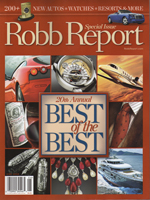
Sports & Luxury Automobile Buyer's Guide 2007
TLC ICON
TLC, which built its reputation by restoring old Land Cruisers, has draped the classic Toyota FJ40 shape over modern, trail-tested mechanicals. The result is the four-wheel-drive Icon, which will go farther off the beaten path than most desert reptiles, and certainly beyond any wide-body Hummer, mass produced Jeep, or antiquated Toyota. The only original FJ component incorporated into the Icon’s design is the frame: everything else-from powdercoated body panels that resist scratches and never require waxing, to fold-that windshield latches barrowed fro Sub-Zero freezer doors – is unique, and designed for durability. The Icon moves to the rumble of 350 hp and 400 ft lbs of torque produced by the 5.7-liter V-8 engine. Each Icon is customized, allowing you to choose a diesel engine (for and additional $3,500) of forgo the four-wheel-drive system entirely and select a two-wheel-drive hybrid electric. TLC promises to build only 20 Icons per year, so exclusivity-even on public roads – is guaranteed.
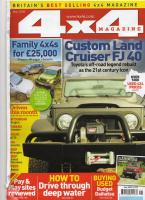
Back To The Future
The ICON is where 21st-century technology meets Sixties styling to become utilitarian chic worthy of a $100,000 price tag. Based on the FJ40 series Toyota Land Cruiser, the Icon is a reinvention of a classic 4x4.
Based in Van Nuys, California, TLC is a high-profile vehicle restorer and parts supplier specializing in keeping older Land Cruisers on the road. Boss Jonathan Ward’s passion for old Land Cruisers was inspired by TV prorammes he’d seen as a kid, yet he wasn't even born when the first FJ was launched in 1960. Nevertheless, it was Ward’s desire to create the ultimate Land Cruiser that would turn his ideas and design sketches into a product that has become coveted by the rich and famous.
When dreaming up a wish-list specification, it soon became apparent that this wasn't going to be a cheap exercise. The TLC team agreed that there would be no compromises in achieving their goal, no matter how many noughts ended up on the final bill. However, rather than go the lazy route and create a tasteless “ghetto fabulous” ride, they built something truly unique while staying true to the spirit of the original FJ Land Cruiser.
CLASSICS REBORN
A line of ageing Land Cruisers outside the TLC workshop provides the donor vehicles for the Icon. Each original chassis is used so that the vehicle can keep its original title and satisfy the California authorities. Once the donor vehicle is stripped bare, the chassis is placed on a jig and has its wheelbase stretched. Wheelbases are extended to offer a better ride, increase interior space, and improve handling, but also to accommodate additional safety features and mounts for the new driveline that forms one of the fundamental changes from the original Toyota specification.
When choosing the spec for their Icon, customers work through a menu-style options list. Top of that menu is a choice of engines that reads like a wish list for any off-road enthusiasts. Powerplants are by GM and use the same small block Chevy V8 found in a Corvette. That means a 350bhp 5.3-litre V8 with the option of a 5.7 430bhp stroked unit. Establishing its green credentials, TLC even offers a diesel option in the shape of an International four cylinder 2.8-litre turbocharged unit that has its roots in the 2.5-litre 300Tdi engine found in older Land Rover Discoverys and Defenders. Seen as the hot rod version of the 300 Tdi, the Brazilian-built 2.8 International units offers an increase in power and torque compared to the Land Rover engine, plus smoother running and the added benefit of being able to run on biodiesel. TLC is even working on a hybrid technology to power a future version of the Icon.
The Icon’s gearbox is a heavy duty NV4500 five-speed manual typically found in GM and Dodge trucks. An auto box is an option. Behind your choice of gearbox is an Atlas II Transfer Case, which as any self-respecting fourwheeler will tell you, is the transfer case that rates sub-zero on the cool wall of T-cases. The ultimate in four wheel drive control, the Atlas unit is available with super-low crawl ratios and will even let you operate front and rear axles independently.
Completing the truck builder’s porn specification is a pair of Dynatrac axles featuring a Dana 44 differential in the front and a Dana 60 in the rear. ARB lockers are an optional extra.
The Dynatrac axles are hung on Old Man Emu leaf springs. OME shocks with modified spring hangars provide increased ride height as well as improved clearance off-road. Brakes are vented and drilled discs all around. Propshafts are custom made with super tough universal joints and exhausts are stainless steel. Power steering is controlled by a NASCAR pump. Any fluids travel through Teflon coated stainless steel hoses and even the wiring loom gets the Icon treatment with vermin-proof and waterproof connections. Crucially, all of the driveline components are sourced through third-party suppliers so should you have a problem, rest assured any replacements are available off the shelf.
With its no-expense-spared specification and a portfolio of no-expense-spared customers who, research has shown, will typically store their Icon with the seven or eight other cars in their garage. TLC’s refusal to pander to bling culture is to be admired. It would have been easy for Ward and the TLC team to throw a wheelbarrow-full of diamonds at the Icon, park it outside some rappers crib with a $500,000 price ticket and a sign in the window saying ‘Buy Me!’ That strategy probably would have worked, but that would be missing the point.
You either get the Icon or you don't. When one perspective customer rang TLC wanting his Icon fitted with much larger tyres than the rather modest BFG offerings that come as standard, Ward was happy to turn down a $100K+ sale in order to preserve the Icon’s integrity. The Icon is all about understated elegance; it’s not trying to be showy or glitzy. Rather than crocodile-skin seats stuffed with ostrich feathers, you get heated seats covered in water-proof marine-grade vinyl. The material for the hood is the same stuff Mercedes uses on its top-end convertibles and the sun visors are the same polarized items you’ll find in a Lear jet.
Jonathan Ward took time out from putting the finishing touches on the latest Icon- bound for a private 22,000-acre ranch near Yellowstone National Park – to point out some other stealth-like details. Ward hates the acres of interior plastic that cheapen Range Rover ownership, so one thing the Icon experience had to be was tactile. The aluminum eyeball HVAC vents on the dash are sourced from aircraft and have a weighty feel, so you know they will last forever. The Icon’s stereo speakers are marine-grade and the retro headlamp dip-switch on the floor is rated for submersible applications. The instruments and switches mimic the Toyota originals, but are custom-made with LED lighting. The switches themselves are machined out of billet aluminum and then hand enameled by Ward himself. In researching a steering wheel worthy of the Icon and everything it stands for, Ward’s quest for the best ended with the wheel from a CAT earthmover. Not bling, not pretty, just tough.
POWDER PROCESS
The alloy body panels are new pressings and are covered in a special mix of powder coat that TLC helped develop in conjunction with a major coating manufacturer. Ward professes a hatred of traditional painting methods, describing it as a ‘nasty process’, so in the search for a tougher and greener solution TLC came up with a powder mix made from bio-soya polymers that offers greater resilience to knocks than traditional paint finishes.
Besides the obvious practical and ‘green’ advantages of this finish, the textured, crinkled feel of this surface coating covering the panels, chassis and components reinforces the Icons strength by inviting you to run your hands over it. What it’s it like to keep clean? I guess if you can afford an Icon, washing your car isn’t something you worry about. With a six-month build time and production running at about 25 per year, exclusivity is assured. Nevertheless, TLC already has a half-filled order book for 2008. Bob Seger has one and so does Tom Hanks. The boss of Toyota has one and US chat show legend David Letterman (or plain ‘Dave’ if you are Jonathan Ward) has eight!
With the Icon’s niche in the luxury marketplace now firmly established, Ward’s vision for the future extends beyond his beloved Toyotas, with classis 4x4s such as the Ford Bronco, Jeep CJ’s and Land Rover Defender being eyed up as candidates for the Icon treatment. With a perfect location a stone’s throw from Hollywood and Beverly Hills, it’s a vision you can see working.
However, Ward’s feet remain firmly on the workshop floor. Movie-star endorsements are nice, as is the million-dollar order book, but for Ward, the real reward for his efforts came the day a guy called Johnny Ive walked in and placed an order. Johnny Ive is a man who knows all about style and design. He’s the man responsible for designing the iPod. When the creator of one icon writes out a cheque for another Icon, that’s about as good an accolade as you can get.
Written by Kevin Baldwin for 4X4 Magazine
5/2008

Off-Roaders, Reloaded
Auto Restorer Icon hits high gear with its souped-up iterations of vintage 4x4's
At a grease monkey shop in industrial Van Nuys, Jonathan Ward and his ICON staff are rethinking the off-roader from scratch and speeding into pole position as perhaps the coolest name in the auto restoration biz. In addition to installing state-of-the-art mechanical systems in midcentury Land Cruisers and Jeep Wilys, they're adding such deluxe (but consciously understated) elements as powder-based, Teflon-polyester-matte finishes, softly simmering Chilewich upholstery that can be found in placemet for at WP24, and sun visors devised for Learjets. After up to an eight month long assembly period, these haute rides are taken out on 400 miles of test drives (yes, 400), just to make sure they do not rattle when delivered to style-maestro customers like Marc Newson, James Perse, and Mickey Drexler.
With Toyota's blessing, Icon first gained attention in 2005 for its inspired take on the Land Cruiser. Its newest is a tricked out Wilys, which starts ar around $79,000. Discussions are in the works with GM about an electric powered Camaro. For these auto behemoths, partnering on so-called "heritage model" revivals with an upstart firm is not so much about making significant money. Rather, runs as small as these are primarily about cultivating trickle-down brand prestige amoung an out-of-reach elite demo. The same strategy, for comparision, is behind all of those limited-edition collections at Opening Ceremony with storied labels like Dr. Martens and Pendleton. Explains Ward: "It's leveraging the bespoke experience".
Ward says he has never sold any of his 4x4's at base price, noting that his customers, generally, are people who already thought they had what they needed on wheels"-are always asking for one-off amenities. Those range from stainless steel boxes with drainage for wetsuit storage (surfer James Perse's request) to specialty rigs that can accomidate such expensive hobbies as falconry. Still, he has his limits, resolutely steering away from appeals for add-ons like 44" tires and other pimp my ride-worthy excess. "If you do things like that, it ends up reading as a cul-de-sac vehcile", he says tactfully, before turning more blunt: "This isn't hot rod bullshit with flames. We're the anti-bling. No chrome, no TV screens".
After all, it's the performance that really counts. The upgrade options are extensive under the hood. Big spenders can choose, say, a 5.7 V* engine boasting 470 HP on the Land Cruiser. By contrast, a plebe's standard version typically rocks on with a 5.3 V8 at 350HP. Thanks to a top-flight suspension system (Nitrogen charged shocks), the Icon's stale ride is not as bumpy as one might expect, although they certainly remain rugged-and kept that way by design, for authenticity's sake.

The Transportation Issue: Getting There
Out of a 11,000 square-foot garage in Los Angeles, ICON designer Jonathan Ward and his team completely rebuild classic Toyota Land Cruisers-originally made in the fifties by the Japanese for the U.S. military-into brand-new Icon utility vehicles. Every aspect of the Fj models, from engine size to powder-coated exterior colors-is customizable. Eco-friendly? There's a 28 MPG diesel engine option. Craving more power? Ward will put in a 450 HP V8 engine that's found in Corvettes. "Some people prefer a manual-wind Swiss watch over the accuracy of a cell phone clock", says Ward. "That's our client".
The company's newest undertaking, the CJ3B, is made using another fifties vehicle: the Willys Overland Jeep. It can be customized to accomidate cleints' hobbies, from fly fishing to off-roading, and is equally comfortable scaling cliffs in the desert as it is serving carpool duty. "We take these somewhat gross-polluters off of the street for an overhaul", says Ward, "and send them back out with modern drive train systems and emissions control devices. We like to think of it as the ultimate conscious automotive project". Each ICON takes six months to construct, and the company limits production to 24 cars each year.
Land Cruiser Reborn, Again
By Aaron Robinson
Car & Driver 2/06
Toyota’s 2007 FJ Cruiser may stir memories of the original Japanese Jeep (see page 48), but those with deeper pockets and a taste for something more authentic will want to check out the Icon. It’s basically an $88,000 scale model for the original FJ40 Land Cruiser imported in the ‘60s and ‘70s. The body, the engine, the driveline, the wiring, the seats, the suspension, and the steering are new, but the look is pure vintage. Built by TLC, a Land Cruiser restoration and customizing shop in Van Nuys, California, a firm that was started in 1996 by Jonathan Ward. The Icon uses only the frame from an original Cruiser (bring your own and save $4,000.00). It’s powder-coated and reinforced to accept your choice of a 2.8-leter Iveco turbo-diesel making 195 horsepower and 295 pound-feet of torque or a fuel-injected 350-hp, 5.7-liter small block Chevy crate motor with a torque number of 400. The Icon’s all-aluminum body gives this V-8 ute a 3750-pound curb weight and is stamped by Aqualu Industries in Canada, which also makes aluminum pontoon boats, should you be in the area. You can choose between the “Old School” package with original-looking steel bumpers, steel wheels, and vinyl seats or “New School” with reinforced bumpers, alloy wheels, and leather buckets. Options include a killer stereo, heated seats, and locker diffs, although TLC has offered everything from dog cages to custom surfboard racks for customers. TLC plans to build just 20 Icons in 2006 with the first delivery due in May.
Building a Better Car
While Detroit's Big Three were fighting for survival, a trio of American upstarts were rethinking how cars are made. In Arizona, Local Motors is designing by comitee: Pros oversee safety and performance while enthusiasts propose tweaks, from suspension components to body shape, on the company’s website. (The first production ehicle is the Rally Fighter, a sports coupe with the stance of a monster truck). In Kansas, H-Line Conversions is retooling Hummers and Escalades into green beasts that run on biodiesel, with new power trains that provide the bost of a hot rod. And in California, Icon is handcrafting 4x4’s with parts from other industries-visors from Learjets, latches from Sub-zero fridges, even fog lights from Mars Lunar Rovers. It’s off-roading gone artisanal. “The standard suppliers’ products are indistinct, plastic, and temporary”, explains Icon founder Jonathan Ward. “Our idea was to revive art in transportation”. Don’t underestimate these indies’ reach- Ford, for example, is working with ICON to design a badder-ass remake of the orignal Ford Bronco.
Details Magazine December 2010

No Mountain High Enough
The TLC ICON SCORE BAJA 1000 EDITION pays tribute to the world’s most famous off-road race the only way it knows how: by rolling over anything in its path.
In 1962 two American men on motorcycles spent roughly 40 hours navigation the cacti and dust between Tijuana and La Paz, Mexico, time-stamping cards at the telegraph offices in both towns as proof of their run. Their bravado inspired the inaugural Baja 10000 race in 1967, and now off-road skunk-works TLC celebrates the 40th anniversary of the peninsular sprint with its won triumph of will: the Icon Score Baja 1000 edition. It is a brutish beast, engineered to see boulders as mere speed bumps and blaze trails where even nimble fauna fear to tread. Hand-built and heavily fortified, its suspension articulates like a G.I. Joe action figure while endless torque pours forth from a 450-horsepower V-8 (bio-diesel is available, too). The brushed aluminum and alligator skin black of the body bring butch flair, but the spartan interior with only headlight and wiper controls joining a GPS and gauges on the dashboard, confirms that this vehicle exists for one reason: to conquer that which begs conquering. ($145,000.00)

Keep On Truckin'
Jonathan Ward's customized Land Cruisers are built to last.
It all started in 1994 with a bogged truck, an idea, and a visit from God. Jonathan Ward stood under the blazing sun in Sabi Sands, South Africa, staring as the wheels of one of his safari group's Land Rovers spun futilely, axle-deep in mud. Luckily for Ward, his Toyota Land Cruiser had already negotiated the swamp successfully, but the Rover just did not have the torque to pull it off. So they cinched it to the battered Land Cruiser, set it on low gear, and with the tires spinning, that old '70s Toyota pulled the much more expensive modern Rover out of the thick mud. Then and there, Ward was in love. "I spend a lot of time traveling, and I've found the more remote the locale, the harsher the environment, the more people revere their old Cruisers", he explains.
Ward returned home to a successful but unfulfilling career. During a business class at the University of Southern California, he got into a debate with a fellow student over an economic model, and an idea was born. "Supply and demand is bullshit: if you can control the supply, you can create the demand by redefining it", argues Ward. Considering his experience in South Africa and other remote lands, and his long-held hobby of restoring classic cars, he decided to attempt his theory with Land Cruisers. "In six months I went all over California and the Southwest and bought every Fj40 Land Cruiser worth a damn, till the only ones left on the market were pretty skanky. And then each one I bought, I used my resources and skills to restore it", he says. "Then I slowly trickled them out, and it got rolling. I realized there's something here. I saw Land Cruisers (in fact, all vintage off-roaders) really weren’t getting any respect. The ones out there for sale called 'restored'? At best all they'd have was a $600 Maaco paint job. No one was applying the same type of thorough restoration like they did on a vintage Mercedes or Mustang or Bel Air." So he put some of his trucks in an empty showroom in Van Nuys with a sign saying CALL US IF YOU ARE INTERESTED. Unexpectedly, there was an instant reaction, and it expanded quickly. From restoration he moved to repairs, then to parts. He named his fledgling business TLC and it was soon a full-fledged operation.
Clients urged him to even higher standards. "We were somehow blessed with the right demographic that weren't solely budget-driven and wanted the best", says Ward. "So that helped us really get our skills down and get our act together. It's weird because over the years, the market shifted distinctly. More and more people did not have the patience for vintage mechanical systems- drum brakes, 3-speed transmissions, improper ergonomics- they just didn't want any of that. More and more, our customers wanted the vintage look but with a more efficient and evolved mechanical experience. So that became the focus, but it had it's limitations."
Then in 1999, came the visit from God. As TLC's reputation grew, people from Toyota became aware of the upstart garage in the valley that was restoring Land Cruisers. "Literally, [Toyota CEO] Mr. Toyoda came and visited our shop," recalls Ward. I didn't even know there was a Mr. Toyoda. It was like God coming to the church: it was a trip." The reason for the visit was that Akio Toyoda wanted to hire TLC to build some concept vehicles for what would become the current FJ Cruiser. Ward ended up building three concept vehicles for Toyota, and although the production unit looked significantly different from Ward's vision, some of his design elements made it to the production model: the white roof, headlight bezel, and, most importantly, the triple wipers (originally inspired by rare military versions of the FJ40).
"We took it as a great honor and busted our ass to do them right", says Ward. "We get all sorts of celebrity clients, and I couldn't give a darn. It's the industrial designers and Mr. Toyoda and guys like that who really rock my world."
The contract was directly responsible for TLC's evolution from a master restoration shop into a design and engineering house. Sent to Brazil to study their Bandeirantes (a Brazilian-specific Land Cruiser built there until 2001), Ward began wondering if, with the already supply chain of parts, they would be able to go into production-even if it was ultra-limited. As these trucks dated back to the ‘60s, no one at Toyota had the digital collateral of the old Land Cruisers, so Ward had to capture it himself. Adamant about maintaining the original proportions and silhouette of the first FJ40s for his concept, he used a Faro Arm to scan and track a 1970 Land Cruiser, digitally capturing all of it’s surface profiles and dimensions. Now he had all of the basics to launch his own brand, ICON, based aesthetically on the classic FJ40s but with the capability of integrating hi-tech components and contemporary chassis design theories. “When I had clarity on where Toyota was heading with their FJ Cruiser, I went back to them and explained the concept of the ICON brand and how we wanted to build on the heritage value of the truck, no costs negated. Of course, we needed Toyota’s blessing before we jumped into this, and they were kind and supportive, so that is how Icon started.”
The TLC Icon comes to the party dressed rugged. The Icon features a 350-horsepower fuel injected aluminum V8, complimented by four wheel disc brakes. That’s more than triple the horsepower and double the torque of the original Cruiser. The recently launched CJ model is powered by a GM Ecotec 4-cylinder engine. But the three most significant upgrades of the Icon includes its body, completely constructed of un-annealed high-grade aluminum, as opposed to the original highly rust-prone steel. Second is the FJ’s 50/50 weight distribution, very rare in 4-wheel truck applications (original Land Cruisers were extremely nose-heavy). Last is its suspension-which moves away from the archaic elliptical leaf spring and a five bar steering to a variable ratio three bar design, and utilizes instead coik-over shock suspension. Of course, all of this hand-built craftsmanship and high-grade tech doesn’t come cheap: the CJ starts at $79,000, and the Fj model base is $115,000.
Speaking of Ward, it’s clear that his commitment to building a product is unchecked by bottom-line scrutiny (the CJ recently won Robb Report’s “Best of the Best” award). Lots of businesses harp on about manufacturing the best product possible, but TLC Icon legitimately focuses on making the highest-quality trucks it can. This commitment is non-negotiable, a lesson taught to Ward by Mickey Drexler, CEO of J.Crew. “Mickey was really pivotal in helping me understand the value of brand”, explains Ward of his longtime client. “Stick to my original vision: hold the line, don’t whore it out, keep it true, and the rest will come. At the end of the day, there is enough crap in the world. I don’t want to build something unless I’m really proud of it. Now, would I like a business model that would allow me to sell triple of what I sell? Yes. But I don’t think this vehicle’s a match with large-scale production because the volume automotive industry is driven by a completely different set of principles and priorities. You end up with vehicles that don’t stay in our collective soul at all; people are over them in a hurry. That’s not what I’m about.” We agree.
Written by Nicolas Stecher for Vinyl Men 10, 2008

Birth of an Icon
Overlander 4WD 9/07
Want a brand new FJ40?
California’s TLC can do it for you with its Icon.
Think of iconic American vehicles and our mind swings toward the classic muscle cars. Shelby Mustangs and Corbars, Hemi Mopars, Camaros, Corvettes and GTOs. All the stuff of legend. Checkout the website for North Carolina’s Trent Performance and you’ll see some of these collectibles all available at prices many times the original sticker price. The surprise among these big block muscle cars it the number of stock looking FJ40 Land Cruisers with equally huge price tags.
In the USA, the humble FJ40 has also gained iconic status and in original condition is a much sought after vehicle. So much so that Van Nuys, California company TLC Inc, does a good trade in restoring and dealing in classic Cruisers.
Business at TLC became so good that company director Jonathan Ward soon faced a problem. Like many old classics, parts for FJ40 Land Cruisers – body parts in particular – were becoming harder to find. And with rarity comes expense. So Jonathan set about creating his own FJ40.
“Back in 2000 Toyota come to us at TLC to design the first prototypes for what would become their FJ Cruiser,” says Ward. “When I saw the direction Toyota was heading with the cool FJ Cruiser it kind of begged the question of me: if I were to revisit the classic FJ myself, how would I do it?”
For Jonathan and many of his customers, the key attributes of the original FJ were its aesthetics and simplicity and he wanted to keep these factors in any recreation of it. Hence the reason the TLC Icon bears such a resemblance to the classic Toyota. But while many people love the look of the classic FJ, they wouldn’t appreciate the archaic driving experience.
TLC effectively recycles original vehicles, retaining only what is salvageable (only the original frame rails and tags are saved for an Icon) and recreates the rest using modern components. Many retro items like the original wing mirrors are refurbished and refitted on an Icon or Land Cruiser restoration.
Some of the modern components used in the Icon’s drive train include a choice of fuel injected Chevy small block V8 engines or an International 2.8L turbodiesel, NV4500 five speed gearbox, Atlas-II dual-stick transfer case offering 87:1 low ratio (optional 5:1 low range give 105:1 overall reduction), Dana 44 and 60 axle assemblies and power steering There’s an Australian connection too, with Old Man Emu shocks and ARB Dakar leaf springs used and ARB Air-Lockers and compressors available on the options list. The front bumper is also from ARB while the rear is a Kaymar unit.
“The Australian aftermarket 4x4 products have long been valued as some of the best in the world because the design and utility values are all tested and used in the bush,” Jonathan Ward explains. “TLC has been using ARB and Kaymar products for many years in our work and nothing else comes close in product quality and design”.
Rock Roller
TLC transforms the classic FJ Cruiser shape into an icon of its own
By Gregory Anderson
The Robb Report Collection June 2006
Jonathan Ward guns the throttle of his TLC Icon, provoking a raspy , rude note from the 4x4’s throaty exhaust. BLAAAAAAAaaaaat! He shifts to second gear, and the bellowing sound is nearly overwhelmed – but not quite – by the wind rushing through the open cabin. “Some of our clients prefer to keep a low profile so we also offer a quieter exhaust,” Ward says. “But others get in, and it’s yee-haw!” The Icon moves to the rumble of 350 hp and 400 ft lbs of torque developed by its 5.7-liter V-8, Fat, knobby tires grip the pavement with an easy, athletic grace as the Icon scrabbles over hot tarmac with the ease of the reptile on its grille.
The Icon is something different for Ward’s company, TLC, which normally specializes in the frame-up restoration of all years and varieties of Land Cruisers. “We saw the FJ as a platform that we could expand upon and do so much more with,” Ward explains. “There’s a vintage aesthetic, but he customer still wants modern drivability. They don’t want to ever have to deal with a choke cable, rare parts, drum brakes, or short gearing. Original Cruisers, though capable, were never built to address modern use. As they age, their designs are becoming more and more archaic.”
The company first came to Toyota’s notice when it built a series of trucks for the Universal film Dante’s Peak, and the Van Nuys, Calif., company has been working with Toyota since 2000, when the Japanese manufacturer began planning what would become the new FJ Cruiser. TLC built the first three driving prototypes and is working on show-car concept variations (read: a convertible), as well as aftermarket products.
With the Icon, TLC has made its first original production care. Although the vehicle may look familiar – its design is based on the classic Toyota FJ Land Cruiser of the ‘60s, ‘70s and ‘80s – the Icon is not in fact a Toyota, but rather a product of Ward’s won creation. “Icon embodies how we look at the truck,” he says. “We want to be clear that we’re not trying to replicate the Land Cruiser. Our primary business is caring for them, restoring them, and reengineering them. The Icon is something else. We really wanted to design to stand on its own.” He also stresses that TLC’s experience building one-off show cars for Toyota is applied directly to the Icon. “What we’ve tried to do is create a prototype that you can take home,” he says. “And they’re handbuilt by dedicated craftsmen from start to finish.”
They only FJ component incorporated in the Icon’s design is the frame, which Ward used to maintain the FJ’s classic form, size, and relative scale. The Icon rides on a 3.5 –inch-longer wheelbase and the body itself is 7 inches longer than the original: this not only enhances ride quality but also provides the space for the rear leaf spring suspension from a 1990 Land Cruiser, Weight distribution, Ward explains, is key. “ The original was nose-heavy but light in the rear. The gas tank was like a bomb under the passenger’s seat, so we changed the entire floor design in order to move the gas tank to a safer location, where it’s boxed by the frame and protected.”
Relocating the gas tank also created a flat floor, allowing both front seats to slide fore and aft, and to recline. Lower seat height improves outward visibility when compared to the old FJ. Though a nostalgic touch, the ubiquitous rear-facing jump seats did not make it into the Icon. “From a safety angle,” says Ward, “they’re a disaster,” All passengers have three-point belts, and the forward-facing rear bench seat-which is large enough for adults-tucks and tumbles forward for quick storage.
Toyota supplies the Icon’s steel hood, but TLC forms all of the high-grade aluminum body panels itself. A Teflon-polyester hybrid powder coat-both rugged and durable –covers the body and provides a hard-to-scratch finish ideal for off-road use. There is an optional aluminum hardtop, dows dating back to vintage trucks of the 1950s and ‘60s.
TLC centered the rear differential, which is based on a Dana 60 design. The one-ton class rear axle is built for far heavier duty that the Icon will ever see, and the front axle is a Dana 44. There are vented and slotted disc brakes on all four wheels, but no traction control or antilock braking system because neither is very useful off-road.
The top-of-the-line fuel-injected engine comes from General Motors, and an available turbo-diesel variant will average around 30 mpg. Ward will soon unveil a gas electric hybrid engine-sans for wheel-drive-as an environmentally friendly beach runabout.
The transmission is commonly found in UPS trucks, while the transfer case can also be found in everything form rock-crawling trucks to freeway fliers to off-road Baja racers. It can shift-on-the-fly up to 55 mph, and twin-stick controls provide power to the front and rear axles independently. Combined with the locking differential option, the Icon offers unparalleled torque control off road. Aggressive gearing makes the Icon perfect for scaling a rock quarry, but even at 70 mph, it will ham along at 2,200 rpm. “We were really careful to make it more than just a trail truck,” Ward says. “The customer base for this has a house in Maui, the Outer Banks, or the Hamptons.”
The Icon can be has in either New School or Old School trim, each with nearly infinite customization. “No two trucks will be exactly the same.” Say Ward. “One we’re building has a roof rack with a rear ladder so our client can use it as a shooting canopy for photography.”
New School (pictured on previous pages) ash an industrial, tooled look and feel. It integrates the spare tire carrier and the jerry can into the bumper. The steel rear bumper, which hold a Class II receiver and improves on the old FJ’s already-steep departure angle, features an inner and outer bearing sourced from the front axle spindles of Toyota trucks. “You can shake the entire truck from the carrier without any give at the pivot points,” Ward says, reinforcing his words by hopping up and down on the rear bumper. New School also includes Teflon-coated wheels, a bull bar in the front, and machined aluminum dash panels, like those in the Bugatti Veyron. Old School meanwhile, indulges in retro, wearing traditional Land Cruiser front silver bumper and rear bumperettes, vintage wheels and hubcaps, and standard textiles and dash finishes.
According to Ward, TLC developed in Icon without regard to cost. “We made the decision early on that we’re going to just build it right,” he says, “and then we’re going to see how much it costs when we’re done.” Only 20 examples of the Icon will be built, most priced between $88,000 and $108,000.00
THE ORIGIN OF SPECIES
The Icon’s reptilian grille ornament has become something of a corporate mascot for TLC. “He was part of a discarded fireplace screen that had been rusting away in a garage with one of the first Land Cruisers I ever bought, over 20 years ago.” Ward says. The lizard caught his eye, so he removed it from the fireplace, bolted it to his own truck, and “he’s been with me ever since.”
When you drive off road in a Cruiser-even just a stock Cruiser.” Ward explains, “slowly but surely the herd thins out, and you get to a point where the only thing you can see anymore are either other Land Cruisers or California blue-belly lizards.”
The Iconoclast
TLC’s biodiesel-powered version of the Icon redefines the meaning of “tread softly”
By Jan Morgan and Christian Gulliksen
The Robb Report 7/04
Jonathan Ward noticed that clients of TLC-the shop he founded to restore and customize Toyota’s rugged FJ40 Land Cruiser-kept asking for original aesthetics and modern technology,: he says. “A lot of people are still concerned about using a restored vintage vehicle.” This mix-and-match ethos inspired the Icon concept: A fresh interpretation of the original FJ40 built almost exclusively with new components.
An Icon starts with a reconditioned FJ40 frame that Ward reinforces and powdercoats. The TLC-crafted body closely follows the vintage truck’s design precedent, but features unique dimensions and materials. Says Ward, “There are major differences in body construction, size and positioning, but they’re difficult to identify.” Finished in a scratch-resistant polymer/Teflon hybrid powdercoat, the high-strength aluminum assembly weighs a full 150 pounds less than an original FJ40’s steel skin: an available carbon fiber hardtop and doors further reduce the Icon’s tonnage.
Though the ubiquitous Chevy V-8 powers most Icons, this truck sports a 4-cylinder International diesel unit producing about 135 hp and 278 ft lbs of torque. (The diesel option adds $5,200 to the Icon’s $96,500 base price.) Power might be scare by drag strip standards, but this Icon has the torque to pull itself out of almost any situation, and to return a credible 25 mpg to 30 mpg. It also runs on biodiesel, the environmentally sensitive fuel obtained from virtually any fast-food fryer-and, in some cases, from your local gas station (see “Buying Bio”, page 62.)
The updated leaf spring chassis relies on off-road standard bearers, like super-heavy-duty Dana 60 axles and an ARB “air locker” front and rear differential. A limited slip in the rear axle is standard. Calibrated for serious off-road use, the suspension is necessarily stiff to keep the heavy axles in contact with terra firma. Slow steering facilitates maneuvers over rough terrain, and the short wheelbase-a boon for rock crawling-can be identified as the reason for an Icon’s bouncy ride.
TLC clearly considers diminished on-road performance a fair trade for off-road excellence. And that’s just the way Icon owners want it. According to Ward, they often use their sturdy off-roaders to navigate ranches and large estates, in locales as diverse as Hawaii, Montana and North Carolina’s Outer Banks. “I’ve got one or two guys who might only parade them around on the weekend,” he says, “but most of my owners beat the piss out of them.”
The TLC Biocon
Classic Good Looks Meets Rugged Ingenuity
By Jordan May and Jonathan Ward
4 Wheel Drive & SU Magazine 6/07
Jonathan Ward and his team at Toyota Land Cruisers (TLC) have created some of the most memorable Toyota FJ-series vehicles to date. We were so impressed with their TLC Icon vehicle that we put it on the cover of our Feb. ’06 issue. All Icons are handbuilt in very low volume in Van Nuys, California, by a small crew of six specialists, one at the time, with and tools. All design work is done with CAD to ensure standardization and to improve efficiency of the operation. The concept behind the Icon vehicles was to create something that would offer the consumer the classic good looks and style of the original FJ40 vehicle with the driving performance of a modern vehicle. With a little bit of research and a whole lot of know-who, they have new added a biodiesel version into the Icon family. As we take a walk through this more-than-impressive vehicle, we can only wonder what TLC will think of next.
TLC began development of the new “Biocon” by researching many engines and manufacturers. Although they have always been big fans of the non-USA Toyota diesel engines, this was not an option due to the fact that service parts are not available in the U.S. After also investigation the more common North America market diesel four-cylinders, they came to the conclusion that they were either too heavy, too tall, too long, or too difficult to adapt to the chassis. Ideally, TLC wanted to use a high-pressure direct-injection motor but discovered that there is not enough technical support in the service sector to ensure that their customers would be able to find support for maintenance. The new electronics-intensive diesel engines require special tools and training barely present at the dealer level, not to mention in the general repair community.
In the end, they chose a proven, simple, and highly reliable engine made by International called the HS 2.8L VNT. Four cylinders, 2.8 liters, high-pressure rotary-injected with Garrett variable turbo and intercooler. This engine features quality Bosch support parts, simple electronics, stellar reliability, and extreme longevity. The fuel system was designed to be directly compatible with biodiesel. Delivering plenty of performance with loads of torque down low where it’s needed (376 lb-ft of torque at 1,600 rpm) while averaging 25 to 30 mpg, this is a four-wheeler built with exploration and the environment in mind.
The Icon begins life as an old FJ40 Toyota Land Cruiser (’60-“78). The truck is then stripped down to the frame, and the extra parts are recycled back into the Land Cruiser community or are sold as scrap metal. All of the textiles TLC uses are from environmentally conscious suppliers.
The surface body coating is a TGIC Teflon/polyester hybrid powder coat, which emits no CFC’s or VOCs in its application. The powder coating was developed with Andrews Powder Coating and Cardinal Coatings and is far tougher then paint. The powder coating keeps the vehicle’s body looking new. All you need to do is simply wipe it down with organic dishwashing soap mixed with 50-percent water. Best of all, the finish never needs waxing and is UV-stable.
Instead of the traditional petroleum based under coatings, TLC uses heatcured polyurea from Line-X which not only helps protect the body from road debris but also adds heat and vibration insulation with no potential negative effect on ground water as with petroleum-based coatings.
The original frame is modified by reindexing the rear suspension hangers, removing the crossbrace, adding a removable center crossbrace, and boxing the nose. That frame is then powder coated, and the process begins.
The original axels are replaced with new Dynatrac Dana 60 and Dana 44 assemblies that are offered with either a limited-slip in the rear, a locking ARB differential in the rear, or locking ARB differentials front and rear. Brakes are four-wheel-vented and slotted power assisted discs based on GM designs. For improved long rating and ride comfort, special Old Man Emu leaf springs from Australia are used on all four corners with greaseable pins and anti-inversion shackles, nitrogen shocks, and poly bushings. The rear leaf springs are 7.5 inches longer than the original design.
For improved weight distribution and a lower center of gravity, the fuel tank has been enlarged and repositioned to the rear and boxed by the frame. The original fuel tanks are directly under the fixed passenger seat. TLC also redesigned the floor structure to ease rear seat entry and to expand the front passenger foot area, which was always an issue with the vintage FJ40s.
Painless Performance helped develop a specific wire harness and switch package for the vehicle. Steering is accomplished via an ididit collapsible tilt steering-wheel column using a PSC 17.5:1 steering box mounted to the frame with an Advance Adapters fit kit. ARB supplied the front bumper, lockers, compressor, and Dakar suspension utilizing FJ40 and FJ60 parts for an improved ride. GM was chosen for the fuel-injected, 350hp, rollerrocker, 5.7L Ram Jet small-block engine, and the Dodge NV4500 transmission with the Advance Adapters Atlas II transfer case delivers power to the axles thanks to J.E. Reel custom driveshafts. A McLeod CNC clutch system was used to ensure long-term service under heavy demands.
TLC is now offering the Icon in four standard colors, including Quarts Rock White, Mocha Brown, Rocky Mountain Gray, and Slate Blue. After exploring the trails in Johnson Valley and hugging plenty of thornbushes, a quick wipe-down with Simple Green and water restored the finish.
The interior features forward-facing seating for four, with three-point shoulder belts for everyone. The entry and exit to the rear seat through the front doors is drastically improved over Toyota’s original design, with front seats that tumble forward to the dash, allowing tons of room. Both front seats recline and feature long floor tracks. The rear seat is also removable. Or it can be tucked and tumbled forward for storage room. The seat are covered in Mercedes marine-rated vinyl and an innovative woven vinyl that is highly durable (originally intended for outdoor furniture) and looks like woven strands of steel and titanium. This material proved ideal for the heated seat elements with controls hidden in the Tuffy console. The same material is backed in rubber and used for the floor mats. Also inside the console is an Alpine CD XM/AM/FM iPod stereo, with four Infinity Kappa speakers cleverly integrated into the body structure in the their own CAD-designed aluminum pods. The steering wheel is from a Cat diesel, and the gauges are from an aircraft supplier. The windshield frame latches the dash knobs were selected from commercial refrigerator and tooling suppliers and are stainless steel. To address the traditionally poor dash lighting, a clever stainless hex bolt protrudes from the center of the dash controls and 12V power port (a second power port is in the rear speaker pod). The HVAC system uses components from TLC’s favorite A/ suppliers to provide full in-dash heat, A/C. and defrost with exceptional air volume.
In keeping with the handbuilt, low volume production, each Icon is built to order. No two will be alike, with unique colors, surface coatings and textiles to meet each owner’s tastes and utility needs. The Icon s are available in two different styling packages: the New School and the Old School. The New School features a more modern industrial look with an ARB Bull Bar, a Kaymar dual-pivot Class II rear bumper, and American Racing Teflon-coated 17-inch alloy wheels. The Old School is more of a throwback to the original FJ40, with stock gray power coated steel wheels and hubcaps and stock front and rear bumpers. The original body-mounted spare-tire carrier is also maintained with the Old School package, 4WD.
Iconic FJ: TLC’s Interpretation of the Classic FJ40
Motor Trend 6/02
By Allyson Harwood
Bashing an old Toyota FJ on the rocks of the Rubicon Trail isn’t for the faint of heart – while this sport/utility Icon is durable and reliable, parts become harder to find every year. Caring for an FJ40 doesn’t have to be expensive, but it’ll get more difficult as time goes on.
California-based TLC, a company that specializes in restoring and modifying classic Land Cruisers, has designed and built a new-age FJ that could solve this problem and also takes the platform way beyond what was possible when it was new. Its Icon embodies the classic styling of the FJ40 and uses durable, modern components, with readily available parts.
Initially, all Icons will be based on pre-1975 FJ40 chassis, keeping them 50-state legal and smog exempt. The all-new steel and aluminum body was made to emulate the 1965 Land Cruiser. It’s powder-coated, not painted, and the floor and underside have polyurethane costing for protection from the elements. Inside, the front seats are available with heaters and hinge forward to allow easy entry into the back, and there are three-point seatbelts at all four seating positions. It also features a modern HVAC system, power port, and locking center console. The Icon’s 5.7 liter GM Ram Jet 350 V-8 cranks out 350 horsepower and 400 pound-feet of torque and is backed by New Venture’s NV4500 five-speed manual trans. The transfer case, a dual-stick Atlas II, has a standard 3.8;1 low range (87:1 crawl ratio): 5.0:1 is available, providing a 115:1 crawl. Front and rear axles are custom-built, based on Dana assemblies, with a standard 4.09:1 limited-slip. Four-wheel disc brakes are standard: ARB front and rear locking diffs optional. Soon, buyers will be able to order the Icon with a biodiesel-burning engine-an iveco 2.8-liter four-cylinder turbodiesel, which TLC estimates will get an average of 35 mpg.
For now, every Icon is custom-built, and no two are identical. Pricing starts as $88,000, about what you’d expect for a high-quality, handbuilt specialty machine. In its first year, about 20 are planned (as of this writing, five are already spoken for), with deliveries ready as early as May.
TLC has even bigger plans. Most states allow exempt status for vehicles manufactured to resemble those form 30 or more years ago, but a few still don’t-which keeps the company from using a new dedicated frame. That may change and could allow the Icon line to expand to include a stretched SIB and a pickup – and maybe more. And, believe it or not, the fact that the Icon is going on sale at the same time as the FJ Cruiser is purely a coincidence.
Behind The Build ICON D200
Back in 1965, few folks probably thought of a Dodge D200 crew cab as a potential collector’s item. Four-door versions of the pickup were mainly sold to the government or businesses for use as a work truck, which could hold six employees. This was long before the days of a Mega Cab full of electronics that might be used for grocery-getting more often than hauling. Jonathan Ward, the owner and creator of ICON, saw a lot of potential for upgrades when a rancher asked him to turn a ’65 Dodge D200 into a custom truck with all the style of a ’60s Chrysler pickup and the performance of a 21st century ¾-ton 4x4 truck. Sporting a Cummins diesel under the hood, advanced suspension at each corner, and a simple yet richly trimmed interior, this build surpasses anything you’ll ever find on a dealer’s lot.
The Dodge D200 as seen in its original For Sale ad.
This SEMA-bound project has been more than a year in the making, with about three months spent finding the perfect donor vehicles that could be combined into a one-of-a-kind work truck and showpiece. Ward spent a lot of his time tracking down an original crew cab ’65 Dodge D200. While four-door versions of the truck can be found, many, if not most, came from the factory as two-door regular cabs but were then stretched into crew cabs. That was not an option for Ward, who is known for focusing on the details when restoring vehicles, such as the Land Cruisers his company, TLC, transforms into better-than-stock condition. His meticulous searching paid off when he found a pristine D200 that went up for sale, and it was just a couple hours drive north from the ICON headquarters in Los Angeles. The truck turned out to be exactly what he had been looking for: a real factory four-door model that was originally owned by the U.S. military and looked as if it had been sealed inside Tupperware during the past 3½ decades.
The second donor vehicle wasn’t nearly as hard to find, but it still had to meet Ward’s strict specifications. He ended up purchasing a lightly used ’06 Dodge Ram 3500 with a manual transmission behind the tried-and-true Cummins 5.9L turbodiesel engine. With four-wheel drive, single rear wheels, and just a few thousand miles on the odometer, the Ram was barely broken in and would provide the perfect backbone for this modern interpretation of a classic truck. In addition to the frame and drivetrain, multiple modern parts would be used to upgrade the ’65 Dodge to current standards.
This truck might not seem right for the pages of Diesel Power without the aid of the engineers at Banks, who helped maximize the potential of the Cummins engine. In addition to computer programming via a Banks iQ 2.0 module, a Banks Ram Air, an intake elbow, an improved turbo wastegate, the added stopping power of a Banks exhaust brake, and a Banks Monster dual exhaust system, this truck got some very special treatment. While most modern turbodiesel trucks use air-to-air intercoolers, which are fairly simple contraptions, limitations on space led Banks and ICON to build a custom water-to-air intercooler system.
Lots of work went into creating a setup with custom coolant reservoirs, and a one-of-a-kind heat exchanger box connected to a specially fabricated ram-air intake system. As if the ECU and intercooler upgrades weren’t enough, Banks and ICON decided to take advantage of the ports on the Banks Monster Ram intake to install a large-capacity water- methanol injection system for added power and mileage. If that piques your interest, then keep an eye out for Banks’ new line of injection systems for modern diesel trucks. With all these engine upgrades, the lucky owner of this one-off Dodge will have 975 lb-ft of torque on tap—pretty awesome for a so-called “ranch truck.”
Since every ICON project is much more than a body and engine swap, there was plenty of room for improvement on the original truck, while maintaining the look of the original vehicle. To complement the upgrade to four-wheel drive, the suspension got a 4½-inch suspension lift with reservoir shocks and large off-road tires on two-part military-grade wheels. The factory body was altered to fit the big rubber with reworked front wheelwells while keeping the truck looking stock by avoiding the appearance of cut fenders. Gaps and lines in the doors, bumpers, and every body panel were worked to make them look as good, or better than when the truck left the factory, and the dash was even stretched to perfectly fit the modern Dodge instrument panel inside.
Plenty of other details are being added, combining the functionality and style that have made ICON creations famous. The interior surfaces are made using custom-dyed free-range bison hide, a motorized pop-up engine control system utilizing the factory storage bin, integrated modern four-wheel-drive controls, a hidden iPod-controlled audio system with JBL speakers and custom steel speaker enclosures, and plenty of sound-deadening material to bring the ’65 Dodge up to the standards expected while inside a modern fullsize truck. On the outside, custom badges with the ranch owner’s logo, custom exterior mirrors, ICON badging, and other contemporary touches hint that this is not your typical D-series truck.
The Dodge was just leaving for custom paint when we had to send this article to the printer, but we’ll have a full-coverage feature with exclusive photos and information in an upcoming issue of Diesel Power magazine.
Men's Journal 9/07
It’s dark. It clings to rocks. It looks mean. The Icon is a Toyota FJ40 Land Cruiser rebuilt with half of a tarantula’s DNA and all of its rude beauty. An original FJ40 chassis sacrifices its ride then gets fortified with a passed of engine options. Dana axles as thick as your forearms, and suspension parts built to withstand an A-bomb. Off-roaders will dig it when they see it. The Icon is the dark knight of the Rubicon Trail, a middle-finger salute to the minivans and station wagons trying to act as sport-utility vehicles. (from $96,000: tlcicon.com)

Toyota FJ40 Series Reborn
The original shape Land Cruiser remade in the USA
By Isaac Bouchard
Car Middle East Edition 7/07
Mulholland drive in Los Angeles is a famous noir plot device from decades of film and TV. But what hold my attention right now is how devilishly tight and twisty it is, not to mention how sheer the drops are over many of the precipices that border it. Equally captivation is that I’m dispatching the worst of its bumpy, off-cambered challenge in an almost comically competent way from behind the wheel of the TLC Icon.
Based on the classic FJ40 Land Cruiser, this confection of 350hp V8 shoehorned into a ladder frame, and suspended by leaf springs, live axles, and narrow, off road-spec BF Goodrich tires, seems tailor-made to spit me over one of the cliffs.
Yet the Icon actually seems to thrive. Despite lacking anti sway bars, roll is well contained: the cornering stance is near neutral, and the modern brakes are strong. The only thing that betrays the age of the design is the play in the antiquated recirculating-ball steering, limiting my confidence. That’s painfully obvious when company founder Jonathan Ward takes the tiller and proceeds to incinerate the route I’ve just traversed: out cornering Angelinos in their SL500s.
Thanks to the weight distribution, wider track, longer wheelbase, and lower CPG – credit the use of an aluminium body, and careful repositioning of high-mass elements deeper into the frame – the Icon drifts like a champ. This revitalized beast will embarrass more conventional card in the stoplight grand prix. Even the smaller displacement 5.7-liter tested appears good for mid-six second 100kph runs. The crate-motor’s instant throttle response reinforces the raunchy rod nature of the machine.
This surreal amalgam of time-tested off-road indomitability and newfound on-road prowess is the essence of the Icon. TLC is so respected for its work at restoring classic FJs that Toyota tapped its expertise for the development of the all-new FJ Cruiser. To Ward, the Icon was the obvious next step: a reimagining that would wed cutting edge tech, SoCal hotrod talents, and the simple and proven strengths of the toughest 4x4 ever built.
Fully clothed, the Icon is a work of art: the classic FJ proportions updated with engine-turned instrument surrounds, billet aluminium switchgear, even multi-axis sunvisors sourced from a Lear jet. The finish is exemplary: the custom-built alloy body goes through 100 hours of handwork before being finished in Teflon nanocoating.
TLC starts with an original FJ40 donor frame, which is stripped, magnafluxed, reinforced and upgraded beyond its already heady OEM heritage. The custom exhaust, Baja-rated Atlas transfer case, and Dana Dynatrac axles bespeak its abilities in the wild.
The Icon has multiple appeal: not only does it have the static style of a modern rod, but the prowess to please its owner in a much more diverse manner than most expensive toys. It’s exclusive too, with only 32 made each year.
Off-Road in Colorado: Taking a Rebuilt Land Cruiser from Durango to Boulder
By Ezra Dyer
Popular Mechanics 6/09
A summer road trip doesn’t need pavement or even modern transportation. We tackle Colorado’s dusty mountain trail in a rebuilt, restored and very rugged icon FJ40—an old-school 4WD adventure in the heart of the Rockies.
We’re bouncing straight for the edge of a cliff. My wife, Heather, is in the shotgun seat, her right foot reflexively reaching out to press her own phantom brake pedal as blue sky fills the windshield. Adrenaline, about 10 Red Bulls’ worth, courses into my system as I lean on the brakes and wrestle the steering wheel to the right, until the passenger-side mirror is nearly grazing the sheer rock wall that defines one side of the trail. Better to hug the cliff, because the other side of the trail is defined by abrupt, airy nothingness. I downshift a gear in low range and manage to negotiate the vertigo-inducing switchbacks of Tomboy Road as we make our way from 13,114-foot Imogene Pass down to 8750-foot Telluride. Locals characterize Tomboy as an intermediate trail, but, of course, that presumes you don’t fall off it.
If you’ve got five days to spend in a single state, and you want to experience the best roads, the best views and the most charismatic towns, plot a route through the Colorado Rockies from Durango up to Boulder. You’ll find 14,000-foot mountain peaks littered with postcard vistas and draped with the alpine roads you dream about during your daily commute. I enlist Heather to help an adventure that takes in some legendary towns—Telluride, Crested Butte, Aspen. In these places you can escape civilization—and still find a place to eat a nice steak if you roll in at 9 pm.
I have a good idea where I’m going, because a few days earlier I drove from Telluride to Lake City—50 miles, more or less—almost entirely off-road, in a Hummer H3T Alpha. With less than 200 miles to cover on any single day, there should be plenty of time for hiking, mountain biking, fishing and off-roading. That last activity helps dictate the choice of vehicle for this endeavor. What I want is a cross between a Jeep Wrangler Rubicon and a Toyota Prius, but no new vehicle comes close to combining that degree of off-road acumen and fuel-miser efficiency. There is another option, though: revising the past.
Rockhound
Anyone who’s driven a classic Toyota FJ40 Land Cruiser would praise its utilitarian, go-anywhere talents, but in terms of livability, an old FJ is a Massey Ferguson tractor crossed with an Iron Maiden. TLC, a small company based in California, specializes in reimagining the FJ as the Icon—essentially an original FJ40 that’s been stripped down to its bare frame and rebuilt with modern amenities and cool details like handcrafted, engraved and enameled stainless-steel dash knobs. A new drivetrain is part of the package, and TLC now offers a four-cylinder turbodiesel that allows the Icon to average between 22 and 28 mpg. Not bad for a vehicle equipped with 33-inch tires, locking differentials and a hefty winch bumper. The diesel also runs on biofuel, should we happen to come across any of Willie Nelson’s filling stations.
This particular Icon diesel is loaded with toys—heated seats, a thumping stereo and a Power Tank CO2 reservoir for airing up the tires. Despite the vehicle’s amenities and six-figure price, the driving experience is still retro. Wind, road and engine noise barge in through the soft-top, the five-speed shifter has longer throws than an Olympic javelin competition, and the steering is disarmingly slow on these serpentine roads. And yet the squeaks, rattles and groans of an old vehicle, the telltale complaints of calcified bushings and rotten seals, are entirely absent. It may be retro, but it’s definitely not old.
I’m keen to try the Icon in its true element: off-road. Telluride begins to lure off-roaders as soon as the snow melts and the high trails outside town become passable. We drive to the Imogene Pass trailhead (barely a quarter-mile off the main drag), and I yank the e-brake and jump out. There’s something gratifying about the solid, tactile sensation of manually locking the front hubs on an old-school 4x4. I engage the front axle with the stubby transfer case lever on the floor, and we’re off. Heather offers a hand at airing down the tires to improve traction in the rough. But I decide we should skip this procedure because I don’t expect to encounter any terrain that will challenge our Icon. This, it turns out, is a rookie mistake, because I quickly learn that you don’t just air down your tires for better off-road capability. You also do it for comfort. Especially if your passenger is unenthusiastic about the kidney-shaking cocktail of solid axles, leaf springs and rocky trails.
Heather gets some respite from the constant jostling when she gets out to spot me as I attempt to climb a challenging rock shelf. There’s an easier route around, but what’s the fun in that? I gear down into low range, engage the ARB locking diffs and successfully claw my way up. After about an hour, we’re at Imogene Pass. Besides a bullet-riddled mailbox at its summit, Imogene offers spectacular views of the surrounding peaks, which are littered with mining operations that were abandoned back when off-roading was an unavoidable condition of travel rather than an amusing diversion. We don’t spend much time there, however, since we’d unzipped the windows from the soft-top back in balmy Telluride, where the temperature was at least 25 degrees warmer than it is up here.
Saturday Mechanic
En route to Crested Butte after lunch, I pass four vehicles at once—something I’d wager this particular FJ never accomplished in its pre-Icon incarnation. Even now, the 2.8-liter motor is better suited to mellow cruising than to torrid acceleration, but with 135 hp and 276 lb-ft of torque, it’s got respectable giddyup. I glance at the speedometer, notice we’re doing 90 mph and assume the concentration of a bomb-squad specialist as I edge down to legal speeds. No antilock brakes, no airbags, no sudden moves.
Crested Butte looks like an idealized conception of the Wild West, with old-timey storefronts clustered in a tight downtown that hugs the base of a towering set of mountains. The plan is to do some hiking before taking a trail over those mountains to our next stop on the other side—a little place called Aspen.
After a hearty breakfast in Crested Butte, Heather eyes the grumbling orange truck outside the diner and asks, “Why’d you leave it running?” I produce the ignition key from my pocket and explain that there really wasn’t much choice. The ignition switch is shorted out. See, production Icons get break-in mileage to expose any kinks or faulty parts, but on this brand-new example, we’re performing the shakedown in the field, as it were. And we’ve got a kink on our hands. Since I’m not sure whether the switch will still crank the starter, I make a game-time decision: We’re not shutting this thing down till we get to Aspen. And thus, our stroll around a pristine mountain lake is accompanied by the persistent growl of the idling Icon. The hills are alive with the sound of compression ignition.
As I fill up at a local gas station, I ask the attendant about a trail someone mentioned that connects Crested Butte and Aspen. “Oh yeah, the Schofield Pass,” he says. “That trail is mega-gnar.” Then, deciding he might’ve under-gnarred his original estimate, he adds, “Mega-mega gnar.” He eyes the Icon sitting at the pumps. “That thing would make it, but if you put a wheel wrong, you fall 40 feet into the river.” I ask if there is perhaps a kinder alternative for this $122,000 truck that does not belong to me, a trail rated single-gnar or less, and he recommends another unpaved way called the Kebler Pass. The Kebler Pass is more like a dirt road than a trail, and I air down the Icon’s tires to take the edge off the stutter bumps. This smooths out the ride nicely, and I make a conscious decision to avoid telling Heather that we could have had a much nicer drive up Imogene Pass if I’d thought of this sooner. The aspen forest makes for a beautiful backdrop, and the woods are teeming with life—including, oddly, cows. Heather notes that cows are normal and trees are normal, but put some cows among the trees and suddenly you’ve got a strange and exotic tableau.
A few hours later we’re in Aspen, and I pull into the parking lot of the Gant Hotel, press my right foot on the brake and pop the clutch with my left. The motor stalls, choking itself into silence for the first time in the past 7 hours. Now comes the real moment of truth: I turn the key to see if it’ll start up again. The starter spins, the motor roars to life, and we’re in business. After shutting down again, I disconnect the battery to keep the accessories from killing it overnight, but we have a viable strategy for continuing our trip. This is the benefit of older designs—things may go wrong, but it’s a lot easier to devise work-arounds than it is in new cars. There are no OBD II trouble codes, no electronic security systems to go haywire. Bad ignition switch? Stall it out.
Damage Waivers
As We walk around Aspen, I notice a poster advertising performers at a subterranean bar. “Hey, look,” I say, “Ice Cube played at this place!” It seems unlikely that Ice Cube, of N.W.A fame and Friday movie stardom, would’ve played a little bar in Aspen, but there it is. “Look at the date,” Heather says. “He didn’t play there already, he’s playing there tonight!” And that’s how we ended up witnessing Ice Cube performing “Straight Outta Compton” live in Aspen. That’s the kind of thing that could make for a good story later. Just like when you try to go mountain biking and your bike falls off the car rack at 50 mph.
About that: I thought everything was properly ratcheted down when we set off toward Woody Creek. The woman at the bike place told me that the late gonzo legend Hunter S. Thompson used to live near the trail, so I wanted to check it out, even if Thompson probably would’ve pistol-whipped me for wearing a helmet while riding a bicycle. He would have fully approved, however, of the carnage. As I hit an expansion joint on the highway, my bike bounces off the rack and begins a death cartwheel down the highway. Did I sign up for the damage waiver? I hope I signed up for the damage waiver.
When I return the bike, the shaggy dude at the counter buys my explanation for the large chunk of foam missing from the seat. “I took a digger,” I say, gesturing to the road rash on the seat. “You sure did!” he agrees, and I depart before he can ponder how I trashed the seat without suffering so much as a scrape myself.
Alpine Angler
Back in the Icon, we climb out of town on Route 82, headed toward Independence Pass on the Continental Divide. The blacktop is smooth and mostly free of plow scars. Up here at 12,000 feet, on one of the highest paved roads in North America, they don’t even bother to plow in winter—they just close the road and wait till spring. Once the 10-mile route thaws, it’s a popular climb for road bikers touring the Sawatch Range.
The Icon’s turbocharger is whistling, and I’m spinning the steering wheel like Mix Master Mike on the turntables, but as I pass a parade of Porsches going the other way, it’s hard not to wish that I had a sports car right now. At the top, the Icon’s riotous idle is suddenly drowned out by an otherworldly shriek. Over the ridge, making excellent time, comes a red Ferrari Enzo, one of only a few hundred or so on the planet. Judging by the smile plastered on the face of the lucky guy behind the wheel, we should all aspire to drive a red Enzo over Independence Pass before we die.
Soon, we’re on Interstate 70 for the first time on the trip. I want to reach Boulder in time to set up a fishing trip tomorrow. So we forgo lunch in favor of that traveler’s staple, jerky (with a side order of surprisingly good convenience-store tamales), and head down I-70 as fast as the Icon can carry us.
My seat-of-the-pants approach to scheduling means that no guides are available. But I don’t even need to drive that far to find my own solitary place to fish. Barely 20 minutes after I leave the Kinsley Outfitters Orvis shop in Boulder I drop anchor. I inspect the fancifully named flies I bought and ponder which one to deploy for some epic trout slaying. I contemplate the Chernobyl Ant and the Elk Wing Caddis, but decide to try the Stimulator first.
I’m more of a shameless bait caster than a fly fisherman; still, I try to dance the fly on the water, because that seems like what a fly would do, right? But the water is only up to my shins, and I fail to see how there could be fish here. They’d have to be two-dimensional, and I’m pretty sure flounder are not indigenous to the Rockies. I’m ready to give up and try a new spot, but suddenly the fly is tugged underwater, and the slack goes out of the line. The fishing in Boulder Creek really must be pretty good, because I caught a fish. I let it go—so there’s no evidence to contradict the hyperbole I conjure to describe my catch back at the hotel bar in Boulder. It was a creature of the deep, five rows of teeth, license plates in its belly.
The next morning brings the road-trip bummer: the realization that we’re done driving to new places looking for new adventures. No more random Ice Cube concerts, unexpected fly-fishing mastery or rural Enzo sightings. No more challenges—the bike tumbling down the highway, the shorted ignition—followed by the exhilaration of a successful fix. And, I’m sad to say, no more Icon. While I initially missed the refinement of a modern car, over the course of the trip the FJ endeared itself. It took us from Durango to Boulder, up Imogene Pass, through the Crested Butte aspens and past the woodland bovines, its center console shut tight enough to prevent the smell of the ever-present beef jerky from permeating the interior. Besides all its crafty details, the Icon has the FJ40 charisma, an authenticity that only comes with a genuine four-decade pedigree.


